
4.1 Module Introduction
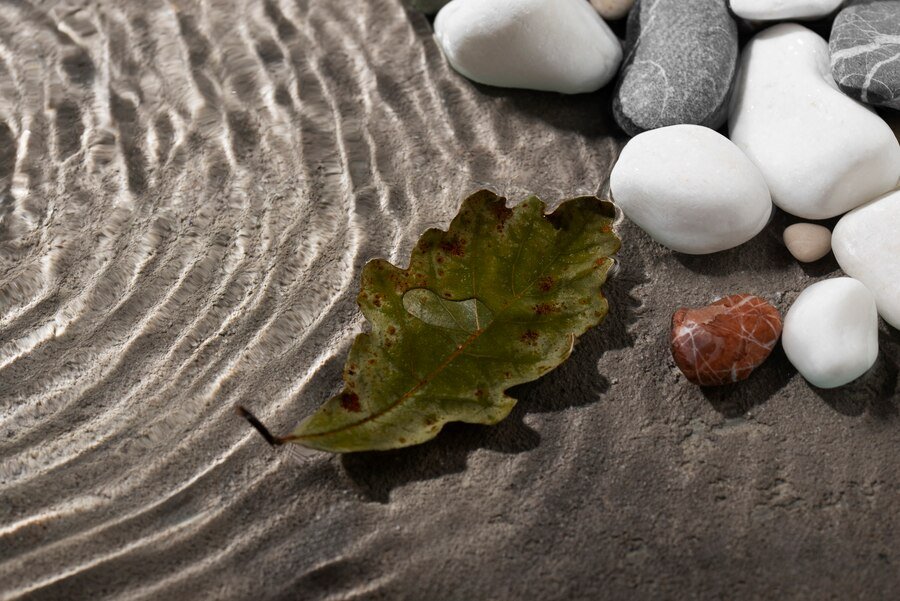
Water is so important in a Zen garden, at least the symbolisation of water, that we have devoted an entire module to this element. Water is highly symbolic in both Japanese and Buddhist culture, and every Zen garden should contain water, at least symbolically. This module exclusively focuses on water. We cover the symbolism of water and discuss how to use water in your Zen garden in the form of ponds, waterfalls, fountains, and of course, 'dry' water. You also get information about koi ponds, which not only incorporates water, but also life.
4.2 The Symbolism of Water in Japanese Culture

As mentioned, water is very symbolic in Japanese culture, so it should not be surprising that water is a key part of any Japanese garden. Japan gets a lot of rainfall and is an island nation, so for thousands of years, the people of Japan have had a special relationship with water.
In a traditional Zen garden, you already know that real water is not present. Instead, the gravel in the dry garden is raked in a way to symbolise water, whether it is a rushing stream or gentle ocean waves. Rocks and other embellishments are also placed in the 'water' to make it look more real. In modern day Japanese Zen garden, you often see water features, including ponds, waterfalls, and fountains. The sight and sound of water has a deep meaning in Japanese culture. It is strongly associated with the passage of time, though there are other meanings, too. Let's go with the interpretation that water symbolises the passage of time for a moment.
Another essential element in Zen gardens is a bridge, and a bridge crosses the water. So, think about those together. This is not simply a bridge that crosses water to keep your feet dry. Instead, it is symbolic of the life journey we all take as time passes. In fact, to further understand this, 'hashi,' is the word for 'bridge' in Japanese, but it is also the word to mean 'edge.' So, when you consider all of this, when crossing a bridge in a Japanese Zen garden, you are symbolically crossing the edge of one world into another.
4.3 The Symbolism of Water in Buddhist Culture
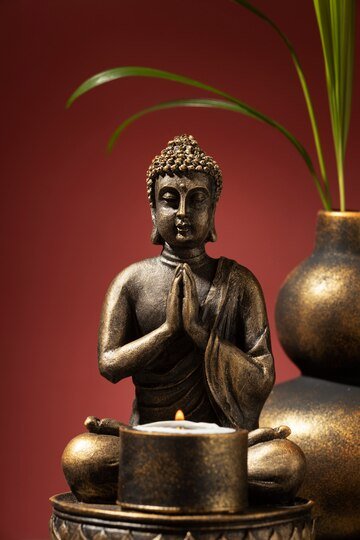
There is also a lot of symbolism associated with water and Buddhist culture. Buddhists often offer water at shrines because they believe that water helps to bring calmness, purity, and clarity in the mind, body, and speech. In this case, Buddhists believe that water can be used as a way to cleanse our need for attachment, which is the major roadblock to Finding enlightenment. As you might remember, compassion, generosity, and wisdom are used to find enlightenment, too, and only after perfecting these things can 'True Happiness' be experienced. There are also rituals associated with Buddhism that utilise water.
For instance
On Vesak (Wesak) Day, which is the day that celebrates the birth date, death date, and day of enlightenment of the Buddha, Buddhists use water. They take images of Siddhartha, who became the Buddha, and bathe the images in water. This is a reminder that we, too, must purify ourselves to, over time, reveal the traits that lead to enlightenment.
Fact
In the Buddhist 'Bathing the Buddha' ritual, which is part of Vesak Day, water is poured over statues of Buddha as a reminder to purify our minds.
Source: BBC.co.uk
In addition to this, water is also used in consecration ceremonies and for blessing objects. In Vajrayana Buddhism, there is a custom of offering seven bowls of water at shrines and altars.
Practitioners do this to represent the seven aspects of Buddhist prayer, which includes the following:
-Paying Homage
-Giving Offerings
-Repentance of Misgivings
-Rejoicing the Good
-Requesting Buddhas to Stay
-Inviting in Teachings
-Dedicating Merits
There is also a prayer that is said as these offerings are being made, and many place altars or use offerings like this in their Zen gardens.
Activity 1
Estimated time: 10 to 15 minutes
We have only brieβly touched upon the symbolism associated with water in Japanese and Buddhist cultures. There are many more interesting meanings associated with water.
Take about 10 to 15 minutes and do a brief internet search on the other meanings of water in Japanese, or even Asian, culture, as well as within the different sects of Buddhism.
Do you feel particularly connected to any of these meanings?
How can these meanings positively affect your life?
4.4 Japanese Zen Gardens and Ponds
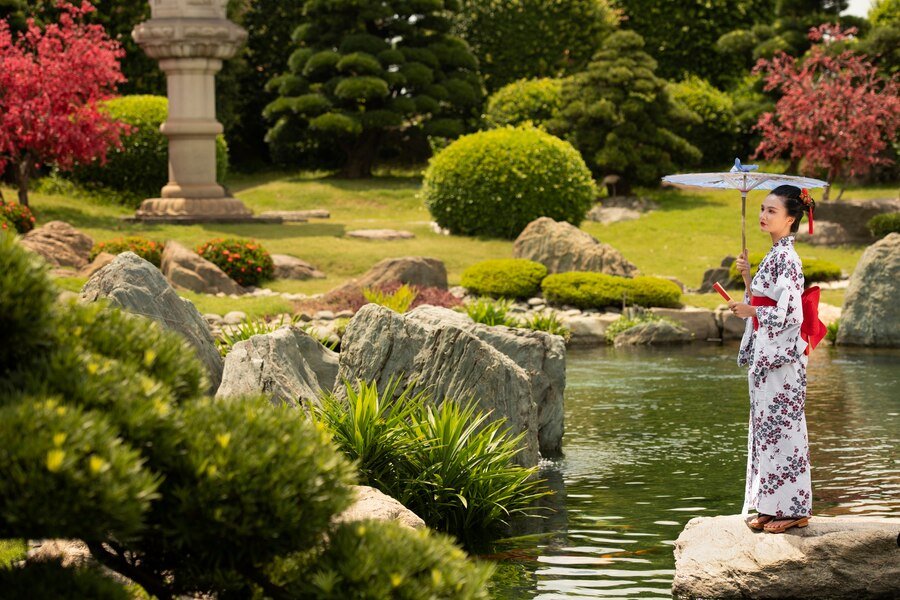
As you know, adding a pond to your modern Zen garden is a popular water feature, and many Zen gardens have them. This is typically due to the symbolism of water in Buddhist and Japanese cultures. There are several different types of ponds that you might consider including wildlife ponds, koi ponds, fountain ponds, and waterfall ponds.
Fountain ponds
Fountain ponds are those that...yes, you guessed it...feature a fountain. This is a popular option for Zen gardens, and this type of pond generally takes care of itself, especially if you add the right kind of pond plants to it to keep the water healthy. Additionally, the fountain itself helps to keep the pond oxygenated.
Waterfall Ponds
A waterfall pond is another option, and these are incredibly popular in Zen gardens. Remember the yin and yang and how this concept fits into a Zen garden? These are opposites and just like the yin and yang, a waterfall is, too. How? Well, a waterfall is made of water and rock, which are opposites. Remember, you want to βill your Zen garden with these elements in order to create balance. Like fountains, waterfalls in ponds help to keep the pond clean and healthy.
Natural Ponds
A natural pond is a third type of pond that you might find in a Zen garden, but these are a bit more difficult to care for. The difficulty comes into play because it takes a variety of plants to keep the pond water healthy. These ponds, however, often attract wildlife, so they are often a welcome addition to Zen gardens.
Koi Ponds
The most popular type of pond found in a Zen garden is the koi pond. In fact, these ponds are popular throughout China and Japan, as well as all across the globe in Asian- style gardens. Because these ponds are so popular among Zen garden enthusiasts, we are going to look at them in length, including how to build one.
4.5 Koi Fish Symbolism
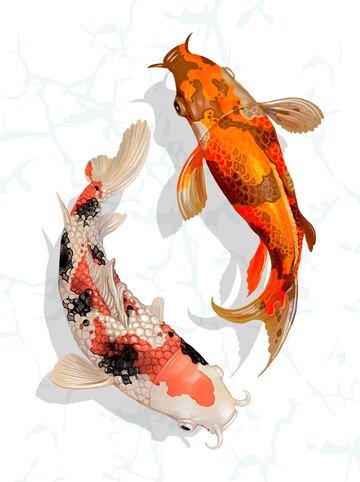
Koi fish are a type of carp, and have been bred to display gorgeous colours of bright yellow, red, orange, white, black, and more. Much of the symbolism associated with koi is also symbolic of lessons and trials that we, as humans, experience in our lives. The koi fish is a powerful life force due to its ability to travel upstream and against currents, something that other fish are not known for.
Some of the attributes that are associated with koi include:
-Longevity
-Prosperity
-Ambition
-Courage
-Good fortune
-Success
-Perseverance
As with many aspects of Zen, the koi fish was borrowed from the Chinese, and many of the symbolic meanings of the koi are based on Chinese legends.
Colour and Symbolism
Koi fish come in 22 recognised colours, and within those designations are different types. The colour of a koi fish is directly related to the symbolic meaning of the fish, and people choose the koi of a certain colour to coordinate with things they might require in their lives.
For instance
A koi fish that has a white coloured body with red spots is called Kohaku, and is said to symbolise career success. So, if your career is a top priority, in your own koi pond, you should make sure to have a few Kohaku koi.
Here are a few of other koi colour meanings you might be interested in:
Ogon - An Ogon koi is silver in colour, and it symbolically represents wealth and business success.
Yamabuki - The Yamabuki koi is gold in colour, and these fish symbolise riches and wealth.
Kuchibeni - The Kuchibeni koi is also known as the 'lipstick fish' due to the red colouring around its mouth. It is red and white in colour, and it represents long relationships and love.
Kumonryu - There are two main types of Kumonryu: an all black fish and a fish with a white body and black spots. These koi are said to bring transformation and life changes.
Tancho Kohaku - This is one of the most beloved koi βish in Japan due to the prominent red spot on the top of their heads. This is similar to the look of the beloved Japanese βlag. The symbolism associated with the Tancho Kohaku is with career advancement.
Fact
Some colours of koi fish are so highly prized that people pay thousands of pounds for them. In fact, Freddy Mercury, the late lead singer of the band, Queen, had a koi collection in his Japanese garden of 89 fish that was estimated to be worth more than £1 million.
Source: DailyMail.com
Koi Fish and Yin Yang Symbolism
We are sure that you will not be surprised that the koi βish is also associated with Feng Shui and the yin yang symbol. As you know, these are also very important parts of the Zen garden. In fact, it is said that the yin yang symbol itself is actually two koi fish, a male and female. The eye of each of these fish is said to represent the watchful eye of the koi, and both the symbol and the fish are both seen as symbols of a
happy, long marriage.
Additionally, the koi βish, in general, is seen as being symbolic of happiness and harmony. On top of that, the koi contained within the yin yang symbol bring a balance of both positive and negative energy, which, as you know at this point, is the basis of Zen.
Do You Need Koi?
If you do not want to put koi fish in your Zen pond, you are not alone. Koi are like pets, and though they are not extremely difficult to care for, they do take a commitment. Instead, you can use koi artwork, sculptures, or even photographs. Remember, Feng Shui is important here, and where you place the koi, and your koi pond, for that matter, is important.
Alternatively, if you do not want to build a koi pond, you can still have koi in a home aquarium and experience the same Zen qualities that you would if they were in your garden. Keeping koi is a very popular hobby, especially among those who enjoy gardening. Some of these fish are quite expensive to collectors, and they can get quite large, so it is important to ensure you have enough space. For hobbyists, however, a koi pond is an affordable and fun way to bring a bit of positive energy into your Zen garden.
4.6 Creating a Koi Pond
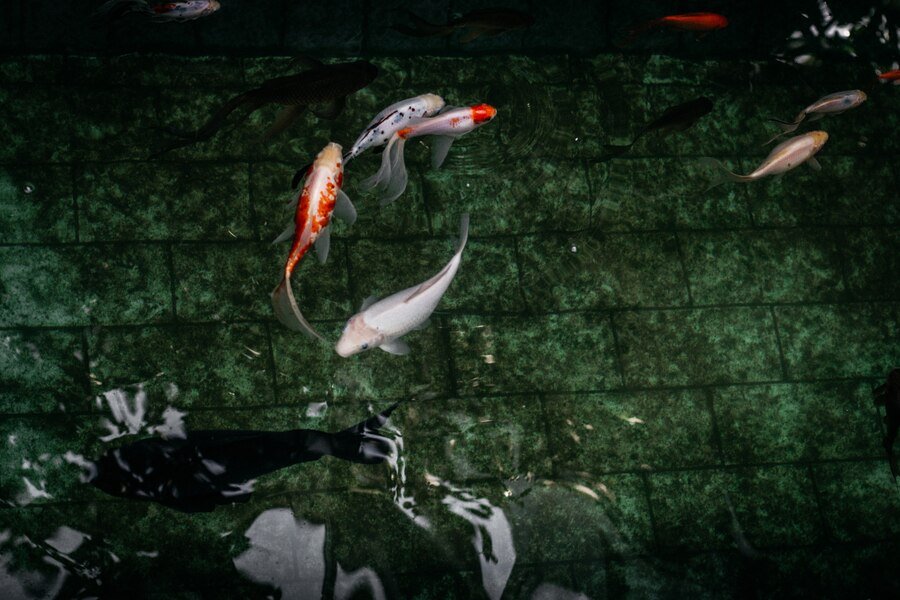
If you are going to create a koi pond for your Zen garden, your first task is to consider the location. You must consider aesthetics, of course, and since you also want to utilise Zen principles, it is important to find the best place in your garden to encourage energy flow. Again, we could write an entire course on Feng Shui and determining where to place a pond, so we will not get into all of the details here.
However, we can tell you that the south side of the garden is generally not good for a pond as, according to Feng Shui, it is ruled by fire, which does not bode well for water. The north side of the garden is ruled by water, but too much water can bring a sense of imbalance. Therefore, it might be best to choose the west or east side of the garden.
Also keep in mind that there might be other elements that can negatively affect this, too, so again, consider consulting with a Feng Shui expert or do some Feng Shui research on your own. It is not as difficult as it might sound to learn the basics of Feng Shui. In addition to choosing the location based on Feng Shui, you also must consider other surroundings for your pond.
For instance
If your pond is located under a Japanese maple or a cherry blossom tree, expect debris falling in. Additionally, the root growth of the tree could damage the structure of the pond. Next, you have to decide if you want to have a fully submerged pond, a semi-submerged pond, or a pond that is totally aboveground. A fully excavated pond is the most common found, but you might find advantages to other pond types.
You can easily dig a pond yourself, generally in a weekend, but you can also hire a landscape company to do the work for you. Most traditional ponds are built by using clay lining or purchasing a preformed plastic shell. For a koi pond, you also might consider a concrete pond. The thing to remember here is that it is imperative that a koi pond remains watertight.
Designing Your Pond
For a general garden pond, you can choose any design shape that you might like. However, if you are going to build a koi pond, the design must centre on the health of the fish. A bigger pond is going to be more stable in terms of temperature and water quality, but as long as the pond is at least 4,000 litres, you should be βine. Additionally, you should make the pond at least a metre, around three feet, deep. Keep in mind that the koi you purchase are often small, but since they live for at least a couple of decades if well cared for, they can grow quite large, over 75cm in some cases.
Ponds are relatively simple structures, but they must be quite strong. Even small koi ponds hold around four tonnes of water, so it is imperative that the ground is strong enough to hold that weight. Generally, at least six inches of reinforced concrete is laid before placing a plastic fibre reinforcement, but if your ground is strong enough, you might not need that. If you are utilising a liner in the pond, you must make sure that the lining has the ability to withstand its environment.
For example
If there is a sharp rock or root in the soil, it could rip the liner. So, in this case, most people place a layer of sand, old carpet, or even cardboard between the soil and the liner to protect the liner's integrity.
Activity 2
Estimated time: 10 to 15 minutes
Because of the range of ponds available on the market, it can take some time to go through your options and to determine what pond is right for you.
Take some time to visit a local garden centre to see what they have available. Consider talking to someone at the centre to see what advice they have based on your personal property and available space.
Try to narrow down your options to a couple of choices, and then determine if this is a job you can do yourself or if you must hire someone.
Equipment and Plumbing for Your Pond
Some ponds do not require filtration as the plants you choose, and the wildlife that move in, take care of the job for you. In the case of a koi pond, you must install plumbing, such as a filter. This equipment is designed to help maintain the best possible conditions for your fish, and if you have ever had a fish tank in your home, you know how this plumbing works. In this case it is no different; it is simply on a larger scale.
Koi fish produce a lot of waste which all has to be filtered out. Most people use a bottom drain filter at the bottom of the pond, as the waste naturally falls to the bottom. Essentially, the water is pulled out through the bottom, pushed through a filter, which removes the waste, and then it is biologically purified before being sent back into the pond.
Maintenance for the Pond
In addition to ensuring the pond is correctly βiltered, there are other things you must do to maintain a pond.
For instance
Algae growth might occur. Actually, the growth of algae is a good sign, but the green slime might be unsightly. So, you might want to consider adding some type of ultra-violet light source to control the algae. There is also other equipment available that sterilise the pond. This does not harm the fish, and it helps to keep the algae under control.
Koi fish are considered 'cold water' fish, so we do not generally require heated ponds, but you might consider it if you are located in the northern, colder parts of the UK. Part of the maintenance of having a pond in your Zen garden, at least one that contains fish, is that you have to check the levels of nitrates, ammonia, pH, and nitrides. This helps to ensure that the water quality is suitable for the βish. One of the best ways to keep things comfortable for the fish is to utilise water treatment equipment, such as βilters, and to change the water each week.
You do not have to change all of the water, but you should change approximately 10 percent of the water every week. Maintaining a pond varies depending on the season, which you can read more about below, but it is interesting to note that the maintenance and enjoyment of the pond is another example of balance in the Zen garden. Yes, you must put work into the maintenance of your pond, but the tranquillity and peace you get from the water and fish balance that out.
You might even find that other wildlife, such as frogs, will join your koi in their pond, and the koi themselves bring benefits such as insect control. When you add features to your pond such as waterfalls or fountains, you can create a magical place that promotes peace, meditation, and the Zen way of life.
Pond Maintenance in the Spring
Each season requires specific tasks in regard to the pond, regardless of if you have chosen to place a wildlife pond, a koi pond, or a different type of pond. In the spring, it is best to check the bottom of the pond for wear. Any type of leak in the liner can be devastating for the fish or wildlife that live in the pond, so it is always best to check.
You should also check the pump and filter of the pond in the spring, and then replace it if necessary. Additionally, look at the water level of the pond, and if it requires more water, βill it from the bottom. This helps to avoid the build-up of minerals and salt. Clean up the debris and leaves, and make sure to add friendly aquatic plants to the pond to increase oxygen. If you have fish in the pond, they might have slowed down their activity during the winter, and go into a sort of semi-hibernation state, though they do not technically hibernate. So, you might want to start feeding them a high-quality food with a lot of carbohydrates in order to help them to get more energy.
The spring is ideal for planting Zen garden plants such as lotus or water lilies, but make sure the danger of frost has passed before planting. As an added bonus, these plants help to control algae. Finally, if you have any potted plants around your garden, the spring is the perfect time to fertilise.
Pond Maintenance in the Summer
Summer pond maintenance is typically easy, and your big concern is to focus on the water level. As the temperature rises in the summer, it might cause evaporation. This lower depth can cause an imbalance of essential nutrients and cause the build-up of minerals. You also must check the chemistry of the water each week, as you do not want levels of chemicals, such as chlorine or ammonia, to build up too high. These chemicals can kill fish.
You should also look at the plants around the pond, too, as you must remove dead flowers and leaves, as well as trim any plants that are overgrown. This helps to keep the pond clean and the fish and wildlife healthy. Each week, you should also check the pump and filter for clogs, and if it looks dirty, make sure to clean it. Additionally, you should check the oxygen level, and if it is consistently low, you might consider adding a fountain, bubbler, or even a waterfall.
You also want to check the fish in your pond for any unusual behaviour or sores that might appear. This could indicate a problem in the pond's environment.
Pond Maintenance in the Autumn
When the autumn comes around, it is important to skim the surface of the pond for falling leaves. If you have a number of trees, you might consider adding netting over the surface of the pond, which helps to catch falling leaves and branches. Begin monitoring the temperature of your pond, too. As the days cool down, your fish start to become less active. You should reduce feeding your βish as the water temperature falls, and stop completely when the water temperature hits 10 degrees C.
The fish do not eat in the winter, and if they have undigested food in their bodies, it could kill them. Remove any plants that are not hardy throughout the winter, and if you have fish that are not hardy, move them indoors, too. Koi fish can remain outdoors in the UK all year, as long as there is a hole in the ice should the pond ever freeze.
Your fish also do not require a filter or pump in the winter, so you can disconnect all of the pumps and filters you have. Finally, drain all hoses and fountains, as you don't want those to freeze if it gets cold.
Pond Maintenance in the Winter
In the winter, the only thing you really have to worry about in regard to your pond is that there is proper air βlow. Again, your fish slow down their activity in the winter, so do not worry about them. As long as there is oxygen in the water, they should be fine until spring. If your garden freezes over, you must make a hole in the surface. Do not break the ice, as you could harm your fish. Instead, pour boiling water over the ice to create a hole. You might have to do this every few days to keep the air βlow optimal.
Activity 3
Estimated time: 10 - 15 minutes
The internet is a wonderful source for those who are looking to learn more about keeping koi.
Look for an active online forum or chat room for those in the UK who are passionate about ponds and keeping koi.
Place a post on a forum of your choice indicating that you are new to raising koi and that you are seeking advice. Do not forget to check back in a couple of days to see if you have any responses.
MODULE SUMMARY
This entire module was focused on water features in a Zen garden. We started the module by looking at the symbolism of water in both Japanese and Buddhist cultures, and we introduced some of the main water features in Zen gardens: fountains, waterfalls, and ponds. Though we touched briefly on waterfalls and fountains, much of this module was dedicated to ponds, which are extremely popular in Japanese style gardens such as these.
In addition to introducing information about the koi βish, we also discussed their symbolism and their great importance to both Japan and to gardeners throughout the world. We closed out the module by introducing maintenance information for your pond, including what to do each season throughout the year.
In our next, and final, module, we show you exactly what you can do with your Zen garden, including different raking techniques and of course, more symbolism. We also present important maintenance information that is important for anyone planning on building a Zen garden.
.svg)



