
2.1 Module Introduction

This module focuses on the many elements of a Zen garden. As you work through this module, think back on what you learned in the previous module. This is important as Zen gardens are very spiritual and symbolic areas. Remember, a Zen garden is a physical representation of Buddhist principles, and they are much more than something that is beautiful to look at. As you might remember from the previous module, some Zen gardens are described as 'traditional,' while others incorporate new elements that are Zen, yet modern. In this module, we discuss all of these elements, and describe the difference between those traditional and modern elements. By the time you Finish this module, the full understanding of all elements of a Zen garden is yours, so be prepared to insert your chosen elements into your own Zen garden.
2.2 Utilising the Zen Principles in Your Garden
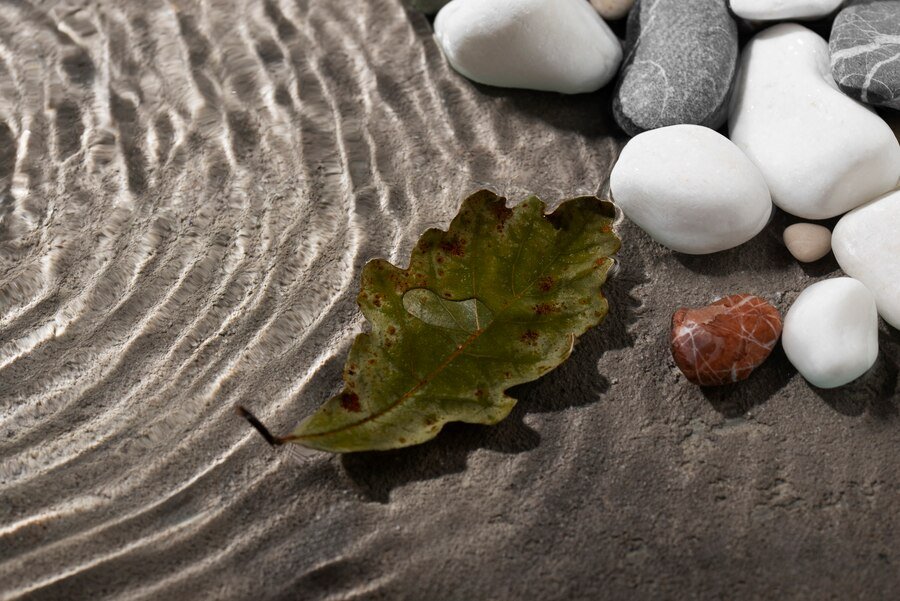
Most of the First module was focused on Buddhism and Zen, so you are familiar with many of the principles and how they are used in a Zen garden. We are going to add one more here: yin and yang. Though the yin and yang symbol is not necessarily Buddhist or Zen, it is certainly possible to incorporate the elements of the yin and yang into a Zen garden.
The yin and yang concept comes from the Chinese Taoist philosophy, and is not only popular with other philosophies, such as Zen and Buddhism, but also other eastern philosophies. Sometimes, these even extend to western philosophy and religion, too, including Judaism and Christianity.
It is important to remember that the yin and the yang are opposites:
Yin is feminine and dark while
Yang is masculine and light.
They are opposites like night and day or the two sides of a coin, but they also are both necessary in order to make up the whole. As you begin to learn more about Zen gardens and how they are designed and created, you can surely see how opposites are incorporated. Examples of yin and yang concepts in a Zen garden A cherry tree standing next to a stone wall - The cherry tree changes several times throughout the year thanks to the seasons, which shows that life is transient. The stone wall, however, is a permanent structure, the opposite of something transient. A stone lantern set permanently in the ground while a small stream, or the gravel raked into the shape of a stream, running beside it - This, too, shows motion, which is the opposite of the permanence of the stone lantern.
Pairing opposite concepts throughout a Zen garden is one of the main design principles used with these gardens, and there are thousands of different ways that you can reβlect the yin and yang if you wish to incorporate it. However, just keep in mind that simplicity and space are also important elements in Zen gardens, so make sure that you do not put too many elements. This could make the garden look too busy or overcrowded. It is fairly easy to install opposites into a garden, and one of the ways that people do this is with horizontal and vertical features.
For instance
Vertical features include trellises, trees, birdbaths, arbours, or even gazebos in the traditional Japanese Pagoda style. Pair them with horizontal features such as Flowerbeds, flat river stones, a sea of raked gravel, or even grass, should you want to add plants. Pairing these features allows viewers to look upon and interpret your garden in their minds. Remember, these gardens should also promote meditation, and opposites help to do this, too. You can also incorporate the principles of yin and yang, or opposites, by using colour and shade.
For instance
You might have a shady patch of trees that cover a sunny area of the garden. Or, you might consider adding some brightly coloured flowers next to dark coloured plants like ferns. You also might consider installing features that move beyond what you believe you see. Remember in a Zen garden, a small trickle of water is not just water; it symbolises movement and energy. A white βlower is not simply a white βlower like it might be in a Western garden. Instead, it symbolises beauty and innocence. As you begin learning more about Zen gardens, you start seeing all elements of nature beyond what they really are. Instead, you look upon these elements with a spiritual eye.
Fact
The first permanent Zen garden in Britain is located behind Glasgow's St Mungo Museum of Religious Life and Art. It is adjacent to the cathedral and was built in 1993.
Source:Rattandirect.co.uk
2.3 Engage the Senses in Your Zen Garden

Before we get into the different elements of a Zen garden, you must understand that a Zen garden is meant to awaken and engage each of the five senses. So, generally, you find a number of sensory elements in these gardens.
For example
To engage the sense of hearing, a small wind chime might be added to a Zen garden or perhaps a small fountain or trickling stream. To engage the sense of smell, βlowers that give off a pleasing aroma are often placed in Zen gardens, such as jasmine, lavender, cherry trees, or gardenias. Keep this in mind when you choose elements for your Zen garden.
Activity 1
Estimated time 10 - 15 minutes Think about each of the five senses: hearing, smelling, taste, touch, and sight. How can you incorporate all of these in your Zen garden? Take some time to do some internet research to see how you can do this. Make a list of ideas you like, and keep this list close. Future parts of this course refer back to it as we help you create your Zen garden.
2.4 Rocks/Stones in a Zen Garden

As you know, rocks, or stones, are an important aspect of Zen gardens, and each rock is symbolic. There is never a random rock in a Zen garden. Instead, every rock is placed with a purpose. Each of the rocks placed in a Zen garden, depending on their position, has a different name, and it is represented as one of the βive natural elements.
Kikyaku
Reclining rocks that you see in a Zen garden are called kikyaku, and they represent earth. These stones are also known as 'root stones,' and they are often placed in the foreground of the garden based on the optimal viewpoint. These stones are also said to bring harmony to the garden.
Shigyo
Stones that arch or branch out are called shigyo, and they represent fire. If you picture a βire, you can easily see why shigyo stones represent fire, as their branching shape is reminiscent of flames.
Shintai
Flat, horizontal stones in a Zen garden are called shintai stones, and they represent water. Like the kikyaku stones, the shintai stones are said to bring harmony to the garden, and they also are representative of the body and mind.
Taido
Tall and vertical stones are taido stones, and these represent wood. They also might represent a body. Most taido stones are placed among other stones, such as groupings, to create a symbolic forest.
Reisho
Stones that are low to the ground, yet vertical, are called reisho stones and they represent metal. Much like metal, these stones are steady and firm, and when placed in a Zen garden they are usually placed near taido stones. Reisho stones are often believed to represent the soul.
2.5 Small Pebbles and Gravel in a Zen Garden

As you have come to know at this point in the course, gravel and small pebbles are also used in many Zen gardens in addition to the large stones or boulders. Most Zen gardens feature flat areas of pebbles, gravel, or sand, and upon these features, you might find things like the large boulders, a fountain, stream, bridge, plants, or lights. Even though some of those items would never be found in a 'traditional' Zen garden, gravel and/or sand always are with very few exceptions.
Those who have no knowledge of Zen gardens might look upon the pebbles and gravel and see it as unusual, but beautiful. However, as you probably realise, there is much more meaning behind it. Most often, gravel and pebbles represent bodies of water, and are raked in a way as to create intricate and interesting patterns. These patterns might represent the waves of the ocean, ripples in a pond, or other water features.
The Types of Gravel
There are many types of gravel out on the market, and you can use any of them to create your Zen garden. Most people who create these gardens use crushed, fine gravel, as remember, you want to rake it. Some people choose small, smooth pebbles, which are easy to walk upon but might not hold their raking shape as well. Other people use crushed, jagged gravel, which holds shape better when raking but does not feel great on the feet if you want to walk on it with bare feet or with socks. When looking for gravel for your Zen garden, you might be surprised by your options. You have gravel made of different materials, such as granite, quartz, and limestone, as well as gravel of varying
sizes. Most gravel comes in sizes from 3mm to 10mm, but most Zen gardeners prefer gravel that is from 8mm to 10mm. However, it's all about personal preference. Gravel also comes in various colours, different finishes, and some Zen gardens might not contain gravel at all, though this is not traditional.
Activity 2
Estimated time: 10 - 15 minutes Think about what you want your Zen garden to portray. Are you looking to create a scene of winter snow with mountains? Perhaps you want to create a relaxing scene with a river moving through it. Whatever you wish to do, the gravel you choose should reflect that. For instance: Use white gravel to portray snow, or use other coloured stones, such as blue, green, or brown, for a river. Also, consider polished pebbles if you want to create a sparkling scene or one that catches the light in the morning or the evening. When you think about that, take some time to explore websites that sell gravel, or travel to a local garden centre.
2.6 Getting Creative With Rocks in a Zen Garden

In a traditional Zen garden, the landscape is dry with only rocks, gravel, and sand used to represent water. However, modern Zen gardens often do feature water within them. We learn more about that later in the course. If you are taking a traditional route with your Zen garden, you do not put in a water feature. Instead, you use sand, gravel, and rocks to create the fluidity and movement that water has.
For example
You can use round pebbles to arrange a path that looks like a dry stream. Place white granite chips across this spring bed to imitate the movement of water and foam. You can also get creative and design your dry Zen garden with sand within a containing wall. A short wooden rock or wooden wall in the shape of a stream, perhaps half a metre to a metre tall, works well to add water to your Zen garden. Fill this space with white sand or gravel. Use a rake with thick spikes to create designs and patterns, which represent the flow of the water. You can place larger rocks or stones to create islands in the stream, and best of all, you can rake the sand or gravel as often as you like. This changes the entire vibe of your garden. Another creative way to utilise rocks in a Zen garden is to reflect life, not only nature. You might have noticed when we were talking about the large boulders, one of them, taido stones, could be used to represent the body.
2.7 Water in a Zen Garden

We have already said several times that a traditional Zen garden is dry, meaning that they do not feature any streams, ponds, waterfalls, or any other type of water. However, just because no water is traditional, that does not mean that people do not put water features in their Zen gardens. Water is usually represented, of course, but whether it is actually water or symbolic water is up to you.
In Japanese garden design, the water element is referred to as mizu. Water is seen as purifying and cleansing in Japanese culture, and many who build Zen gardens place water in their design. Think about how peaceful it is to walk next to a still pond or bubbling brook? This is why water is often used in these gardens. There is also a belief that water helps to make the practice of meditation easier. If you choose to add water to your Zen garden, you have several choices including ponds, fountains, and waterfalls. Flowing water is relaxing and calming, which is important in a Zen garden, as remember, you want to use this place for meditation. You might already have some type of water feature in the area where you want to build your Zen garden, or you can choose to add a water feature. Either way, water has a lot of symbolic meaning in both
Japanese and Zen culture, so you will not go wrong if you have water there. We discuss digging a pond or installing a waterfall in a future module.
2.8 Plants and Trees in a Zen Garden
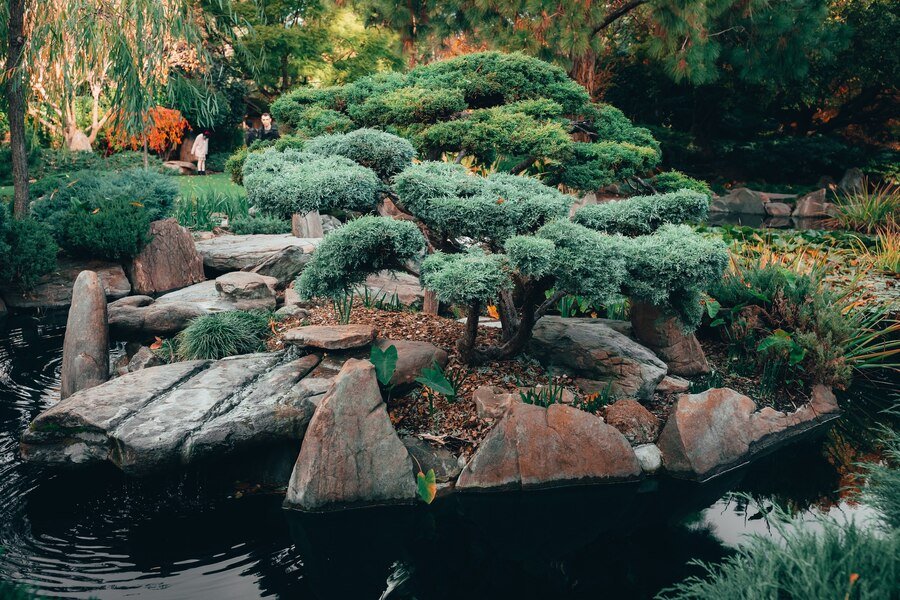
A traditional Zen garden is also without plants and trees, short of naturally growing moss, but if you look at some of the greatest Zen gardens in the world, you can certainly see greenery in their gardens. Most plants chosen for Zen gardens are Japanese, or at least Asian, so
there are several choices you have at your disposal. Again, as with anything in a Zen garden, the chosen plants, shrubs, or trees you choose are all symbolic, so keep that in mind as you work on your design.
Popular plants for a Zen garden include bamboo, bonsai, and of course, naturally growing moss. The plants in a Zen garden are called shokobutsu. Frequently, cherry trees, which burst into gorgeous pink flower in the spring, are seen as an essential element in a Japanese garden, but you also, of course, find bamboo, and even evergreens. You might remember that we said enjoying a Zen garden should affect all of the senses, and in this case, the sound of the wind blowing through the bamboo is what you are looking for.
Activity 3
Estimated time: 10 to 15 minutes Though we have some suggestions for you in the next module, take some time right now to research plants that might have a place in a Zen garden. Not only should you look at the types of plants available, you should also look at their symbolic meaning in Zen gardens. Bamboo, for instance, is extremely symbolic in Japanese culture, and there are different meanings and interpretations of the plants. What do you want to say or get out of your Japanese Zen garden?
2.9 Statues and Decorations in a Zen Garden
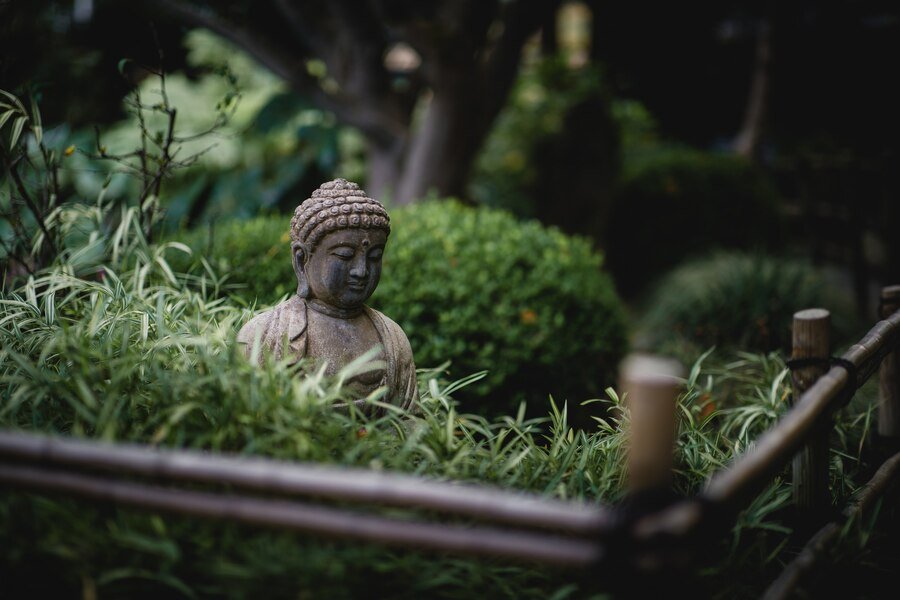
You have likely seen many Zen gardens with statues and decorations throughout. These might include lanterns, statues of Buddha, or even crystals or other spiritual elements. These items are called tenkeibutsu, or simply as ornamentation. Lanterns and statues of Buddha are common tenkeibutsu, and of course, are symbolic.
For example
Lanterns symbolise enlightenment. Other types of tenkeibutsu include basins, gates, or even frogs, which Japanese culture sees as goodluck. It is also believed that the croaking of the frog brings rain. Remember, if you are taking a strong traditional route with your Zen garden, keep the tenkeibutsu to a minimum. If not, feel free to add where you see fit. Bridges are also common in Zen gardens, and as with everything else, there is symbolic meaning to it all. In this case, bridges are referred to as Hashi, and symbolise a person's journey between multiple planes of their existence; the inner and the outer. When a person walks across the bridge, it is also a symbolic unity with nature.
Fact
Traditional bridges in Zen gardens are either made of stone or wood, and vary in complexity. Some are only a few steps across, whilst the longest are more than 10 metres.
Source: Japan-guide.com
2.10 Setting up a Budget for Your Zen Garden
.jpg)
Before closing out this module and moving on to our next one, we want to quickly discuss the budget of a Zen garden. A traditional Zen garden is likely less expensive than a non-traditional, or modern Zen garden, but it really comes down to the size of your garden and what you want to include.
For instance
Obviously symbolic water, in the form of raked gravel is less expensive than installing a fountain or pond. Size certainly affects the cost of your Zen garden, but most of them are fairly small areas, so most people can choose a size that works well with the budget they have. The type of elements you choose for your Zen garden also affects the cost, but we have some tips, below, which can help to lower those, if necessary. Also, do not forget that 'less is more' in a Zen garden, so don't feel as if you have to fill every metre of space. Instead, large, open areas are ideal.
Rocks
As you know at this point, rocks are an essential element to a Zen garden, so they must be part of your budget. The cost of rocks for a Zen garden range anywhere from free...yes, free...to hundreds of pounds. You might consider digging up large rocks from βields, or if you live in a rural area with large tracts of land, talk to neighbours about any large rocks they might want to rid themselves of. Farmers, or those with large gardens, might be willing to let you take rocks from their property, or might sell them to you for a low price.
Keep in mind that you should not take large rocks from private or public property without permission. Another option for rocks is to purchase them from local landscapers or garden centres. These rocks are more expensive, of course, but many times the delivery and installation of these large rocks are included in the price. Alternatively, you can even buy large boulders and rocks online.
Sand and Gravel
Much of the cost of a Zen garden comes from the sand and/or gravel you choose to purchase. Most gardens are fully covered with sand or gravel, so the size of your garden has a direct impact on the cost of the materials. White sand, fortunately, is not that expensive.
For example
Play sand might only be a couple of pounds per bag, whilst bulk sand, such as what you might find at a garden centre, is usually more expensive. Traditional white sand is more expensive, too. Gravel, too, ranges in price, and you might find 20kg bags of it for as little as £15, or you might buy in bulk and pay several hundreds of pounds. Different gravel types range in price, so it is always a good idea to take that into consideration before you make a decision on what type of gravel you want. Remember, you can always expand your Japanese Zen garden later if you want to start small, now.
Plants
Plants also come into play when creating a budget for a Zen garden. The main plant in a Zen garden is moss, which is available at most landscape or garden centres for only a few pounds. Of course, you can also find moss in local forests or even in your own neighbourhood. Remember, do not take moss blindly. Always ask for permission to take moss. Once you do, you can transplant it directly into your own garden. Other plants, such as larger trees including bamboo and cherry trees, are going to be more expensive. A small Japanese βlowering cherry tree might range in price from £20 to £50, whilst a larger one might be over £100. Bamboo plants, which are considered to be evergreens, usually start at about £40, and go up to £60 or more. Shop around and compare prices if your budget is important. Both of these plants are common in the UK, so you should have no issue finding them.
Paths
Most Zen gardens have a path to walk along, as walking on the raked gravel messes it up. So, you have to add the cost of a path, or at least paving stones, into the budget, too. Again, you might find suitable paving stones out in nature, but you can also buy them from garden centres for relatively low prices. Raised wooden paths are also common in Japanese Zen gardens, and if you are a DIY-er, you can even build this yourself. Look up designs for garden paths, and take it from there.
Ornamental Elements
Ornamental elements are also something to consider when creating a budget for a Zen garden. The statues, lanterns, bridges, and anything else you might want to add come at a price. Again, less is more in a Zen garden, so do not necessarily believe that you have to buy several ornamental objects for your garden at the start. Instead, buy two or three things, and if you want more later, buy them then.
Equipment
Finally, you must consider the cost of equipment for your Zen garden. At the very least, you must buy a rake, or a couple of rakes of varying sizes. There are both hand rakes and traditional rakes on the market, and even tie-on rakes, which attach to a standard rake you might already own. These rakes might range from as little as £5 to as much as £60 or more. If you have plants in your Zen garden, you might also have to consider the cost of fertiliser, watering, and other items you need to care for those plants. Are you going to have a pond with koi? In that case, you must purchase the fish and make sure they are well fed.
Saving Money When Building a Zen Garden
Finally, before closing this module out, we have some ideas for saving money when creating a Zen garden. At this point, you know that there are speciβic elements that should be included in a Zen garden, but remember, any of these elements can be displayed symbolically, too.
For instance
If you do not want to spend the money to put in a water feature, rake your gravel to look like water. Also, keep in mind that a Zen garden is not a traditional garden that you might create over one weekend. Instead, these gardens are meant to develop, evolve and change. Many people, in fact, change their Zen gardens a couple of times a week. You might not want to move the large boulders that much, of course, but changing the raking patterns or even moving plants is a good way to promote meditation and to save money along the way. Why? Well, because you can hold off on adding certain features until you find a good deal. Start with gravel and a few rocks and build it up
from there. Zen is not about rushing to complete something. Instead, it's about having patience and allowing the right things to come to you. Also, make good choices. A Zen garden is a perfect home feature for those with a small budget.
For instance
You do not have to spend a small fortune importing bonsai trees from Japan when there are perfectly good bonsai trees in the UK. Remember, putting a lot of flashy, expensive objects that you just want to show off negates the purpose of a Zen garden. Also, as you shop, remember that the number three is important in Zen Buddhism, so many Zen gardens keep to that number of items. So, you might have three large rocks, not 10, or three statues, not seven. This, of course, also saves money.
MODULE SUMMARY
In this module, you learned all about the different elements of a Japanese Zen garden. We introduced the concept of yin and yang in Zen, and how you can use the ideals of yin and yang in your garden. We then focused on engaging your senses when creating a Zen garden, and then moved into the details of the elements including rocks, gravel, water, plants/trees, and statues and ornamentation. We closed the module by talking discussing the budget of your Zen garden, and even how to save money. The third module focuses on creating your Zen garden, and what steps you have to take to create a traditional Zen garden on your property.
.svg)



