
3.1 Module Introduction

At this point in the course, you should have some idea of what you want to include in your Zen garden. You might want to create a very traditional dry Zen garden, or you might want to create a garden with water features and/or plants. Either way, this module shows how to create a Zen garden on your property.
Topics covered include creating a plan for the garden and using the concept of Feng Shui to place different elements. We also discuss how to lay the foundation for your garden and which plants are commonly found in Zen gardens. Finally, we introduce the symbolism and meaning behind lanterns and statues often found in Zen gardens.
3.2 Choosing a Site for a Zen Garden

Your First task when creating a Zen garden is to choose the site for the garden. If you have been paying attention over the past couple of modules, you know that Japanese Zen gardens do not have to be large and imposing. In fact, many Zen gardens are quite small. Remember, traditional Zen gardens often use the existing landscape, such as large, natural boulders, but most of us do not have these rocks on our properties.
The best sites for Zen gardens are those that are quiet and away from roadways and other distractions. The space should also be away from play areas for children and from pet areas. You also might want to choose a space that you feel comfortable in, such as under a large, beautiful tree. Most people who create Zen gardens create them in a rectangle or square shape, but if you have another area that you like, there is no reason you could not use it. Once you have chosen a site, you are ready to move to the next step, which is planning your Zen garden. Before this, however, we want to give you a brief overview of Feng Shui.
3.3 An Introduction to Feng Shui
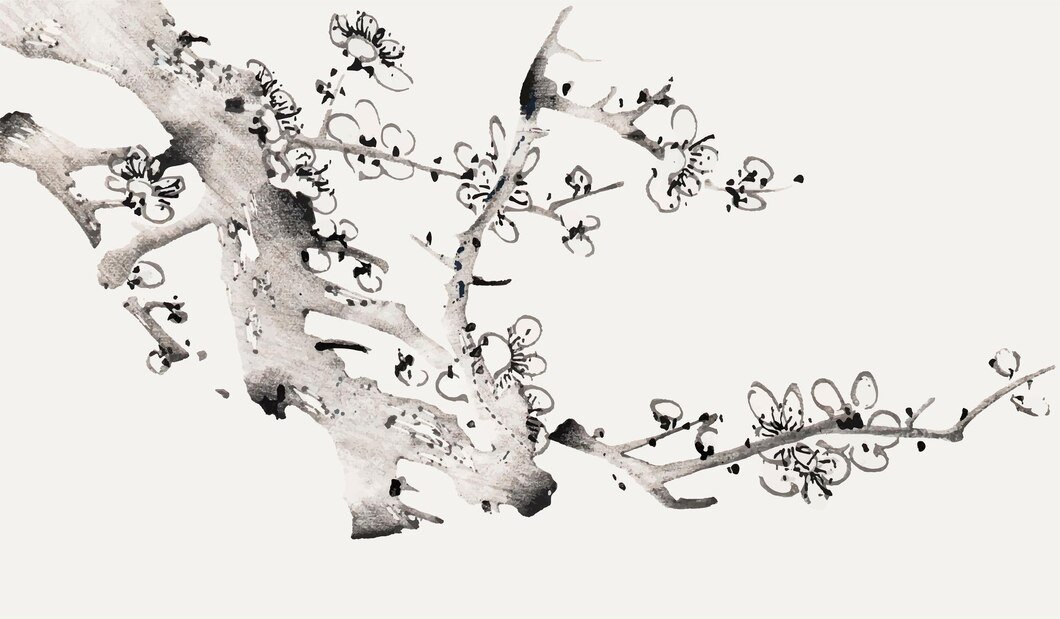
You might believe that you know everything about Zen gardens by now, but there is still one more concept we need to introduce. This is the concept of Feng Shui. Feng Shui is a Chinese art that teaches how to live in harmony with an environment; it is the art of placing things in a certain place in a certain area with the intention of Finding the optimal βlow of energy.
People across the globe utilise the concepts of Feng Shui in their homes and gardens, and when dealing with a Zen garden, this is an excellent practice to incorporate. According to practitioners of Feng Shui, when there is a good flow of energy in a garden, especially one where you spend time in meditation, it has a positive impact on the chi, which is the life force that surrounds your home.
Believers of Feng Shui believe that if there is a good βlow of energy, the person surrounded by that energy prospers. If you were building a house, you would start with a plan, and this is exactly what you should do with a Zen garden. In Feng Shui, there is a focus on being harmonious with nature, and as you likely remember, Zen is the same. Another aspect of Feng Shui is balance, which is also found in Zen gardens, though we have referred to this as the yin and yang. In addition, Feng Shui also uses the five elements, which, once again, is also part of Zen gardening.
With Feng Shui, it is believed that the elements, earth, water, βire, wood, and metal, each correspond to a specific part of the garden. When you place items that are the same shape and/or colour as the element, it has a major impact on the well-being of those in the home. So, placing wooden items, or those that symbolise wood, is an excellent choice for your Zen garden. We could write an entire course on Feng Shui, so we will not get into the details of the practice here. There are plenty of internet sites that have information on Feng Shui that you can utilise, too. Additionally, you can hire a Feng Shui expert who can help with your Zen garden design in order to optimise the energy that is βlowing through.
Tips to get you started when planning your garden
Do not put a tree in front of your entry door nor in front of the windows. According to Feng Shui, this could lead to liver, heart, or mouth problems. Since the windows are the home's eyes, if you place a tree in front of them, it could cause a person to have difficulties seeing their future, clearly. When adding βlowing water into your Zen garden, ensure that the water flows towards the entry door. Remember, you can always symbolically do this with gravel and a rake. The same rule applies to fountains. Add evergreens to your Zen garden; in Feng Shui, this is said to keep the flow of energy going even when it is very cold in the winter.
Do not make paths in a straight line. This is an important point of both Feng Shui and Zen. Instead, if you put a path in your garden, make sure it has curves. Try to put several layers when building your Zen garden to incorporate Feng Shui. Do not place any rubbish bins near your Zen garden. This brings negative energy into the area.
Fact
Feng Shui is so popular among people in China, Japan, and other Asian countries that several Las Vegas casinos consult with Feng Shui masters when building or improving their businesses.
Source: uk.reuters.com
Drawing Your Plans
Now that you have an idea about what Feng Shui can do in your Zen garden, it is time to sketch out a plan. You can use a simple sheet of grid paper to do this, or you can purchase or download computer programs that allow you to do this. There are free programs online, including from the RHS, Royal Horticultural Society, that make this an easy task. There are even apps available for your mobile phone or tablet, which means you can take your plan with you out into the garden as you build. We are not going to get into creating a plan, as each type of software is different. But, it is important to not skip this step.
Activity 1
Estimated time: 10 - 15 Minutes A plan for your Zen garden is essential to success. Fortunately, this is an easy task that you can do on the internet for free. If you want more detailed plans, you can buy software that offers these features. Start looking online for software that you want to use. Explore your options and try using these programs to see which one you like the best. Once you decide, start creating your plan, as you need it for the next step.
3.4 Buy Your Supplies

With your plans done, take a look at what you need to buy. This is different for everyone, but for a Zen garden, at a minimum, you need gravel/sand, large rocks, and a rake, in addition to other ornamentation.
Determining How Much Gravel You Need
Before you can buy your gravel or sand, you must know how much you need to fill your garden. So, you must measure the area that you intend to fill and then figure out the area. To do this, First, you should determine how deep to put the gravel in your Zen garden. A good rule of thumb is from 10 to 12cm. You can vary this, of course, but it should be deep enough that you can rake. You also have to measure the width of the area you want to βill in metres, as well as the length. Once you have these numbers, use a formula for area based on the shape of your garden. Many gravel suppliers have these on their websites.
For example
A small Zen garden might be 3 metres by 5 metres, and have a depth of gravel of 12cm. This means you would require a bit over three tonnes of gravel.
Laying the Gravel
Before you lay the gravel, you must clear the area. Mark off the border of your Zen garden, and then you must remove the turf. There are various tools you use for this, including mechanical tools that you can hire. For a small Zen garden, you can lift the turf with a simple spade, and use that spade to life the turf. You should dig down approximately 10 - 12cm, as this will get filled with gravel. Keep in mind, however, that the gravel settles over time, so you might have to fill more than you think.
Remove all of the soil from the area, and then tamp down the soil. You want to do this as it helps to keep the gravel looking even and gives a firmer surface for the gravel to sit on. You can hire a tamper, or purchase one from a local garden centre. The surface should be totally flat, so make sure to use a level at various locations in the area you are working with. At this point, you should have a Zen garden shaped shallow hole. Before moving on, you have to lay an edge around this area. If you do not do this, the gravel tends to travel outside of the garden, and could get caught up in mowers.
There are many different types of lawn edging on the market, so you have your choice of what fits in with your Zen garden. If you are going to put a border down, which many do when creating a Zen garden, your choice of edging might not be that important, as you likely will not see it. Now, just because you have gravel spread out throughout your Zen garden, this does not mean that weeds will not grow. So, it is important that you place a membrane down. You can purchase membranes at a local garden centre, order online, or use cardboard or newspaper. Before moving forward, you should refer to the plan that you should have created. Where do you plan to put plants? Have you purchased your plants? If so, it is at this point that you should place them in their designated spot.
Keep the plant in its pot, and then go through and cut out a cross shape in the membrane where the plant is placed. It is a good idea to create small islands where you intend to place these plants, too. This allows you to easily plant through the membrane. Remove enough soil to accommodate your plant. Be careful to not allow soil to fall onto the membrane, as weed seeds are often contained in soil. Once the plant is planted, push the membrane around it to form a seal around it. At this point, you should place any other elements that must be set under the gravel. Pour the gravel in the centre of the area, and then use a rake to spread it out. Try to get the gravel as even as possible, as you will use it as your canvas very soon. Once the gravel is spread out and as smooth as possible, it is time to place your large rocks or boulders. Simply lay the large rocks in your desired location.
3.5 Common Plants Found in Zen Gardens
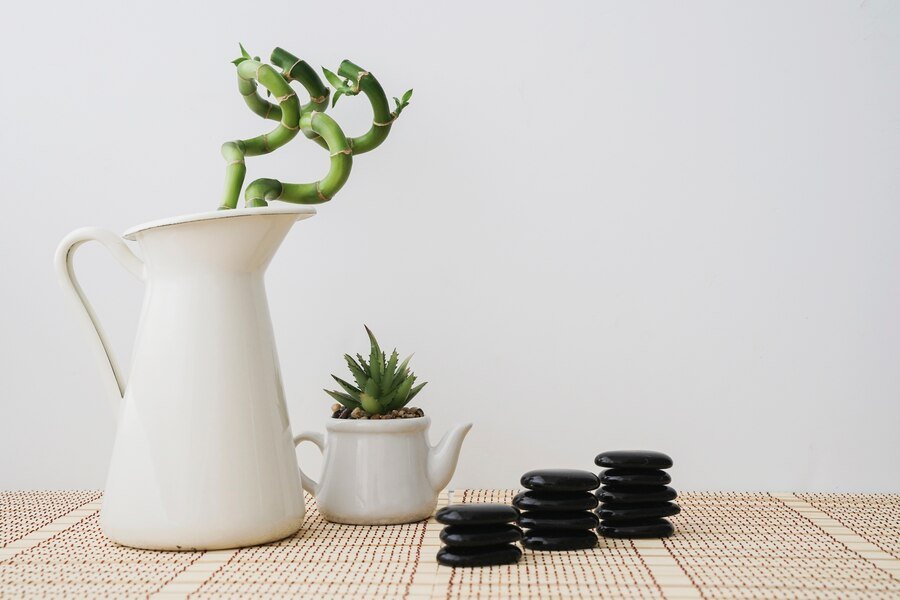
You now know the basics of creating a Zen garden, and how to lay the gravel, so we want to get a bit more detailed about plants. Not all Zen gardens have plants, but many do, so we are adding this information to the course. Remember, simplicity is the key when creating a Zen garden, but you can accent that simplicity with plants. Most of the plants that you find in Zen gardens are Japanese, or at least Asian, in origin, but luckily, they tend to work well in our climate, too.
There are common trees and shrubs, as well as ornamental grasses, in addition to perennials and annuals. Also, as with any aspect of a Japanese garden, every plant has symbolism associated with it, so keep that in mind as you choose your plants.A true garden with Japanese origins attempt to copy the natural world. As you have likely noticed, many of the elements of a Zen garden reflect real-world landscapes such as the ocean, islands, or mountains. Some plants do, too.
As mentioned, most plants chosen for a Zen garden are not necessarily chosen for their looks or their pleasing scents. Instead, the plants are chosen for their symbolism.
For instance
Evergreens, which are common in Zen gardens, are symbolic of stability and longevity. Additionally, these plants bring a splash of colour during the winter months.
Trees
In a small Zen garden, it is best to choose evergreens that are smaller in stature. These include the dwarf mugo pine, Black Dragon Japanese cedar, and the Baby Blue sawara cypress. Other trees are quite at home in a Japanese garden, too, including the classic Japanese maple, which goes through dramatic changes throughout the year as the seasons come and go. There are many types of Japanese maples out there, including the Aoyagi Japanese maple, which has unusually coloured foliage. Another option is the Black Japanese maple, which features dark red leaves that turn a shade of purple as the season turns to autumn. Finally, consider the coral bark Japanese maple, which has a brilliant red bark, which stands out when it snows and other plants are dormant.
Flowering trees are also very popular in Japan, and one of the first to bloom in the spring is the flowering plum. Because of this, these trees are symbolic of vigour and patience. The flowering almond tree is also a popular choice, thanks to its gorgeous pink petals. Likely the most popular βlowering tree found in Zen gardens is the cherry blossom tree. The significance of these trees date back hundreds of years. These trees represent both the beauty and the fragility of life. Many view these trees as representing the overwhelming beautiful lives that we live, but also remind us that life is much shorter than most of us would like.
Bamboo
Bamboo is another extremely popular plant choice for Zen gardens, and some types of bamboo are considered evergreens. Like other evergreens, bamboo often symbolises longevity, but in this case, also happiness. There are two main types of bamboo: clumping and running. Clumping bamboo species generally stay where they are, but running bamboo spreads very quickly. In fact, it is possible that it could overtake a garden before you know it. Because of the many types of bamboo on the market, it is important to do your research before choosing one. Many are colourful with beautiful foliage, and some are hardy in colder temperatures.
Flowers
Colour is important in Japanese culture, so you often see flowers and shrubs in Zen gardens. However, as you might have come to expect, there is a lesson here: life is fleeting, just like the colours of flowers. Contemplating the brevity of life is another common topic of Japanese culture, and remember, Zen gardens are meant to be a place of reβlection and meditation. What better way to promote this than with fleeting flowers?
Common flowers include the Japanese water iris, chrysanthemum, and peony. Flowering shrubs are also popular in Japanese-style gardens, including camellia, hydrangea, and azalea. You often find wisterias in Japanese gardens, too, and since they are so beautiful, it is difficult to say no to this stunning plant.
Mosses
Even in the most traditional Japanese dry Zen gardens, which are devoid of most plant life, you still find moss. Moss is important to Japanese culture, and it is a signature part of any Japanese garden, including Zen gardens. When given the right conditions, moss spreads quickly, and it is not uncommon to see on stones, rocks, lanterns, and trees.
Fact
There are more than 12,000 different moss species in the world, and out of those, 2,500 species grow in Japan.
Source: uk.businessinsider.com
The climate of Japan is perfect for growing moss, as it is a bit wet and humid, and the soil is generally naturally acidic. Moss has the amazing ability to grow on almost any surface, as long as it gets a steady supply of water and enough nutrients. However, it is interesting to note that too many nutrients can damage moss, so if you place moss in your garden, do not fertilise, as it can hurt the moss. Instead, allow it to grow naturally. Moss is also considered a natural air purifier, as it absorbs a number of pollutants such as ammonia and nitrates.
The Japanese refer to moss as koke, and some people even have gardens filled to the brim with moss. As you know, moss is a naturally occurring plant in the UK, too, but you likely have not tried to grow it. Moss is a very different plant than you are likely used to.
For instance
It does not grow in soil; it grows on top of soil. Additionally, the life cycle of moss is unique, so it is not easy to transplant or cultivate like other plants. With all of that being said, moss is not a weak plant, and it often thrives in harsh conditions including drought and little sunlight. However, there are thousands of species of moss, so you have to look for moss that grows in the same conditions as your home's environment. Does your chosen Zen garden location get little sun? Then you might have to choose a moss type that does not require a lot of light. Does your Zen garden location have alkaline soil? If so, you might have to choose a moss that can tolerate that.
The most important thing to understand about moss in a Zen garden is that you certainly want to encourage its growth, but you do not do this by focusing on the moss itself. Instead, you must eliminate the mosses competition. Moss does not do well when other plants are taking its resources, so it is often a daily endeavour to keep weeds at bay and to sweep up debris, such as leaves, that fall upon the moss. Also, keep in mind that moss is a high maintenance choice for gardens, but in a Zen garden, that's part of the point. The more time you spend in your Zen garden, the more you get out of it.
Activity 2
Estimated time: 10 - 15 minutes If you have any plant in your Zen garden it is likely to be bamboo.
You have access to many types of bamboo throughout the UK, but not every type of bamboo is going to be right for your garden and your climate. There are different climates and growing areas in the UK, so depending on where you live, some types of bamboo are better than others. Also, you must consider that some types of bamboo are more difficult to care for than other species, so set aside 10 to 15 minutes to do a bit of research on possible bamboo species.
3.6 Other Elements in a Zen Garden
.jpg)
Once the gravel and plants are installed into a Zen garden, you can add the final elements including statues and lamps. You generally do not have to do anything special. Instead, just place them in an area that looks natural or in such a way that it lends to the energy flow. Remember, balance in a Zen garden is important, so before placing these elements, you might want to do a bit of research to find out how a certain element, such as a Buddha statue, might βit in with the design you have created.
Buddha Statues
Many Zen gardens contain Buddha statues, and you might be surprised to know that these statues come in different poses, and each pose has its own meaning.
For instance
You might see Buddha sitting or standing. In some statues, Buddha might be laughing or smiling, in others, Buddha might be crying. The hands of the Buddha are very important, too, and the hands are posed in different gestures. These are called mudras, and each carries its own symbolism. These include wisdom, courage, balance, compassion, and grace. So, think about what you need in your life, and choose a Buddha statue that embodies those traits. You do not have to study Buddhism to feature a Buddha in your garden. Instead, look upon the statue as a symbol of peace in life. Even professionals, such as doctors and therapists often feature Buddha statues in their waiting areas as it is believed that the presence of the Buddha promotes calmness.
Again, when placing a Buddha statue in your garden, make sure that it is in an area where it balances out with other elements. This is different for every garden, and you might want to refer to the Feng Shui of the garden to determine this. Also, try to place the Buddha in an area where it can face to the East. Why? Because the Buddha found enlightenment by meditating whilst facing the rising sun, and the sun always rises in the East.
Lanterns
Finally, adding lighting to your Zen garden is important, as not only are lanterns important to Japanese culture, they are also important to Buddhist culture. The toro is the traditional lantern that you find in Zen gardens, and like many aspects of a Zen garden, the toro was borrowed from China.
Traditionally, the toro lamps were strictly used by Buddhist monks in temples, but by the Heian period, they began appearing at Shinto shrines and in private homes. There are two main types of toro lanterns: hanging lamps, which often hang from roofs, and platform lamps, which are generally used in gardens and to light paths leading to temples or shrines. Toro might be made of wood, stone, or metal, but in a Zen garden, with its focus on natural elements, stone and wood are the most common.
Most toro are shaped like a pagoda, and they represent the five elements that Buddhists use in their teachings; earth, water, fire, air, and spirit/void:
-The bottom piece of the toro represents chi, or the earth.
-The piece above the chi is called sui, and represents water.
-The third level of the lamp, the one that surrounds the light, is called ka, and it represents fire.
-The top of the lantern, which is in two sections, represents fu, or air, and ki, or void/spirit, depending on your personal views of what happens after death.
Activity 3
Estimated time 10 - 15 Minutes
Buddha statues are an important part of every Zen garden, and there are many types of statues with different meanings out there. Take five to 10 minutes and seriously think about some of the things you might want in your own life. Do you want more wisdom?
Are you seeking more compassion for others? Once you have thought of a couple of these, spend five to 10 minutes researching what type of Buddha statue symbolises those things. This way, when you place the Buddha in your Zen garden, you can reflect on that each time you enter.
MODULE SUMMARY
In this module, we focused on actually installing a Zen garden. We discussed the process of making a plan for your Zen garden as well as the process of using Feng Shui when creating your Zen garden. The module also focused on how to correctly measure the area of your garden to determine how much gravel you require and how to remove the turf and prepare the garden for gravel. Additionally, this module focused more on plants for a Zen garden, including mentioning common trees, shrubs, Flowers, and plants that one might Find in a Zen garden. We closed the module by discussing lanterns and statues along with their symbolic meaning. You might have noticed that we did not mention water, an essential element of a Zen garden, in this module. We did not bring water up yet because there is a lot of information on water and many methods that you can use to add water to your garden. In the next module, we focus completely on water and how to add elements including ponds, waterfalls, and fountains.
.svg)



