
2.1 Introduction
.jpg)
The first module of this course gave you an overview of urban gardening. We covered the history of urban gardens, how to choose tools and even location options for an urban garden. In this module, you are going to take that information and expand upon it, as you consider what plants, shrubs or even trees you wish to plant in your garden. As we move forward, we are going to focus on both flower gardens and vegetable gardens, as we understand that you might prefer one over the other. You can even create a garden with both flower gardens and vegetable gardens!
We have designed this module to show you, step by step, the things that you have to do, in order to choose the perfect plants for your garden. Remember What you Learnt in Module 1.Before we get into how to choose the plants for your urban garden, you should reflect back on what you learnt in Module 1.
You should have in mind a location for the urban garden. You should know how much sun your chosen area has, and you should have your tools together. You now have to choose between a βlower garden and a vegetable garden. We will cover both gardens in this module. However, you firstly need to learn about hardiness zones.
2.2 Understanding Hardiness
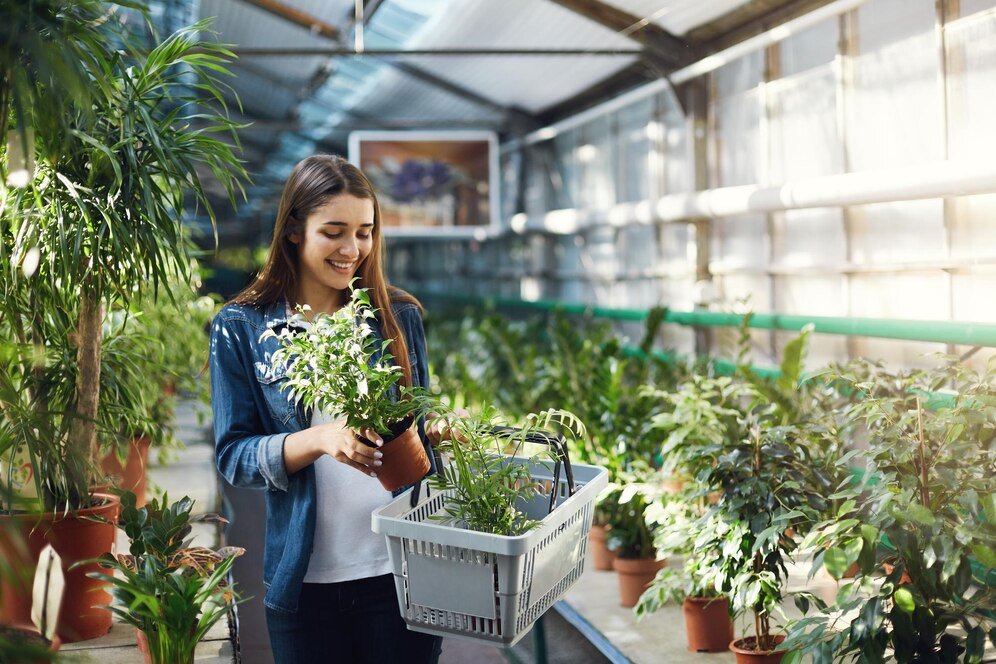
If you have ever shopped for plants before, you might have seen a hardiness rating. This is a rating based on how 'hardy' a plant is, based on environmental conditions.
For example
If you plant a banana tree in London, it cannot survive because it requires certain environmental conditions that we simply do not have in the UK. You can grow bananas in London, if you grow them in a greenhouse with simulated conditions. However, the chances are that your urban garden will not have the technological advances that a commercial greenhouse would have. Therefore, you must pay attention to a plant's hardiness.
There are two measurements for hardiness that we use in the UK. We can refer to either the USDA hardiness rating or the RHS hardiness rating.
The USDA Hardiness Rating
This is a rating system developed by the United States Department of Agriculture that covers the entire world. There are 12 different zones that refer to what type of plant life can grow in that area. The higher the number, the warmer the climate. Thus, if a city is listed as a Zone 9, as is London, it means that the average annual minimum temperature ranges from -1.2 to 6.6 oC or 20 to 30 oF.
Each zone is categorised, based on the mean of the lowest temperature during the winter. This is referred to as the 'average annual minimum temperature'. This is determined by the previous five successive winter's coldest temperatures. Originally, the zones were based on the lowest temperatures posted from 1974 to 1986 in the US and Canada and from 1971 to 1984 in Mexico. As the hardiness rating has spread across the globe, other country's ratings are based on different years.
In the UK and Ireland, the Gulf Stream has an effect on the climate and we therefore tend to have milder winters than you might think. Therefore, the USDA hardiness zones in the UK range from 7 to 10. This is the same as much of the central United States, although the UK is further north.
There are some areas of Scotland that are in Zone 7. Most of England, Wales and Scotland are in Zone 8, but southern England and Wales and western Scotland are in Zone 9. The very low altitude coastal areas of south-west Ireland and the Isles of Scilly are in Zone 10. On some maps or charts showing the USDA hardiness zones, you also might see 'a' or 'b' next to a zone number. This further breaks down areas. However, generally speaking, you do not have to worry about whether you are in the 'a' or 'b' side of a zone. It only involves a very small temperature difference.
The RHS Hardiness Rating System
In the UK, the RHS (Royal Horticulture Society) has also created its own rating system for hardiness. It is a bit different to the USDA version, but it is still easy to understand and follow. The ratings range from H1 to H7, and, as with the USDA system, some zones are split into smaller
sections. Remember that these are the minimum in which the plant can live.
Ratings list:
H1a: warmer than 15 °C - tropical. These plants must grow as a houseplant or in a greenhouse. Examples: bamboo palm, red passion flower, pineapple, jade vine.
H1b: 10 to 15 °C - subtropical. These plants can grow outside, during warm summer months with direct sunlight. Otherwise, these are houseplants or greenhouse plants.
Examples:lemongrass, Amazon lily, poinsettia, begonias.
H1c: 5 to 10 °C - warm temperate. These plants can grow outdoors in most of the UK, during the summer months, or as houseplants. Examples: day lily, pelargonium, sweet basil, chrysanthemum.
H2: 1 to 5 °C - tender cool. These plants are tolerant of lower temperatures but cannot get frozen. In the winter, these plants must remain in a glasshouse or as houseplants but can grow outdoors, after the threat of frost is over.
Examples: marigold, lemon, lime, carnation.
H3: -5 to 1 °C - half-hardy. These plants are hardy in coastal areas in the UK but can die dueto frost. These plants can also survive outdoors in the winter, with proper protection.
Examples: dahlia, aster, strawberry, grape.
H4: -10 to -5 °C - hardy-average. These plants are hardy throughout most of the UK, except at an altitude or in the northernmost locations. Harsh winters may cause damage to foliage.
Examples: rose, peach, asparagus, dill.
H5: -15 to -10 °C - hardy-cold. These plants are hardy throughout most of the UK, even in severe winter temperatures. Plants in pots might sustain damage in the cold.
Examples: rhododendron, plum, blackberry, thyme.
H6: -20 to -15 °C - hardy - very cold. These plants are hardy throughout the UK. Plants grown
in containers without protection may become damaged.
Examples: oregano, horseradish, apple, pear.
H7: colder than -20 °C - very hardy. These plants are hardy throughout Europe, even in the
most severe environments.
Examples: lemon balm, spearmint, pink hyssop, common sorrel.
Although you now have some information about both the USDA and RHS hardiness ratings, there is still a bit more to learn about hardiness, before you can start choosing your plants. Firstly, although both of these are excellent guides, there are exceptions to the rules.
For instance
In some areas, environmental factors, such as elevation might come into play. There is also the fact that sometimes the weather just does not cooperate as we want it to, so we could have a very cold summer or a very warm winter or vice versa, and that can affect how a plant
grows. What is important to realise is that these ratings are not foolproof, so you may have to be slightly flexible.
FACT
The USDA hardiness zones change every 10 °F from one zone to another. The RHS hardiness ratings change every 5 °C.
Source: Gardensillustrated.com
Activity 1
Estimated time: 10-15 minutes
You now know about both the USDA and the RHS hardiness scales. It is important that you know what zone you live in and what plants will thrive there. Therefore, take a few minutes to look up the USDA zone and the RHS zone that you are in. Then compare these with the list of plants that you are considering. If these plants βit within those zones, you are well on your way to a successful garden. If not, or if it
is only a zone away, you may still be able to use those plants; however, it will probably be more work.
2.3 Annuals and Perennials

Before going any further, it is important that you understand the concept of annuals and perennials, in the world of gardening.
Annuals
Annual flowers and plants are those that complete a full lifecycle, from its germination to its demise, in a single year. These plants die each year, and gardeners can collect the seeds that are left behind, in order to plant them again the following year. Annuals are excellent plants for first time gardeners, as they are usually easy to grow and quickly bring colour to the garden.
Examples of annuals include the following:
Sunflowers, marigolds, baby's breath and nasturtium.
Perennials
Perennials, sometimes called herbaceous plants, live for at least two years and often longer. They are typically small, βlowering plants that grow and bloom in the spring or summer and then die every autumn and winter. However, these plants return in the spring.
Examples of perennials include the following:
Foxglove, salvia, verbenas and geraniums.
Biennials
Although you do not hear the term 'biennials' as much as annuals or perennials, biennials are plants and flowers that complete their lifecycle in two years. Most biennials βlower both in their first and second year, but the second year typically has showier flowers.
Examples of biennials include the following:
Sweet william, Iceland poppies and wallflowers.
2.4 Microclimates

Before moving further along in the module, it is important that you understand the concept of microclimates. We have introduced the concept of a garden environment, but you might not realise that each garden, even a small urban garden, has several microclimates. These are areas of variation, in terms of air, light, water and soil.
For instance
You might have an area of the garden that is damper than others or an area that does not get as much sun as the rest, due to a shrub or tree. These areas are all microclimates, and you should bear them in mind, as you choose plants for and plan your garden.
2.5 Your Budget and Preparation for Planting

One of the things that will influence your choice of plants is your budget. Some plants are simply more expensive than others. Although a small urban garden will not be as expensive as a large-scale country garden, there is still an expense to consider. You do not have to spend a fortune on creating a garden, but it is easy to get carried away.
Also, most people do not take everything into consideration, when planning their budget, and then end up spending hundreds of pounds more than they intended. The following is everything that should be considered in your garden budget.
Garden Design
You can design your garden on your own, or you can employ a garden designer. Even if you choose to design the garden yourself, you will probably require help, which might come in the form of a subscription website, a computer programme or books. The design is not as simple as it sounds, and you cannot simply put a tomato plant here and an aster flower there. This is not only about aesthetics - some plants do not like growing next to others, and some plants require different conditions.
For instance
Tomatoes and aubergines require a similar amount of water throughout their growing process, so they can be planted together. However, onions and leeks do not require a lot of water, therefore, if you plant onions near aubergines, you could end up over-watering the onions because the aubergines need more water. Therefore, as you can see, garden planning and design involves some research.
FACT
The average cost for professional garden design ranges from £250-£750, depending on the designer. The length of time to do the design usually is one or two days.
Source: Realhomesmagazine.co.uk
Site Preparation
One of the things often missed by new gardeners is the cost of preparing the site for the garden.
For example
Firstly, you might have to remove turf, pavement or clean up rubbish from an area. This is not free. You might have to hire a garden tiller or even a pavement breaker. Alternatively, you can use a company to do this for you. If you are using containers, you will not have to pay for tilling or breaking pavement, but you need to purchase, create or find containers. These can be surprisingly costly, so much so that people often create their own containers. Just remember that any container has to have adequate drainage.
Also, if you are going to use containers, ensure that they are adequate to use in the winter, if you are going to keep plants outside. The bottom line here is that preparing your urban garden area to plant might be much more expensive than you anticipate. This can greatly affect your budget, if you are not prepared.
Soil
Many novice gardeners also neglect to factor into their budget the cost of soil. Unfortunately, digging a hole and putting a plant in that hole does not usually work. Instead, good soil is an essential part of a good garden. If you are going to place your garden on existing soil, you must test it, before you begin.
You can send a sample to the RHS for £30 or there are some DIY soil kits that you can purchase. The big thing that you are looking for is the pH of your soil. Soil may be acidic or alkaline, and this determines what you have to add to it. Therefore, amending the soil is the next step. Most plants prefer a soil that is neutral to mildly acidic; this soil would have a pH of 6-7. However, if the soil pH is below 7, the soil might be too acidic. Fortunately, the process of toning down the acidic soil is easy: you should just add some lime.
If the soil is too alkaline, i.e., over 7, amending the soil is more difficult. You must add sulphur or ammonium sulphate fertiliser, but it could take a very long time, i.e., years, to change the soil. If this is the case, you must choose plants that can survive in alkaline soil. These include grapes, blackberries, thyme and oregano. The RHS has an excellent search tool on its website that can help
you find appropriate plants.
It is a good idea to mix potting soil or compost with regular soil, especially when starting out. This is the case, whether you are planting herbs and vegetables or flowers and shrubs. Although potting soil is quite affordable, it still adds to the cost of gardening. Depending on where you live, you might want to start a small compost pile, to further assist you.
Finally, the soil texture is going to come into play. Of course, this only has a bearing, if you are planting your garden in an existing soil area. It will not matter as much, if you are using containers with store-bought soil.
In the UK the soil is either sandy, clay or loam:
Sandy soil drains quickly, which can be good, because it is less difficult to over-water, but it does not retain moisture well, and some plants require moisture. Clay soil can easily get too wet, and it is a bit awkward to work with, but it holds nutrients well. Loam is a good mixture of both sandy and clay soil and is the best to work with. Fortunately, it is easy to adjust both sandy and clay soil, by mixing the soil with organic mulch.
Activity 2
Estimated time: 10-15 minutes
Knowing what type of soil you have is important, before starting your garden. Fortunately, it is very easy to find out. If you know where you are going to plant your garden, go to that place, and dig up a good handful of dirt. Hold the dirt in your hands, and then squeeze it. If the dirt crumbles and falls to pieces, the soil is sandy. If you are able to mould the soil, the soil is clay. If it does a bit of both, the soil is loam. Alternatively, you can use online resources, such as the National Soil Resources Institute website, whereby you can search by postcode.
Tools
When thinking about budget and garden preparation, another aspect to consider is the tools that you will use. You should have an inventory of what you have available, which you did during the first module, and you should know what you need to purchase. Of course, this has to be factored into your budget.
Water
People also neglect to factor in the cost of water, when thinking about their new urban garden. You can always rely on rain, but you also have to supplement the rain. You might do this with manual hoses and watering cans, but you may also wish to consider irrigation systems. These are available at garden centres or at large stores with garden supplies.
Other garden items
Also, ensure that you factor in other garden items, when considering a budget. These include fencing, paving, garden boxes and ornamental items.
Choosing your Garden Plants
With the main budget taken care of, we can finally get to the step whereby you choose plants for your garden. At this point, you should have a plan in place; you should have chosen a space for your garden; you should know your growing zone, and you should know how much sun the garden will get.
You also should know the pH of your soil, the type of soil you have, and drawn up a watering plan. Now, you can start choosing plants.
Again, do a quick survey of your chosen garden spot:
1.How much sun is your location getting?
2.What type of soil do you have to work with?
3.Do you have access to a water source, or will you have to buy several hoses or an irrigation system?
4.Is your garden near a high trafβic area? Is it easy to access, in terms of pruning, fertilising and disease and pest management?
5.What objects in the area of your garden could affect it? Are there tall trees or shrubs that block out the sun?
6.Are there any walls or pavement that could direct heat towards the plants?
7.What is your USDA hardiness zone and/or RHS hardiness rating?
8.Is there anything else to consider?
9.Are you on the coast where salty air could affect the plants?
10.Will other people walk around the plants?
11.Do plants have room to grow?
As you work through these questions, make notes about your answers. This will help you to choose what plants you put in your garden.
Activity 3
Estimated time: 15 minutes +
Make a list of the plants that you wish to have in your garden. You might choose herbs, βlowers, ferns, vegetables, fruits or any type of plant. Try to choose more than you think you need because you will eliminate some.
Take this list, and sign onto the RHS Plant Finder on the RHS website. You can search by plant name, to see if the plant is appropriate for your garden, or you can select your garden's conditions and see a list of plants that thrive in those conditions. The plants that have not been eliminated from your list are those that you can safely plant.
The information that you have collected from that activity is only a small part of the process of choosing plants. However, each plant that you have on your list has requirements that are different to the requirements of the next plant.
Therefore, for each plant on your list, ask yourself the following questions:
What are the sun or shade requirements for the plant?
This has a big effect on the ability of your plants to thrive. If you have full sun or full shade, you do not want to choose a plant that
requires the opposite. If necessary, you can create shade, using shrubs, trees or even garden sails.
What are the water requirements for the plant?
Some plants might say 'low-water' or 'drought tolerant'. These are the plants that you should put in the dry areas of your garden or in areas
that are more difficult to reach with a hose. Other plants require more water, so those are the ones that you should choose for areas that are wet or that are easy to water.
What is the growing habit of the plant? How large does it get?
Is this a plant that grows tall, like a tomato plant, or one that climbs, like runner beans? Will the plant spread?
Do you have enough room for the plant, as it grows?
Typically, you will grow plants from seeds or seedlings, and you might not realise how big they ultimately get. Of course, you can prune
them down, but it is best to choose plants based on your available space. You must ask yourself again whether the plant is hardy for your garden space. Hardiness is an important factor, when it comes to choosing plants.
Do you have your heart set on a plant that is not in your location's hardiness rating zone?
You can still attempt to plant it, but realise that you are going to have to work harder, in order to keep it going strong, and you might even
have to bring it inside for the winter.
What are the maintenance requirements of the plant? Will you have time to care for it?
Feel free to choose plants with different maintenance requirements, but understand that it can be time- consuming.
Are you looking for any speciality plants?
For instance, do you need plants that are tolerant to salty air or those that are easy to grow in drier conditions? You can certainly choose plants that do not fall into these categories, but, again, you have to do the extra work, in order to ensure that the plant thrives.
2.6 Plant Suggestions for the UK
As we prepare to end this module, we want to provide some suggestions for plants that can grow throughout most of the UK.
Vegetables
You will find a number of excellent vegetables to grow as an urban gardener.
For instance
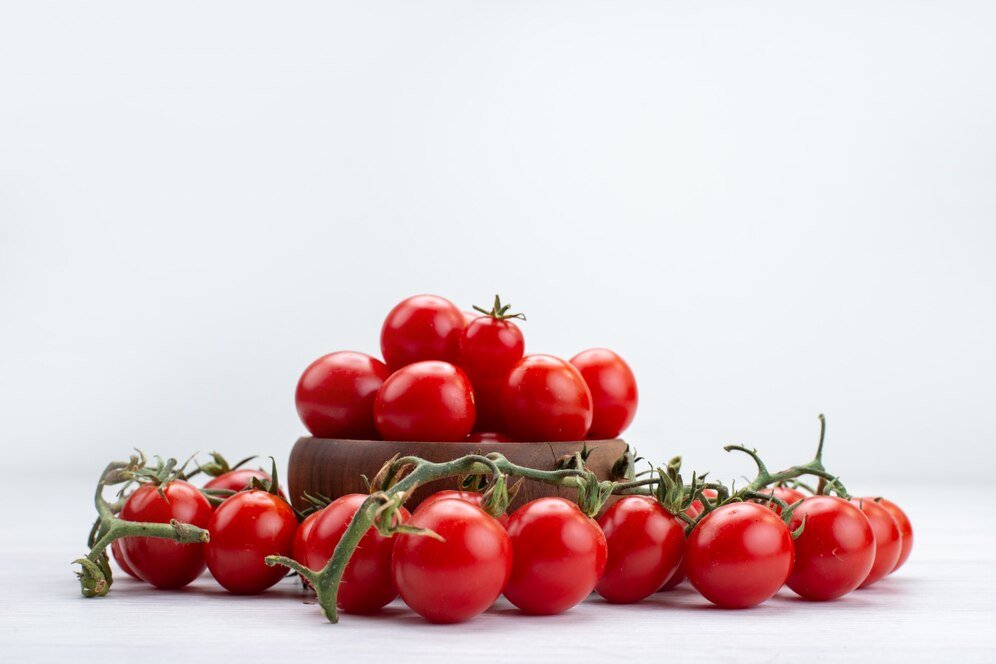
Tomatoes are very hardy, easy to grow and have a great yield. Cherry tomatoes and beefsteak tomatoes are very popular choices. Radishes are also very easy to grow, and they grow extraordinarily quickly. Also, they do not take up a lot of room, making them an excellent choice for people with small spaces.
Some potatoes, such as Charlotte potatoes, are also ideal for beginners, and they can easily grow in an urban garden. However, you must make sure that you have a growing box or other area that is deep enough, since they grow underground. Onions are also very easy to grow, so, if you are focused on a vegetable garden, add one or two onion plants. If you are still looking for more suggestions, most lettuce varieties are extremely easy to grow, as are beetroot, French beans and broad beans.
Fruit
When it comes to fruit in an urban garden, you might have to stick with berries. Strawberries, redcurrants, and blueberries are all easy to grow in containers, and they do not take up a lot of room. If you have a bit of space with which to work, grapevines or gooseberries are also a good choice. Fruit trees might be a bit large, but, if you have room, apples, pears, and plums are also good.
Flowers
Finally, if you want to grow βlowers in your garden, you certainly want to try sunβlowers and sweet peas. The sunβlowers bring a bright splash of colour, and sweet peas are very fragrant. Marigolds, geraniums, pansies and fuchsias are also excellent βlowers for an urban garden.
Module Summary
This module focused on teaching you how to choose plants for your urban garden. We explained hardiness and the two different scales for hardiness that are often used in the UK. We also explained the difference between annual and perennial plants and how to choose which are best for your garden. The module also discussed the importance of a budget, when creating a garden, and aspects of the budget that gardeners often miss.
Additionally, you should have learnt what questions to ask yourself, before choosing plants for your garden, and how to determine what type of plants will thrive in your chosen garden area, based on environmental factors. Finally, the module ended by sharing some 'foolproof' plants that not only grow well in the UK, but are also easy for beginners.
Keep all of the knowledge that you gained in this module, and prepare for Module 3, in which we will share information about how to plant and maintain your garden.
.svg)



