
MODULE 2:Basic Bricklaying Techniques

Bricklaying is a fundamental skill in construction, requiring precision, patience, and an understanding of key techniques to ensure strong, durable, and aesthetically pleasing structures. The Basic Bricklaying Techniques module teaches learners how to handle bricks and mortar, lay bricks correctly, and build simple structures using different bonding patterns. Mastery of these skills is essential for anyone entering the trade.
Mixing and Handling Mortar
Mortar is the binding material that holds bricks together, and preparing it correctly is crucial for strong brickwork. Trainees learn the correct mortar mix ratios (typically 1 part cement to 4-5 parts sand, with possible lime additives for workability). They practice mixing by hand or using a mechanical mixer, ensuring the right consistency—neither too dry (which crumbles) nor too wet (which sags). Proper mortar application involves loading the trowel smoothly, spreading an even bed joint, and "buttering" the end of bricks (known as perpends) to create solid vertical joints.
Laying Bricks to a Line
A fundamental skill in bricklaying is ensuring that each course (row of bricks) is level, straight, and plumb (vertically aligned). Students learn to:
Set out the first course by dry-laying bricks to check spacing (using a gauge rod for accuracy).
Stretch a line between corner bricks (called leads) to act as a guide for straight courses.
Use a spirit level to check horizontal alignment (level) and vertical alignment (plumb).
Adjust bricks gently with the trowel handle to maintain even joints (usually 10mm thick for standard brickwork).
Building Brickwork Bonds
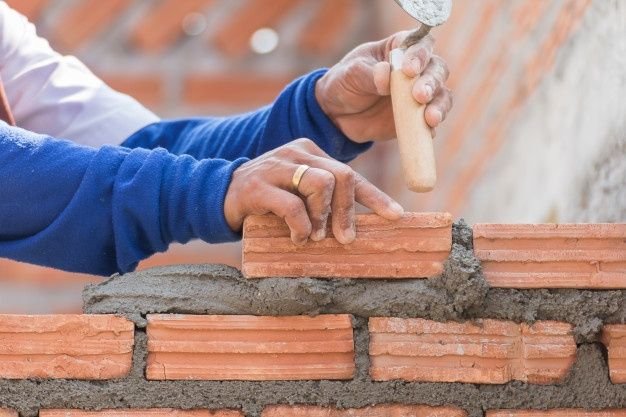
Different bonding patterns provide strength and visual appeal to brick structures. The most common bonds taught at this level include:
Stretcher Bond – The simplest pattern, used in modern cavity walls, where all bricks are laid as stretchers (long side exposed).
English Bond – Alternates headers (short end exposed) and stretchers in each course, creating a strong, traditional bond.
Flemish Bond – Alternates headers and stretchers within the same course, offering an attractive finish.
Students practice building small walls or piers using these bonds, ensuring proper overlap (typically a quarter-brick stagger) to avoid weak vertical joints.
Cutting and Shaping Bricks
Since bricks must sometimes fit around openings or corners, learners are taught safe cutting techniques:
Scoring and splitting with a brick hammer or bolster chisel.
Using a brick saw for precise cuts (especially for engineering bricks).
Creating half-bats, closers, and squints for neat corners and reveals.
Finishing Joints (Pointing)
Once bricks are laid, the mortar joints may be finished for durability and appearance. Common techniques include:
Flush joint (simple, smooth finish).
Weatherstruck joint (angled to shed water).
Recessed joint (indented for shadow effects).
Conclusion
Mastering Basic Bricklaying Techniques is the cornerstone of becoming a skilled bricklayer. From mixing mortar to laying bricks in proper bonds, each step requires attention to detail and practice. These foundational skills prepare learners for more advanced masonry work, such as constructing arches, cavity walls, and decorative features. Whether building a simple garden wall or part of a large structure, precision in these techniques ensures long-lasting, professional-quality brickwork.
.svg)



