
4.1 Introduction

Cognition refers to the activity of acquiring, organising and using information, to enable adaptive, goal-directed behaviours. Cognitive psychologists view human beings as information processors and believe that mental processes guide our behaviours. While behaviourists believe that it is impossible to understand mental processes and instead focus on the relationship between external stimuli and responses towards the stimuli, cognitive psychologists think that it is important to study the mediator between the input and output.
However, cognitive processes do not act in isolation from other factors, such as biological processes and social and cultural factors. While cognitive tasks such as memory and attention are universal, there are cross-cultural variations in these processing mechanisms. By understanding cognitive psychology, educators can gain a deeper understanding of how we learn and process information and apply this knowledge to helping students learn. Cognitive psychology is a broad field, but, in this module, we will be specifically looking at memory, attention and emotion.
4.2 Standard Model of Memory
There are three systems of memory: sensory memory, short-term memory, and long-term memory.
Sensory memory
Sensory memory lasts for less
than one second after perception. It is the ability to perceive an item and
remember what it is straight away. There are three types of sensory memories:
the iconic memory (visual memory), echoic memory (auditory memory), and haptic memory
(touch memory).
Short-term memory
Short-term memory lasts from
approximately fifteen to thirty seconds and has a very small storage. The
working memory model describes how short-term memory processes information. The
model consists of three parts: central executive, visuospatial sketchpad and
phonological loop.
The central executive controls the whole system - it is
responsible for tasks such as directing attention to the relevant information
and suppressing irrelevant information, allocating data to the other systems and
integrating information from the other systems. The visuospatial sketchpad is responsible for visual or spatial information, while the phonological loop is responsible for verbal information. It consists of two subparts: the phonological store and the articulatory process.
Long-term memory
Long-term memory can last forever
and has an immeasurable capacity. There are two types of long- term memory:
procedural memory and declarative memory. Procedural or implicit memory is
responsible for motor skills, such as how to ride a bike. Procedural memories
are often unconscious, once they are well ingrained. For example -You would not need to consciously
think about how to ride a bike, as you are already riding one.
Declarative or explicit memories
Declarative or explicit memories
are conscious, explicit memories of facts, experiences or concepts. There are
two types of declarative memory: semantic memory and episodic memory. Semantic
memory is responsible for storing information and knowledge; such as, the
meaning of the word 'apple' or the fact that London is the capital of England.
Episodic memory is responsible for storing personal events in our lives; such
as, the memory of our first day at school.
4.3 Schema Theory
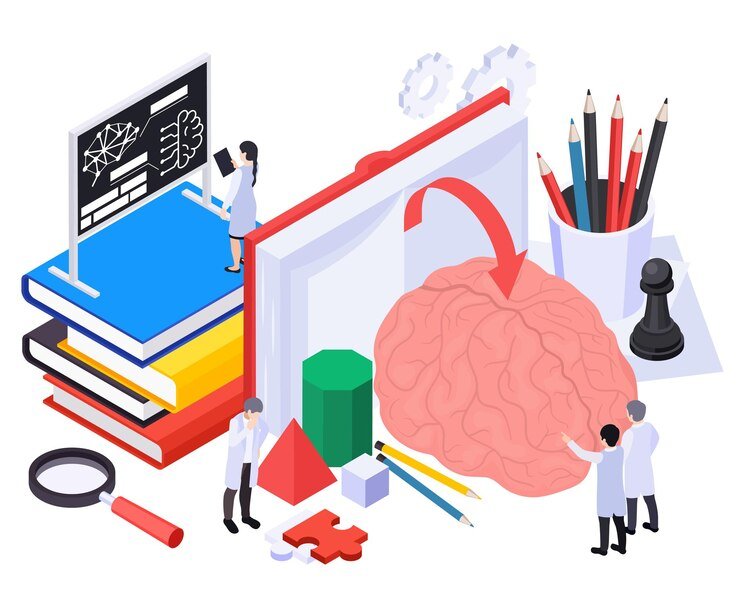
Schemata are mental representations of knowledge stored in the brain, in the form of networks of knowledge, beliefs and expectations about particular aspects of the world. Schemata organise knowledge stored in our memory through categorisation, using our knowledge, beliefs and expectations about particular aspects of the world, such as people, objects, events and situations. They interpret incoming information from two sources: input from the sensory system (bottom-up processes) and information stored in memory (top-down processes).
Schemata organise information in the memory and provide a structure for knowledge or a network of beliefs and expectations. They can be activated, often automatically with little attention, in order to increase information-processing efficiency. Schemata exist, in order to help people make sense of the world, make predictions or provide guidance, as learning through categorisation and association requires less effort. Schema theory states that what we already know will influence the outcome of information processing. We are active information processors that interpret and integrate information, in order to make sense of experiences.
When information is missing, the brain fills in blanks, based on existing schemata, or invents something that seems to fit in, which results in cognitive distortions. This means that we are more likely to remember things that conform to our schemata and forget those that do not (confirmation bias) or even make up memories that fit our expectation (reconstructive memory).
A study
In a study, participants arrived
individually to a laboratory and were asked to wait in an office. The office
contained objects that conform to the office schema, such as, stationery and
desks, and objects that do not conform to the office schema, such as, a skull
and a picnic basket. After waiting for thirty-five seconds, participants were
taken out of the office and asked to write down everything that they could
remember about the room. Most participants recalled schematic objects, but were
less likely to recall items that are not typically found in offices. Some
participants even reported things that were not present but would be expected
in a typical office; such as files. Schemata are shaped and biased by culture.
A group of British participants were asked to read 'The War of the Ghosts', a Native American folktale. After reading the story, the participants were asked to reproduce the story in two ways: serial reproduction and repeated reproduction. In serial reproduction, the first participant reads the original story and reproduces it on paper, and this is read by the second participant, who reproduces it for a third participant, and this continues, until the sixth or seventh reproductions are completed.
In repeated reproduction, the same participant contributes all six or seven reproductions, and these reproductions are separated by intervals of fifteen minutes to several years from reading the original story. In both methods of reproduction, the participants remembered the main idea of the story, but their recollection became shorter each time, and the details were being forgotten. There are signs of reconstructive memories. For example 'Canoes', which are pertinent to Native.
American culture, would be changed to 'boats', which are more typically British. The story in general also became more conventionally British. These distortions made the story more understandable from the participants' experiences and cultural background. Concepts that were culturally unfamiliar to the participants were replaced with familiar ones. Interpretation plays a large role in remembering events or stories. We reconstruct the past and try to make it fit into our schemata; thus, remembering is integrally related to the social and cultural context in which it is practised.
There are different types of schemata
Self-schemata organise what we
know about ourselves and social schemata represent information about groups of
people, for example, Asian people, women, bakers. Social schemata can influence
social perception and be haviour. When they are automatically activated, this
may lead to bias in information processing, which can result in stereotypes and
prejudice.
4.4 How Social or Cultural Factors Affect Memory.

The cultural differences in
education and learning can affect how we remember things. While the ability to
remember is universal, the process learning is different across various
cultures, and how we encode the information that we learn will influence how
accurately we can recall the information. The way in which we are taught the
information through our education system will affect the memory strategies that
we use, in order to recall the information and the accuracy with which it is
recalled. A study on the effect of schooling on memory was conducted on the
Kpelle tribe in Liberia. A group of children from different age groups, both
schooled and non-schooled, were given a list of words to remember. The
non-schooled children did not do well, and they also failed to improve their
performance in subsequent trials.
On the other hand, the schooled children did much better and improved in subsequent trials, by using memory strategies, such as rehearsal (reading the words over and over again, writing them down, etc.) and chunking (grouping items into categories, such as clothes, utensils and vegetables). In the second part of the study, the children were presented with the items as a part of a story, and, this time, the non-schooled children were able to remember the objects exceptionally well, as they chunked them, based on the roles they played in the culturally relevant story.
The children that are schooled versus the children that are non-schooled demonstrated a different learning ability. This is because the schooled children were taught how to memorise using different strategies in their education, such as rehearsing, while the non-schooled children did not have the opportunity to learn these strategies. This shows that memory is directly influenced by your level of education. Even social or cultural factors that are not directly related to school or education can affect how we remember. Another study compared the memory of Mayan and US children. The children were required to reconstruct a miniature model of a Mayan village that the researchers showed them.
The Mayan children performed better than their United States counterparts. This is because the Mayan children were familiar with the items represented in the model, which were related to their everyday surroundings. As these items were a part of their schemata, it took less effort for them to remember the positions of the various parts of the model. In addition, the Mayan children were more skilled in spatial orientation and spatial memory, as these skills are essential for their everyday lives. On the other hand, the US children were trained to focus on routine learning in their classrooms and did not have the same capability in spatial orientation. However, they are found to be superior at memorising lists of words, due to the focus on rote learning in Western education.
Activity 1: Personal history
Estimated time: 10-15 minutes
Think about your own personal history. How has your experience, education, background, culture or even the language(s) you speak affected the way in which you learn and think?
How have these affected the way in which you understand different concepts?
4.5 Flashbulb Memory - How Emotion Affects Memory

Emotion can affect how we encode
and recall memory. Flashbulb memory (FBM) describes a phenomenon, whereby we
first learnt about a very surprising or emotionally arousing event. When
recalling that event, we will remember vivid and detailed memories with regards
to where we were, who we were with and what we were doing. While flashbulb
memories are long-lasting, they are not permanent and may not be any longer-
lasting than other important everyday memories. However, they are often more
vivid and are recalled with a higher degree of confidence than other memories.
A study recruited eight Americans in 1977 - forty of them were Caucasian, while
the other forty were African-Americans.
The participants answered questions about ten events - nine of which were assassinations/attempted assassinations of American personalities, such as Martin Luther King and JF Kennedy, and the final event was a self-selected event of personal relevance, such as the death of a friend/relative or an accident. The participants were asked to recall the circumstances that they were in, when they were informed of these events. They were also asked how often they rehearsed information about the event, both overtly and covertly.
90% of the participants vividly recalled the assassination of J F Kennedy, while Martin Luther King's assassination was recalled with greater ease by the African-American participants. Most participants recalled a personal flashbulb memory, which tended to be the death of a parent. The participants had vivid memories of where they were, what they did and what they were feeling, when they first heard about the event. Flashbulb memories are more vivid, last longer and are recalled with more consistency and accuracy. This is because, when an event is emotionally important to us, we rehearse it overtly.
For example
By discussing it with other people, and covertly, for example, by ruminating on it; thus, strengthening these memories. It has been suggested that flashbulb memories require a specialised neural mechanism, which permanently stores information in a unique memory system.
4.6 Can you Fake Memory?

We may think that our memory is
reliable, but it can be distorted by something as simple as leading questions.
In a study, participants were shown clips of car accidents, and then they were
asked the question: About how fast were the cars going, when they smashed/collided/bumped/hit/contacted
each other?' The average estimated speed increased, when a stronger verb was
used in the question. In this study the participants who were asked the
question with the keyword 'smashed' reported the car going at a much faster
speed than the participants who were asked the question with the keyword
'contacted'.
This shows that leading questions can mislead us and negatively impact the accuracy of our recollection. In another experiment, participants were presented with a one minute film, showing multiple car accidents and were then asked questions about it, with a critical question about speed. Two-thirds of the participants were asked questions about the speed with either the word 'smashed' or 'hit' in the questions.
The control group were not asked anything about speed. One week later, all the participants were asked: 'Did you see any broken glass?' There was no broken glass, but 32% of those who had been asked about the car's speed with the verb 'smashed' in the question claimed to have seen broken glass, compared to only 14% of the participants in the group whose questions contained the word 'hit' and 12% of the control group.
The word 'smashed' provided the participants with verbal information that activates schemata for a severe accident. This is why the participants were more likely to think that there was broken glass involved, when they were asked the leading question containing the word. This effect can be extended to implanting into people's minds false memories of events that never happened.
Researchers were able to implant into participants' minds childhood memories of being lost in a shopping centre, nearly drowning at sea, being attacked by a dog or even being possessed by demons. The subjects insisted that the memory was undoubtedly real, even when they were told by their families that such an event never happened or there was no physical evidence to support these memories.
Fact
America saw a surge of 'repressed memory' cases in the 1990's, when adults suddenly 'uncovered' repressed memories of childhood sexual abuse, alien abduction or Satanist ritual. Many of these cases were proven to be induced memory through therapy or hypnosis.
Source: University of Washington
4.7 Attention

Attention is the brain's ability to self-regulate input from the environment. There are four types of attention, and these are outlined below:
Sustained attention
This refers to focus on specific stimuli. It is related to psychological arousal on a continuum from drowsy and inattentive to alert and attentive. It is also what we often call an 'attention span'; such as, reading a book for hours without breaking attention.
Selective attention
This is how limited the number of the stimuli we can process are. We can only deal with one stimulusat a time, and this may well be at the expense of others.
For example
At the moment during which you
are attending to the words in this module, you may not be as attentive to the
sounds in the background, other items in your visual field or the feeling of
your clothing on your skin.
Divided attention
This is the ability to perform two tasks at once; such as, cleaning up, while listening to an audio book.
Alternating attention
This is the ability to direct your attention from one task/stimulus to another; such as, going from reading a user manual to assembling a piece of furniture.
4.8 Attention Deficit Hyperactivity Disorder (ADHD)
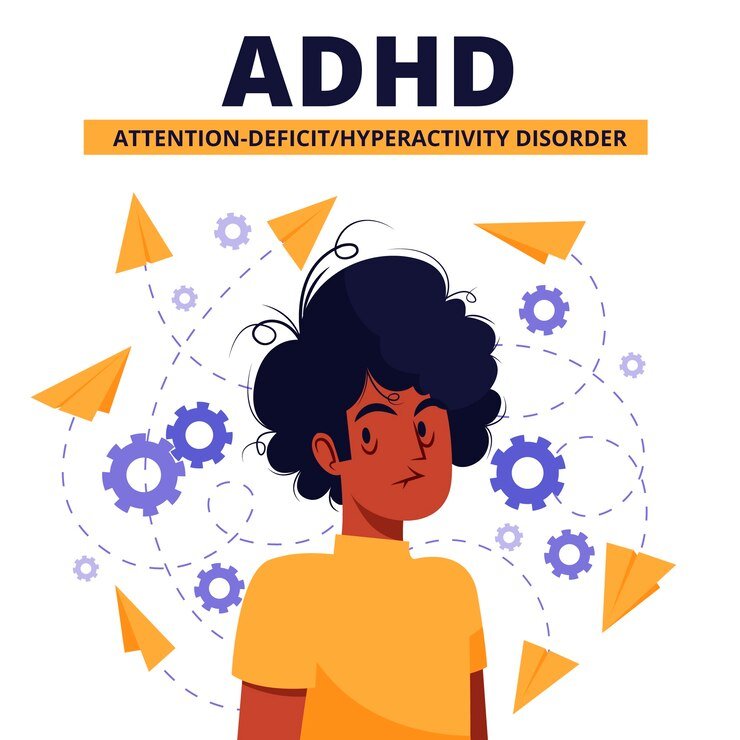
Attention deficit hyperactivity disorder (ADHD) is characterised by a persistent pattern of inattention and/or hyperactivity-impulsivity that interferes with functioning or development. It is the most common childhood neurodevelopmental disorder, affecting 3-5% of school age children.
The symptoms of ADHD are as follows:
Inattention
-Often fails to give close attention to details or makes careless mistakes in school work, at work or during other activities;
-Often does not follow through on instructions, and fails to finish schoolwork, chores or workplace tasks;
-Often has difficulty organising tasks and activities;
-Often avoids or dislikes or is reluctant to engage in tasks that require sustained mental effort;
-Often loses things necessary for tasks or activities;
-Is often easily distracted by extraneous stimuli;
-Is often forgetful in daily activities.
Hyperactivity and impulsivity
-Often fidgets with or taps their hands or feet or squirms in their seat;
-Often leaves their seat in situations, whereby remaining seated is expected;
-Often runs about or climbs in situations whereby it is inappropriate to do so;
-Often unable to play or engage quietly in leisure activities;
-Is often 'on the go', acting as if 'driven by a motor';
-Often talks excessively;
-Often blurts out an answer, before a question has been completed;
-Often has difficulties waiting their turn;
-Often interrupts or intrudes on others.
Although it is commonly associated with children, ADHD is also diagnosable in adults. However, ADHD symptoms are expressed differently at different maturity levels.
These are explained below:
Childhood
-Non-compliant behaviour;
-Sleep disturbance;
-Aggression;
-Temper tantrums;
-Literacy and other learning problems;
-Motor tics;
-Mood swings;
-Unpopularity with peers;
-Clumsiness;
-Immature language.
Teenage years
-Ongoing significant difficulties with daily life management;
-Symptoms change with maturation and cognitive development;
-Vulnerable to clinical depression and oppositional defiant disorder;
-More likely to develop drug dependencies;
-More likely to have traffic accidents and speeding tickets;
-Academic underachievement.
With regards to sexual relationships:
1. Be sexually active earlier;
2. Have more sexual partners and spend less time with each;
3. Less likely to use contraception;
4. At higher risk of teenage pregnancy (38% versus 4%);
5. At higher risk of being treated for STD's (16% versus 4%).
Adult
-Ongoing significant difficulties with daily life management;
-Disorganisation;
-Procrastination;
-Forgetfulness;
-Hyperactivity-restlessness;
-Fidgetiness;
-Stress intolerance;
-Affective lability;
-Avoidance of deadlines.
Fact
During their lifetimes, 12.9% of men will be diagnosed with ADHD, compared with only 4.9% of women.
Source: ADDitude
Activity 2: How would you help a child with ADHD?
Estimated time: 10-15 minutes
What if you are in charge of a child with ADHD?
Where would you go for help?
What would you do if they misbehave?
How would you help them learn, when they are experiencing difficulties paying attention?
4.9 Emotion
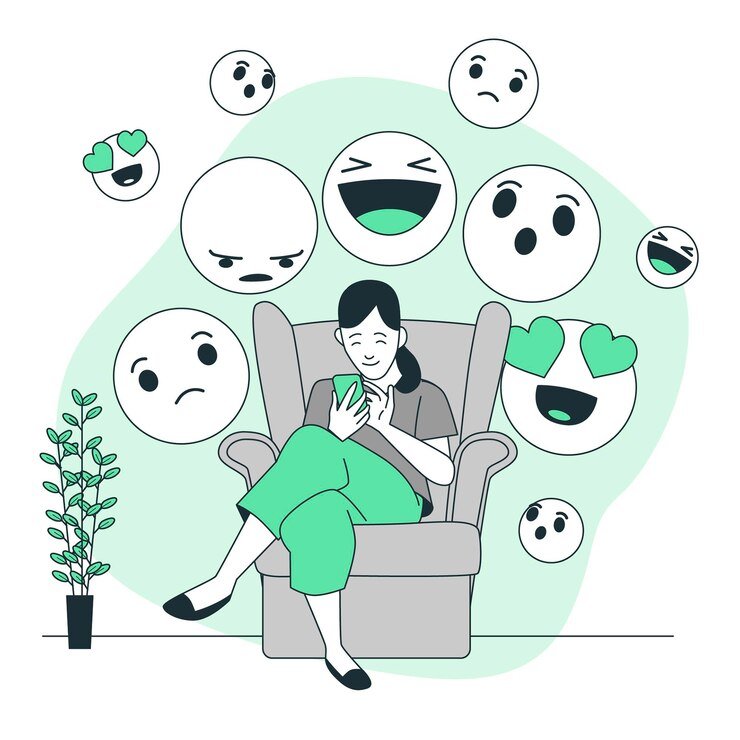
What is the difference between emotions and mood?
Emotions are brief reactions directed towards a specific object or event that often accompanies physiological changes. While mood is a long-lasting feeling, it is not directed towards a specific object and does not necessarily accompany physiological changes. Emotion is a complex multi-componential response to significant threats or opportunities. Negative emotions help us avoid threat and harm, while positive emotions help us approach opportunities and gains.
Theories of Emotion The basic emotion theories view emotion as an affected programme that interprets an event or situation and triggers changes in physiology, perception/attention, cognition and behaviours. Paul Ekman identified six fundamental emotions that are consistent across all cultures: fear, anger, surprise, sadness, happiness and disgust.
These fundamental emotions often trigger facial expressions, which are also consistent across all cultures. The dimensional model of emotion puts emotion on a two-dimensional scale: valence, which refers to the positivity/pleasantness or negativity/unpleasantness of the emotion, and arousal, which refers to the intensity of the emotion. For example Contentment would be a low arousal and high valence emotion Excitement would be a high arousal and high valence emotion Sadness would be a low arousal and low valence emotion Fear would be a high arousal and low valence emotion
The appraisal theory of emotion focuses on the cause of the emotion. People evaluate events in relation to their current goal on several dimensions, and the appraisals would determine the emotion felt. The appraisal dimensions include:
Goal relevance
How important is this situation?
Is it relevant to my goals?
Goal congruence
Does this situation facilitate or block my goals?
Is it advantageous or disadvantageous?
Self versus other responsibility
Who is responsible for this situation?
Did I cause this event, or was it caused by someone else?
Control/power
Is it possible to change/modify the situation?
Are you able to control or influence the outcome of the situation?
Coping potential
Am I able to cope with this situation?
Can I live with and adjust to the consequences of this event?
Future expectancy
Will this event turn out the way I want?
Does the situation look like it will be advantageous for me in the future?
The two-factor theory states that emotion is the result of the interaction between two factors: the physiological process and the cognitive interpretation of the physiological progress. The physiological process involves various brain structures, including the amygdala (fear, emotional memory, aggression), the thalamus (regulation of alertness, consciousness, sensory), the hippocampus (memory) and the hypothalamus (release of hormones). The cognitive processes involved in emotion include long-term memories, appraisal (interpretation and evaluation of the situation) and higher-order thinking and reasoning.
Le Doux's Model of Emotion describes two neurological pathways (long and short) for some emotions, such as fear. After sensory information is perceived, either of the pathways would be engaged, depending on the urgency of the situation. The short route starts at the thalamus, which is responsible for alertness and sensation, and the information is passed to the amygdala, which is responsible for emotion, which in turn produces an emotional response.
The long route also starts at the thalamus, but, before the information reaches the amygdala, it first goes through the cerebral cortex, which is responsible for higher order thinking and reasoning. There is an evolutionary purpose for having two separate pathways for fear responses. In the face of danger, the short route is more effective, as it will lead to a quick fight or flight response. However, as it skips the cerebral cortex, the response is often inaccurate. The long route is slower but will allow for a more thorough evaluation of a given situation and a more appropriate response.
Module Summary
In this module, you have had a brief overview of some components of cognitive psychology: memory, attention and emotion. Firstly, you gained a basic overview of how the different systems of memory work, and you were then introduced to the working memory model. Then you learnt about the schema theory and how schemata affect the way in which we conceptualise the world and learn new things and how our experiences shape them. You also learnt about how our social, cultural and educational background can affect the way in which we learn and remember things. You then learnt about flashbulb memory and how emotion affects memory.
Then you learnt about how our memory is not as reliable as we imagined and how external influences, such as leading questions and suggestions, can mislead or even fabricate memories. Next, we covered the different types of attention and looked at attention deficit hyperactive disorder or ADHD. You also learnt about how ADHD is expressed differently at different stages of life. Then you gained a brief overview of emotion and learnt about the various theories that conceptualise emotions in different ways, including basic emotion theory, the dimensional model of memory, the appraisal theory of emotion, the two-factor theory and Le Doux's Model of Emotion.
.svg)



