
Infection Control
Infection control is about controlling the spread of communicable diseases. Some of the individuals you support will be particularly vulnerable to infection and this means infection prevention and control is vital.
Female Genital Mutilation is abbreviated to FGM.
If a person becomes infected, the symptoms may be serious and even life-threatening. If the micro-organisms which cause the illness are resistant to antibiotics, it can be difficult to treat the illness.
Vulnerabl
When we talk about FGM, we are talking about the practice of removing or altering a female’s genitals for non-medical reasons.

In your role, you must work within agreed ways of working to prevent cross-contamination and promote good infection control procedures.
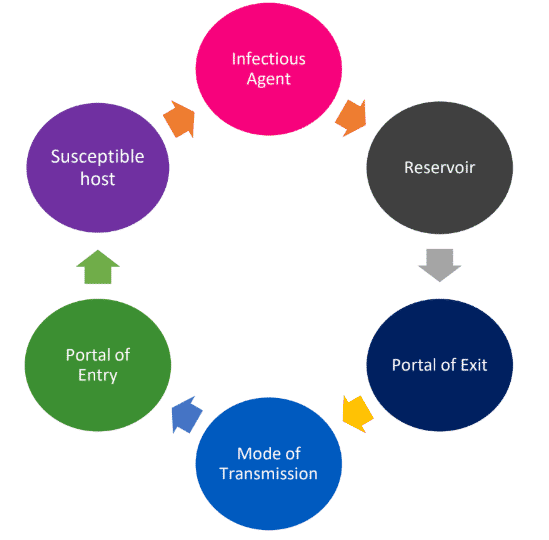
In order for infections to occur, several things have to happen. This is often referred to as…
…the Chain of Infection.
The Chain of Infection

In order for the spread of infectious diseases to take place the Chain of Infection must be completed.
Follow the steps to see what makes up the Chain of Infection.
To break the Chain of Infection, high quality care and support needs to be provided at all times.
Not everybody who carries harmful microorganisms will be ill or show any symptoms, so you must always work in ways that prevent cross-contamination.
Standard Infection Control Precautions
The core of infection prevention and control is based on the assumption that every individual could be carrying potentially harmful microorganisms and that there is the potential for transmission.
Flip each of the following pictures to see the 9 elements to remember for infection prevention and control:
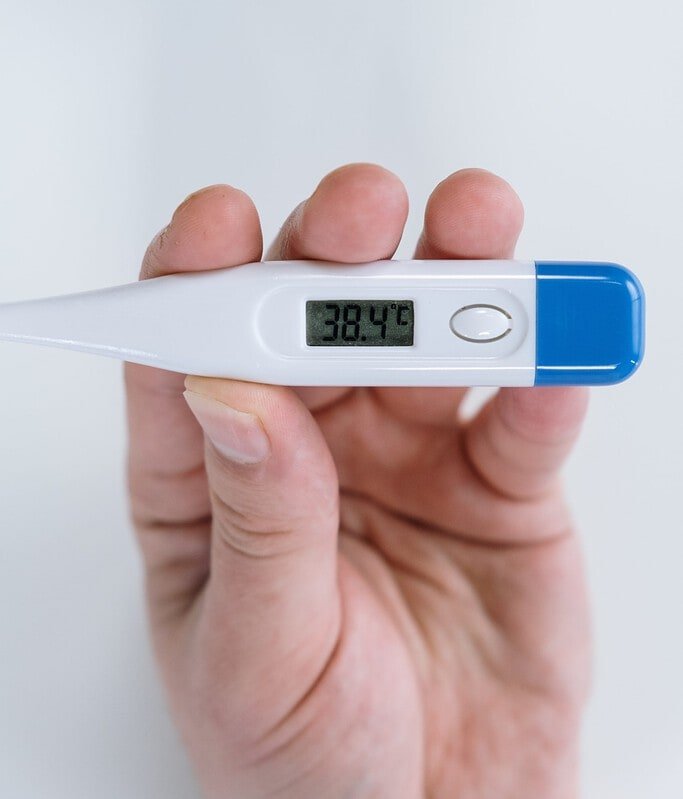
A fever in adults is a temperature of 38 degrees C or above.
.svg)



