
4.1 Preparing the Client for a Facial

Let the client take off their robe and lie on the prepared couch under a blanket; the couch should be warm and comfortable and relaxing
Tie the client's hair out of the way; do not make it too loose or too tight, and ensure that you do not accidentally lean on long hair during a treatment
Chat soothingly to the client, describing what you are about to do, so nothing comes as a surprise
Be respectful to your client, and ask them for their input on any treatments; keep asking low- key questions about their comfort and their understanding of the process
Cover the client's eyes with a cool eye mask, and examine the client's skin under a bright light to assess which products are needed and which problems may need to be addressed; products are usually specific to skin type, sensitivity and age, so this is an important step
4.2 A Facial for Every Skin Type
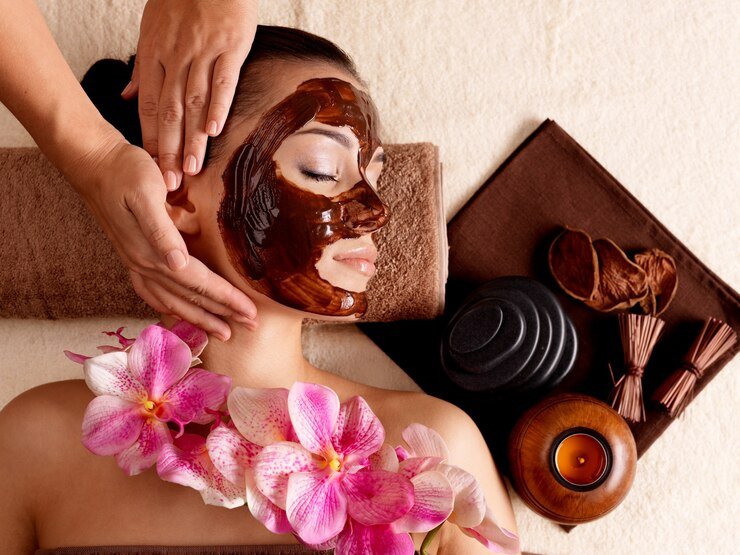
As a therapist, you will know that different skin types require a different or unique facial with its range of suitable products. A prescription facial is prescribed by an expert therapist, based on the client's specific needs. Often, an underlying medical condition may require specific limitations to a normal facial. Your expert aesthetician will know how to conduct such a facial. A trained practitioner could use this highly specific equipment and do these advanced facials:
A microcurrent facial uses an electric current, to stimulate circulation and tone muscles
An oxygen facial uses jets under pressure, to push high oxygen serum under the skin
A resurfacing facial is one that removes outer layers of the skin, to force the body to produce plumping collagen
These specialist facials are usually not available from your average beauty salon, but they are accessible through some beauty clinics.
The following facials are likely to be available at most reputable salons:
A deep cleanse is a facial specific for oily, congested skin with blackheads and pimples; this is also called a balancing facial, and it also benefits combination skin, although extra hydration might be added to the drier areas
A dry skin benefits from a hydrating facial, which adds extra moisture
A brightening facial will exfoliate dry, flaky skin and enhance dull, unevenly pigmented skin; a brightening serum can be added to the treatment
Anti-ageing facials will use massage, a gentle peel or specifically formulated exfoliation, to reduce or plump up fine lines, reduce sun damage and uneven skin texture and age spots; some facials even provide a non-surgical facelift
Facials for sensitive skin will include anti-allergenic, gentle products; the therapist will do a patch test before any treatment is carried out - no harsh exfoliants or chemicals will be used
A good therapist will ensure that the right facial is offered to their client.
4.3 Cleansing the Skin — the Double Cleansing Technique

Due to our lifestyle choices, pollution, long hours, poor dietary choices, makeup that is formulated to last all day, smoking and general skin stressing circumstances, double
cleansing has become the norm among skin conscious clients.
Double cleansing is just as it sounds: cleansing the skin twice. The first cleanse is generally with an oil-based cleanser and will remove makeup and dirt from pollution and daily living.
The second cleanse is water-based and will clean any stubborn congested dirt and hydrate, exfoliate or soothe the skin, depending on personal product choices.
Although double cleansing is highly recommended by therapists, it is usually only done at night, as too much cleansing may strip the skin of moisture. The cost of double cleansing products is also a deterrent.
Any double cleansing products must be geared to the specific skin type of the client.
4.4 Exfoliation
This is the removal of dry, dead, flaky, dull skin. It can be done with a physical, granular exfoliator, a chemical exfoliator, which uses fruit acids, to eat away dead skin cells, or a special exfoliating tool, which gently 'sandpapers' away all the dead skin. The skin constantly sheds dead cells, making room for new ones. Without exfoliation, these don't always come away cleanly and lie on the skin, making it look dull, flaky and lifeless. This skin can even block pores and cause congestion. Exfoliation can have these important benefits:
Brightens the skin
Makes the absorption of products more effective
Encourages the production of collagen, which will reduce fine lines
Prevents blocked pores
Physical exfoliation
This uses items such as exfoliating mitts, dry skin brushes, exfoliating tools and abrasive granules, such as oats, ground almonds and sugar, to physically slough off the dead skin. These are usually cheap and effective. Home remedies are a possibility, but care must be taken not to damage the healthy skin surface, leaving it open to infection or loss of moisture. Don't use a body scrub or foot scrub on the face; it will be too harsh. Chemical exfoliation This method uses chemicals, to dissolve the dead skin and give it a dewy, radiant appearance. It is advised to have chemical exfoliation done professionally. Alpha-hydroxy acids (AHAs) are also called fruit acids because they are found in many fruits, ranging from apples to sugar cane.
They work effectively on:
Age spots
Mild scarring
Fine lines and wrinkles
Uneven skin tone
Beta-hydroxy acids (BHAs) are oil-soluble. Salicylic acid is the most common.
The purpose of beta-hydroxy acids is to:
Penetrate hair follicles and dissolve oil
Reduce and calm redness and inflamed skin
Retinoids are extracted from Vitamin A and:
Treat acne
Treat sun damage
Promote collagen
Reduce free radicals, which cause ageing
These exfoliating products are usually recommended for the following skin types:
Sensitive skin
BHAs are usually not as irritating to sensitive skin as other products may be.
Normal skin
It can use most products and is rarely irritated by new products.
Dry skin
It benefits from AHAs, which allow moisture to penetrate the new layers of skin exposed by the treatment.
Oily skin
It benefits from stronger products, including exfoliating tools. Combination skin
It requires using a mix of exfoliators, geared towards both the oily T-zone and the dry cheek area
It usually requires products containing retinoids; severe acne can be treated by a dermatologist, using retinoids in tablet form; however, these do have side effects and need to be carefully monitored.
Don't exfoliate damaged skin with open sores.
Professional exfoliation can include: Chemical peels, Dermablading, Microdermabrasion. Microbead exfoliating products are no longer considered acceptable because they damage the environment. Professional cleansing and exfoliation are a very important part of a facial treatment.
Assignment
Cleansing and Exfoliation
Estimated time: 30+ minutes
Work your way through this worksheet to see how well you have really done in absorbing the relevant information.
SUMMARY
In this module we looked at how to prepare the client in readiness for cleansing and exfoliation of the face. You now know that different skin types require a different or unique facial with its range of suitable products, and which types of facials are likely to be offered in salons. You learnt the products, techniques and benefits of double cleansing and exfoliation.
.svg)



