
4.1 Introduction

Advertising is found everywhere -
from clothing choices, to public displays, such as billboards, and even within
daily online activities. This module will build off the previous two, as it
will aim to show the link between search engine optimization or marketing, and
website advertising. Module 4 will be focused on digital display advertising.
This will take place by first discussing digital display advertising in
general, as well a providing information on the formats used, and outlining the
benefits and challenges associated with this marketing strategy. The module
will then cover the methods to ensure a successful advertising campaign, and
conclude by covering the various measures of success. At the end of Module 4, a
thorough understanding of digital display advertising should be acquired.
4.2 What is digital display advertising?
 Digital display advertising (DDA) is a form of marketing that takes place within a website. It is for this reason that it is also sometimes referred to as online display advertising. DDA is similar to traditional forms of advertising, as it consists text, audio, or other visual mediums, including images and video.
One way to think of DDA is as a digital or online billboard. There are two varieties of digital advertising: native and display. A native advertisement is considered to blend in with the content of the website and usually appears to be viewed as authentic and more trustworthy. Display advertisements, on the other hand, are defined as any ad found within a website that is obviously a means of promotion. They are also commonly referred to as banner advertisements, because they are frequently found in the form of a banner. However, display ads can also come in the form of a video or audio clip.
DDA is designed to provide profits to the advertising business or company, by generating traffic to its website. This is done by charging a fee for an advertiser to place these promotions or commercials on a website. They are usually strategically placed, and tend to be found on websites that will enable the company to obtain a desirable conversion rate. It works best by providing a personalized spin on the advertisement that is geared towards a specific audience. By identifying a target market for the advertisement, a company can use DDA to direct specific promotions to its intended demographic.
These features of personalization might include the audience's interests, age and/or gender, or geographic location, for example :
Placement
When DDA was first used, it created a bit of an issue. It turned out that the strategic placement of an ad on a related website was not always how DDA appears today. In fact, it rarely happened that the content of the website or page related to the message or intention of the advertisement. This led to the development of a term known as banner blindness. This occurs when a customer ignores the advertisement either because it is irrelevant to the hosting website, or because the user identifies ias lacking credibility. As a result, the conversion rate is likely to be minimal.
Recently, DDA has been featured more frequently on social media sites, such as Facebook, Twitter and LinkedIn. Although advertisements on Facebook are nothing new, their appearance in newsfeeds is. It is in this same fashion that DDA has surfaced on Twitter and LinkedIn. The use of social media platforms as a means of digital advertising will be covered in Module 6 of this course.
FACT
Individuals using a website are 70% more likely to convert if they have been the target of the ad or promotion than those who are not the intended audience.
Source: Digital Information World 2015
4.3 Formats
There are a number of formats used to display these digital advertisements. Each one serves a different purpose. These formats include interstitial, overlay, sponsorship, and rich media. All four will be described below.
Interstitial advertisement

Overlay advertisement
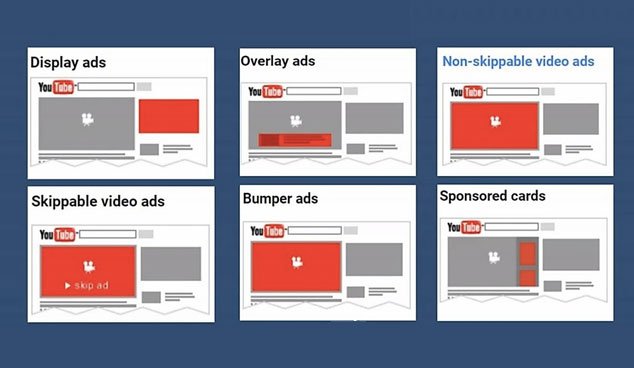
The subsequent DDA format is the overlay. An overlay advertisement typically appears as a transparent pop-up, allowing users to see through it, although the ad ultimately obstructs the content. To access the website or specific page content, users typically must either fulfill the overlay's action, such as subscribing to the site's newsletter, or close it. It's worth noting that staying updated on the latest trends and developments in overlay advertising is essential for navigating this aspect of digital marketing effectively.
Sponsorship ads
The third format under discussion is known as sponsorship advertising. This type of advertisement is seamlessly integrated into the website's design, often appearing as though it naturally belongs or was intended to be part of the webpage. Sponsorship ads are typically designed to mimic editorial content rather than overt promotions. The disclosure of sponsorship is usually subtle, located in smaller print or away from the user's immediate focal point. These advertisements are commonly found at the bottom of a webpage, following an article, where they may appear as related or recommended content despite being paid for by an advertiser. Such ads are frequently considered native forms of Digital Display Advertising (DDA). However, sponsorship display advertising can also take the form of strategically placed logos or other forms of brand recognition on a website. It's important to note that the latest information on sponsorship advertising trends or regulations should be considered for a comprehensive understanding of the topic.
Rich media advertising
Lastly, rich media advertising encompasses ads that feature larger forms of media, such as video or audio elements. These ads are often referred to as flash advertisements, as they typically require a flash player for optimal functionality. Among the most common types of rich media ads are videos that auto-play without user interaction or those that remain muted until the user interacts by scrolling or hovering over them, prompting them to play. Ads of the former type are termed non-polite advertisements, while the latter are considered polite. Non-polite ads may be seen as intrusive since they begin without user consent, while polite ads are usually triggered by deliberate user actions.

In addition to content, DDA formats also encompass size and shape. They can span across a webpage or appear in smaller dimensions. Some ads may be taller, extending from top to bottom rather than across the page horizontally. Generally, wider banners, such as those spanning the width of a webpage, tend to perform better than taller or narrower ones. Staying updated on the latest trends and advancements in rich media advertising, including evolving user preferences and technological innovations, is crucial for effective digital marketing strategies.
Activity 1
Estimated Time: 15 minutes
Searching for sponsored advertisements.
*Visit various websites featuring articles, preferably news or entertainment gossip sites.
*Scroll down to the end of an article and note the recommended selections available.
*Take a few moments to examine these recommended articles.
*Identify how many of the recommended articles are sponsored advertisements.
*Differentiate sponsored ads from regular articles by considering factors such as formatting, wording, or visual cues.
*Reflect on whether any sponsored ads enticed you to click and what specific aspects attracted your attention.
*Determine if you clicked on any sponsored ads and whether the landing page aligned with the advertisement.
*Consider alternative ways companies could engage with users through sponsored ads or other Digital Display Advertising (DDA) formats.
*Evaluate whether other DDA formats would have a similar effect in comparison to sponsored ads and provide reasoning for your perspective.
*Recognize the purpose of the exercise, which is to illustrate the distinction between regular recommended articles and sponsored ads, and to understand the effectiveness of sponsored ads in driving user traffic.
4.4 The benefits

DDA offers a wide range of advantages for companies engaging in this advertising strategy. Firstly, DDA campaigns provide significant flexibility, allowing businesses to experiment with various formats, sizes, and styles to find the most effective approach. Moreover, the relatively low cost of DDA advertising minimizes the financial risk for companies, even if a campaign proves unsuccessful.
Additionally, DDA is advantageous due to its ability to reach a broad audience. These campaigns can be tailored to target local or global demographics with minimal adjustments, resulting in highly transferable ads capable of attracting substantial traffic. Lastly, DDA campaigns are easily measurable, with analytics providing real-time insights into click activity and conversions. This data not only gauges campaign success but also offers valuable user information for future marketing endeavors. Detailed metrics of success will be discussed further in subsequent sections of this module.
4.5 The greatest challenge of DDA

When
discussing DDA, it's important to acknowledge the downsides associated with
this marketing strategy. One of the most common drawbacks, which will be
elaborated on in this section, is the issue of user interaction, or lack
thereof. DDA relies heavily on visual elements to attract traffic and ideally
convert users into customers. These campaigns often incorporate
attention-grabbing colors, slogans, and various forms of media, including
audio, video, images, and photography. However, despite their visual appeal,
DDA advertisements are frequently overlooked by users.
On
average, the click-through rate or conversion rate of DDA ads is less than 1%,
indicating a considerable effort required to implement these strategies with
relatively low returns. Furthermore, the prevalence of ad blockers presents a
significant challenge for DDA effectiveness. Ad blockers are software programs
designed to prevent pop-ups and other types of advertisements from appearing on
websites, thereby enhancing the user experience.
This
means that DDA ads may be blocked from view before users even have a chance to
see them. In recent years, the use of ad blockers has surged, leading
advertisers to reconsider the viability of DDA as a marketing approach. Despite
these challenges, successful DDA campaigns can yield substantial rewards,
prompting further exploration of this topic in the subsequent section. Keeping
abreast of the latest trends and advancements in DDA, as well as innovative
strategies for overcoming user interaction barriers, is essential for
maximizing the effectiveness of this marketing tactic.
4.6 Targeting the right audience for a successful campaign

To construct a successful marketing strategy utilizing DDA, several crucial elements must be considered. Firstly, visual appeal plays a pivotal role. While adhering to the principle of "less is more," it's imperative to craft advertisements that captivate users' attention. A visually compelling ad increases the likelihood of user engagement, thus driving the desired outcomes of the campaign. Additionally, given the relatively low cost of DDA campaigns, experimenting with various formats, sizes, and styles is encouraged. This cost-effectiveness enables businesses to explore different approaches and identify the most effective ones for their specific advertisement.
Moreover, clarity and directness in messaging are paramount. An advertisement must convey its message or directive clearly to resonate with users and prompt desired actions. However, it's essential to balance clarity with user experience to avoid potential annoyance, as even well-designed ads may deter engagement if perceived as intrusive. For instance, campaigns employing non-polite rich media advertisements, which can be perceived as irritating, risk hindering overall strategy effectiveness. Therefore, it's advisable to steer clear of such ad formats. Lastly, leveraging data insights is crucial for informed decision-making. Analyzing previous data helps tailor strategies to target audiences effectively, enhancing the campaign's chances of success. Understanding the intended audience and utilizing available data ensure that DDA campaigns are strategically crafted for optimal results.
Activity 2
Estimated Time: 15 minutes
Measuring successful digital display advertisement campaigns.
Browse multiple websites to locate various types of advertisements.
Identify different styles of advertisements for comparison.
Review each advertisement found.
Reflect on the following questions:
-What is the message or purpose of each advertisement?
-Who is the target audience, and can you perceive the appeal for this demographic?
-Did you click on any advertisements? If so, did the landing page match the originating website? What motivated you to click?
-When examining each DDA, assess which measures of success are being achieved. Is there one measure that appears more likely than others?
The objective of this exercise is to encourage critical thinking about the relationship between the advertisement and its intended outcomes, or measures of success.
4.7 Measures of Success

In conclusion, this module examines how to measure the success of a DDA strategy, focusing on five key aspects: reach, click-through rate (CTR), bounce rate (BCR), conversion rate (CVR), and return on investment (ROI).
Reach: Refers to the potential number of individuals who may view the ad online, influenced by the traffic volume on the hosting website.
Click-through rate (CTR): Represents the likelihood that a potential customer will interact with the advertisement, serving as a primary indicator of campaign success.
Bounce rate (BCR): Signifies the percentage of users who visit only one page before leaving the advertiser's site, often indicating whether the landing page failed to capture user interest.
Conversion rate (CVR): Measures the number of users who completed the intended action, such as signing up for a newsletter or making a purchase, reflecting the effectiveness of the advertisement in driving desired outcomes.
Return on investment (ROI): Evaluates the monetary value derived from the campaign relative to its costs, determining whether the advertisement generated sufficient returns to justify the investment.
This comprehensive assessment of DDA performance metrics allows advertisers to gauge the effectiveness of their campaigns and make informed decisions to optimize future strategies.
Module Summary
Module 4 delves into digital display advertising (DDA), elucidating its definition and distinguishing between native and display advertisements. It provides an overview of DDA's functionality, tracing a bit of its historical context. The discussion extends to the four formats of DDA: interstitial, overlay, sponsorship, and rich media, covering their sizes and styles.
Moreover, it outlines the advantages of online advertising, emphasizing the challenge of capturing user attention for conversion. Transitioning to successful campaign strategies, the module emphasizes audience targeting and offers tips for effective implementation. Additionally, it addresses campaign measurement, detailing five commonly accepted metrics: reach, click-through rate, bounce rate, conversion rate, and return on investment. Through this comprehensive exploration, learners gain a nuanced understanding of DDA tactics and their practical significance.
.svg)



