Module 4: Specialist Cleaning Techniques and Procedures
This module forms the practical core of the course, transforming theoretical knowledge into actionable skills. Cleaning in a data centre is not a janitorial task but a technical discipline requiring specialized tools, strict protocols, and a scientific understanding of contamination control. This section details the specific techniques and procedures for safely and effectively cleaning all areas of a critical facility.
1. The "Do's and Don'ts": Foundational Best Practices
Before any practical work begins, technicians must internalize the foundational rules that govern all cleaning operations in a data centre. A single mistake can cause catastrophic damage. The underlying principle is that data centre cleaning is about removing contamination, not creating it .
1.1 The "Do's": Protective and Controlled Actions
Every action should be deliberate and focused on preventing new contamination.
Use Anti-Static Tools and Vacuum Cleaners: Standard cleaning equipment can be a significant source of contamination. For example, standard mops and plastic buckets are high on the triboelectric series, meaning they readily generate static electricity. A human might not feel a static zap until it reaches 3,000-3,500 volts, but a modern microchip can be damaged by a discharge as low as 25 volts . Therefore, HEPA-filtered vacuums are mandatory to capture microscopic dust without exhausting fine particles back into the air .
Use Lint-Free Cloths: Standard cellulose (paper or cotton) wipes are prohibited because they break down under friction, releasing microscopic fibres—literally creating new contamination . Only nonshedding synthetic materials (like polyester or foam), often thermally sealed, should be used .
Wear ESD-Safe Attire: Static discharge is a major threat. Technicians must wear appropriate anti-static clothing, gloves, and shoe covers to prevent generating a static charge that could harm sensitive components .
Use Nonionic, pH-Neutral Chemistry: Cleaning solutions must be nonionic, meaning they leave no electrically charged residue. Ionic residues can become conductive in humid conditions, posing a short-circuit risk. Solutions must also be pH-neutral (near 7) to avoid being corrosive and accelerating the tarnishing of metallic connectors .
Follow Access and Sign-in Protocols: Strict adherence to security and access protocols is a mandatory "Do." This includes signing in, wearing identification badges, and only entering approved zones .
1.2 The "Don'ts": Actions to Avoid at All Costs
These actions are strictly prohibited and often stem from applying general office cleaning habits to a critical environment.
Never Move or Unplug Equipment: Cleaning personnel must never move, unplug, or attempt to access the interior of any IT equipment without explicit, documented authorization . Unplugging a server can cause an unplanned outage.
Don't Use Excess Water or Spray Directly: Liquids are the enemy of electronics. Moisture can cause short circuits, corrosion, and catastrophic equipment failure . Water or cleaning solutions should never be sprayed directly onto equipment. Instead, approved chemicals like 70% isopropyl alcohol must be applied to a cloth .
Don't Leave Tools or Materials Behind: All tools, cloths, and equipment must be removed from the data hall upon completion of work. Left-behind items can obstruct airflow, become conductive contamination sources, or pose a fire hazard .
Don't Use Standard Vacuums or Brooms: Standard vacuums recirculate fine dust, and dry brooms simply push dust into the air and underfloor gaps, making the problem worse .
Don't Use Household or Generic Chemicals: General cleaning products can leave harmful residues, degrade hardware surfaces, and in some cases, contain corrosive elements that damage metallic connectors .
2. Zoning and Area-Specific Cleaning
Data centres are divided into zones, each with different contamination risks and cleaning requirements. Understanding these zones is critical for planning a cleaning schedule and determining the appropriate techniques.
2.1 Understanding "White Space" vs. "Gray Space"
The terms "White Space" and "Gray Space" are fundamental to data centre design and cleaning operations .
White Space: This refers to the area where the actual IT equipment (servers, storage, networking hardware) resides . This is the most critical "hot zone" and requires the highest level of care. Cleaning here requires HEPA-filtered vacuums, anti-static tools, strict gowning procedures, and is often performed to meet ISO Class 8 cleanliness standards .
Gray Space: This encompasses the support infrastructure that keeps the White Space operational . This includes UPS rooms, generator rooms, battery rooms, electrical switchgear rooms, and HVAC galleries . While dust and debris here might not directly affect servers, contamination can migrate through the facility. Cleaning in Gray Space requires heightened safety awareness due to the presence of high-voltage electrical equipment. For example, cleaning near transformers or switchboards is often strictly prohibited unless cleared by a supervisor .
2.2 Other Areas
Office/Common Areas: These non-critical areas require routine cleaning similar to a standard corporate environment .
Restricted Zones: Areas with special access requirements, such as command centres or specific labs, require permission to enter .
3. Hands-on Techniques: Step-by-Step Cleaning Methods
The practical application of cleanng techniques varies significantly depending on the area being cleaned.
3.1 Cleaning Raised Floors and Subfloor Areas
The raised floor serves as a pathway for cool air (the plenum) and houses cabling. Cleaning this area is a complex, multi-step process .
Top-of-Floor Cleaning:
This involves cleaning the visible surface of the raised floor tiles. The goal is to capture loose dust without pushing it into seams.
HEPA Vacuuming: This is the preferred method, as it collects dry dust effectively .
Controlled Damp Wiping: For marks or residue, a damp (not wet) lint-free cloth can be used. This must be tightly controlled to prevent moisture from seeping into the seams .
Avoid Overwetting: Excess liquid can penetrate panel seams into the subfloor, damaging cables or creating a conductive pathway .
Subfloor/Underfloor Plenum Cleaning:
This is a critical and often overlooked area. The subfloor acts as a plenum for cool air, and any dust here is directly circulated into the equipment .
Process:
Access Control: Only lift the number of tiles needed for the task .
Pressure Differential: The data hall must be maintained at a positive pressure relative to the subfloor to prevent dust from being drawn up when tiles are removed .
Sequential Cleaning: Use specialized HEPA vacuums and carts to access and clean structural supports (pedestals and stringers) and cable trays below the floor . A patented method involves vacuuming these supports, dusting them with a microfiber cloth, and then vacuuming the subfloor area .
Documentation: Record which areas were opened, any issues found, and the cleaning performed .
3.2 Cleaning Overhead and Technical Ceilings
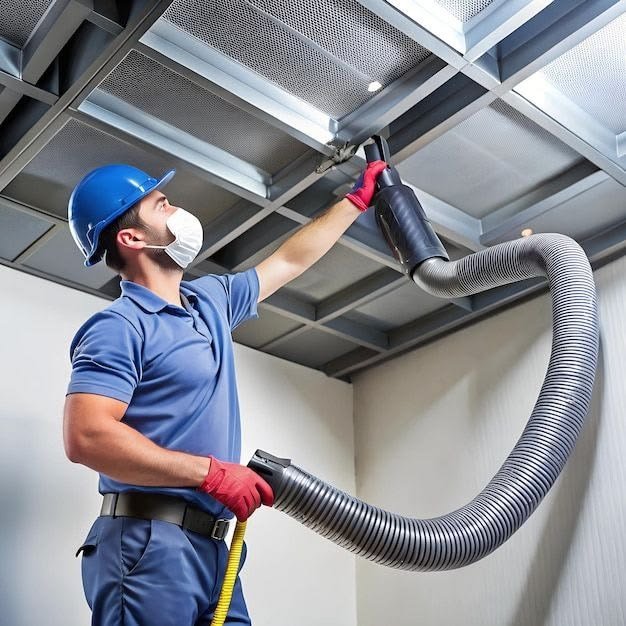
Overhead spaces are a hidden contamination risk. Airflow turbulence can easily resuspend dust that has settled on ceiling plenums, cable trays, and structural supports, sending it directly into equipment intakes .
The Risk: Contamination that has settled on overhead infrastructure can re-enter the environment due to changes in cooling patterns, vibration, or maintenance activity .
The Solution: A complete cleaning strategy must include overhead infrastructure .
Ceiling Plenum Vacuuming: Use HEPA-filtered vacuums to remove dust and particulate from the plenum .
Cable Tray and Raceway Cleaning: Dust and debris accumulate on these horizontal surfaces .
Structural Steel and Support Dust Mitigation: Remove dust from overhead beams and supports .
3.3 Cleaning Equipment Exteriors and Active Surfaces
This is the most delicate task, as it involves working directly on or near live IT equipment.
Wiping: Server cabinet exteriors, network rack surfaces, and UPS housings are wiped with anti-static, lint-free cloths .
Cleaning Agents: Use only ESD-safe cleaning agents. 70% isopropyl alcohol (applied to a cloth, not sprayed) is commonly approved .
Vacuuming Grilles: Air intake grilles and exhaust vents on equipment cabinets are vacuumed with HEPA-filtered tools to remove dust that restricts airflow . This must be done carefully to avoid pulling dust into the equipment.
4. Deep Cleaning & Micro-dusting: Advanced Techniques
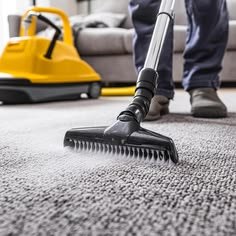
Deep cleaning goes beyond the surface, addressing particulate contamination that has settled in concealed areas or formed an insulating layer on equipment.
4.1 The Need for Deep Cleaning
Surface-level cleaning is insufficient. Dust and debris settle on underfloor supports, overhead cable trays, and deep inside airflow pathways . Deep cleaning is performed to a rigorous schedule (e.g., semi-annually or annually) to prevent this hidden build-up from causing failures .
4.2 Micro-dusting
This is a meticulous process focused on the removal of microscopic dust. Dust acts as an insulator, reducing heat transfer and forcing equipment to consume more power and run hotter . Proper micro-dusting removes these "insulating blankets" from components, improving energy efficiency (lowering PUE) and reducing thermal stress on hardware .
4.3 Verification and Validation
A professional cleaning process does not end once the dust is removed. It concludes with scientific validation to prove the environment is clean .
Post-Cleaning Particle Counting: Using a laser-based Optical Particle Counter (OPC), particle concentrations are measured at various points in the room .
Comparison to Baseline: The post-cleaning particle counts are compared to pre-cleaning readings and measured against the target ISO Class threshold (typically ISO Class 8) . This provides documented scientific proof that the environment is safe for IT assets, supporting warranty claims and audit requirements .
.svg)