
9.1 Introduction: What is an Addiction?

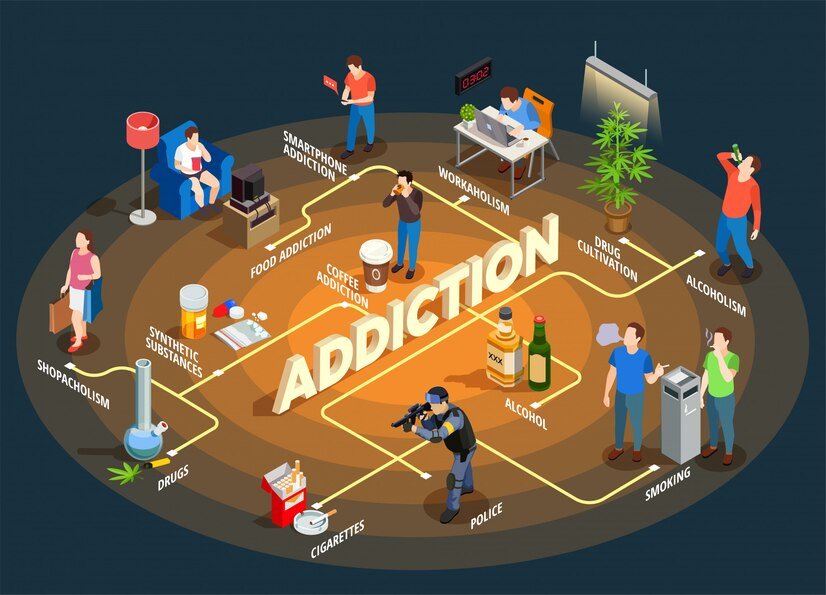
In this module, you will learn how CBT can be applied in the treatment and management of addictions. When someone has an addiction, they have lost control over doing, taking, or using something in a way that is causing them harm. Alcohol and drug addictions receive a lot of attention in the media, but people can become addicted to behaviours as well as substances.
For example
Some people become addicted to gambling and psychologists have begun to speculate that the concept of internet addiction is useful when talking about the behaviours of people who spend an excessive amount of hours online. A person can even become addicted to work. This may seem like a 'good problem' to have, but workaholism can have devastating effects. Working too many hours leads to physical and emotional fatigue. Workaholics often report interpersonal difficulties, as their behaviour damages the relationships they have with friends and relatives.
Shopping can also become an addiction. Buying something new can give a feeling of excitement and wellbeing and some people get into the habit of shopping whenever they feel low, bored, or inadequate in some way. This can spiral into an addiction. Following a shopping trip, the addict feels guilty and ashamed. They then seek out an activity to make themselves feel better and so the cycle continues. Other behavioural addictions include love addiction (in which a person feels compelled to enter into a string of relationships) and sex addiction (in which a person feels compelled to seek out sexual gratification, regardless of the harm it does to themselves and others).
When someone tries to stop ingesting an addictive substance or engaging in an addictive behaviour, they experience withdrawal symptoms. These include physical symptoms such as shaking and feelingsick and psychological symptoms such as extreme anxiety and feelings of depression.
What causes addiction?
As you discovered in Module 3, there is a sound biological reason behind the formation and maintenance of addictions. Addiction seems to run in families, suggesting that genetics play a role. However, being around other people who support an addiction or engage in addictive behaviours is likely to make the situation worse. Addicts find that their behaviours or substance abuse is an effective way to “block out” unpleasant situations or memories.
For instance
Someone in an abusive relationship or living in poverty may use an addiction to grant them a brief feeling of respite or happiness. Even when the addiction is no longer pleasurable and is driven by compulsion, the unhappiness it causes can be a distraction in its own right.
Fact
Approximately two million people in the UK have an addiction.
Source: www.nhs.uk
9.2 How Do CBT Practitioners View Addiction?
In the CBT paradigm, there are seven areas that contribute to psychological vulnerability and techniques are designed to reinforce these areas:
Internal and external high-risk situations:
For example, people, places, moods, emotions Dysfunctional beliefs about oneself, drugs, the world and people in general
1. Automatic thoughts that fuel the drive to use the substance in question
2. Psychological cravings and urges and their effect on behaviour
3. Maintaining factors or 'permission-giving beliefs' that users use to self-justify their addiction
4. Certain behaviours and rituals strongly related to the use of substances
5. Negative or adverse psychological responses to a lapse or a relapse
The CBT practitioner works with the addicted individual to help them the following attitudes and skills:
1. Learning how to distract and delay responses to urges and cravings
2. Identifying and recording dysfunctional ways of thinking
3. Developing a repertoire of polite but assertive comments when they want to say 'No' to drinking or using drugs
4. Learning effective and direct problem-solving skills rather than escaping from them
5. Learning to weigh the pros and cons of being addicted versus refraining and developing attitudes of self-respect and using them to replace self-abasing thoughts
6. Learning to maximise social support and saying no to people who are not supportive of their
therapeutic goals
There are three aspects to address when treating addiction.
Behaviours
Addictive behaviours are the primary indicator that someone is in need of help. They are usually obvious.
For instance
Someone with a cocaine addiction will use the substance and someone with a shopping addiction will spend inappropriate amounts of time and money buying items.
Cognitions
Although the behavioural aspect of addiction is the most apparent, CBT practitioners also focus on treating the thoughts and emotions that underlie the addictive process. Thoughts such as “I can't cope with my life without my addiction” keep the cycle going.
Emotions
An addict often began engaging in their behaviour in an attempt to distract themselves from unpleasant emotions. Unfortunately, the experience of becoming addicted to a substance or behaviour is unpleasant in itself and these feelings perpetuate the cycle of addiction.
9.3 The Role of Negative Thinking in Perpetuating Addiction

When a client holds negative beliefs about themselves, the world and the future, their personal power is reduced.
For instance
If they believe that they are fundamentally incapable of enjoying life without drugs because they are a 'boring' person who does not know how to have fun, they will not feel motivated to conquer their addiction. Negative beliefs give rise to the 'What the hell' effect, whereby an addict slips - for instance, they might have a single drink - then decide that since they have already failed all or nothing thinking.
A therapist treating someone for an addiction works to increase the individual's sense of personal power. Addicts often regard themselves as helpless in the face of their addiction. The urge to engage in self-destructive behaviour can be extremely strong. An important element of therapy is to help the client recognise that cravings might be strong, but they can adopt a healthier, more realistic attitude that will make it easier to process and live with them.
9.4 Example: A Treatment Protocol for Drug Addiction

To understand how these interventions fit together, it is helpful to look at a real-life example of a CBT addiction programme.A Cognitive-Behavioural Approach: Treating Cocaine Addiction is a publication written by the NationalInstitute on Drug Abuse. It provides therapists with a detailed plan to use when working with those addicted to illegal drugs.
The plan laid out in the manual, which is freely available and in the public domain, is as follows:
Session 1
The therapist needs to build a supportive, collaborative relationship with the client and explain how CBT 'works'. Clients are more likely to engage with the treatment if they understand the rationale behind the intervention. The client and therapist will also set up a therapy contract. The terms and conditions will vary according to the context and the client's needs, but they usually include a clause stating that the client may only attend treatment if they are sober.
The therapist and client also agree treatment goals at this stage. The nature of the goals will depend on the type of addiction; such as in the case of a cocaine or alcohol addiction, where abstinence is a suitable goal. However, this type of abstinence is not appropriate for those addicted to sex or shopping, because sex is a normal and natural function and no one can realistically avoid visiting shops forever.
A typical therapy session is 60 minutes long, but the introductory session should be longer - around 90 minutes in total. This provides the therapist with ample opportunity to understand the client's presenting problems and to gain a general insight into their life. It is common for a person with an addiction to be experiencing other psychological problems. This is referred to as 'co-morbidity' and should be explored during the first session. This is because a client may benefit from receiving more than one form of therapy, taking medication, or both.
Activity: Goals For A Shopping Addict
Estimated time: 5 minutes
Imagine that you are treating a client with a shopping addiction. They are currently making an average of three trips to their local shopping centre each week, spending hundreds of pounds at a time. In addition, they tend to order several things online every few days.
What set of preliminary goals might you encourage them to set?
Session 2
The first topic to be broached in therapy is how to cope with cravings. The therapist will explain to the client how cravings work, making reference to the biological processes that generate the urge to ingest a substance or engage in addictive behaviour. It is important that the client understands that experiencing a craving does not mean that they actually want to engage in the behaviour - it is merely a biological phenomenon. The therapist can also make reference to the principles of operant and classical conditioning when talking about triggers and cues that maintain an addiction.
The client should be given strategies they can use to overcome the craving without engaging in addictive behaviour. These strategies include distraction from the craving, talking about the craving with a trustworthy friend or relative, using mindfulness or 'urge surfing' to accept the craving, recalling the previous effects of giving in to cravings and using positive self-talk. As their homework task, the client could be asked to complete a diary sheet noting when they experienced cravings and how they dealt with them.
Session 3
The focus of the third session is motivation and commitment. At this point in the treatment, the client will understand how the CBT paradigm works and will have gained insight into the triggers that make them likely to engage in addictive behaviours. The next challenge is to refocus on the client's treatment goals. Some clients attending therapy for addiction will not be there of their own volition. They may perhaps have been forced to attend by a social worker, a judge, or other professional. Others feel as though they have little choice following an ultimatum issued by a partner or family member.
After the first few weeks of therapy, clients often re-evaluate their goals in light of what they have learned about themselves, addiction and the therapy process in general. They might want or need to change their goals and it is important that the therapist works with them to decide how to proceed. Quitting an addictive substance or behaviour is a huge undertaking. Even if the client understands on an intellectual level that their life will be better if they change, the therapist might still come up against a degree of ambivalence.
Treatment is most likely to succeed when both parties can talk about and acknowledge what the client will lose by giving up their addiction. This also provides a starting point for a frank discussion about the rationalisations addicts use (e.g. "The world is a boring place without coke") and how these thoughts can be challenged.
Session 4
Refusal skills and assertiveness are essential tools for people recovering from addictions, particularly those involving drugs or alcohol. A major barrier for a lot of addicts is the availability of drugs and alcohol. Saying 'No' can be challenging. Addicts often associate with people who enable their behaviour. This can fuel ambivalence.
For instance
If their best friends all use cocaine, a client trying to overcome a drug habit may have to choose between leading a healthier lifestyle and maintaining close relationships with people who enable (or even encourage) their addiction. Healthy relationships will survive this transition, because friends and relatives should be willing to prioritise the client's wellbeing. Unfortunately, some relationships may come to an end and the therapist must be willing to help the client through these changes.
Fact
Alcohol abuse is the most significant risk factor for disability, illness and death amongst 15-49 year olds in the UK.
Source: www.alcoholconcern.org.uk
Activity: Why Is It So Hard To Say No?
Estimated time: 5 minutes
To an outsider, it may seem obvious that someone with a drug addiction should simply start saying No when offered the substance. However, saying No could have a negative effect on other areas of their lives, even though it moves them closer to a life free from addiction.
Can you think of one possible negative effect?
Session 5
This session looks at how addiction can be maintained via seemingly irrelevant decisions. Throughout treatment, an addict will face high-risk situations that are beyond their control: such as, a shopping addict who works in a retail park, or a person who lives in a neighbourhood where drugs are readily available. Both are vulnerable to high-risk situations, but they cannot eradicate the risk altogether.
However, patients also expose themselves to high-risk situations voluntarily, although they might not realise that they are doing so at the time. In making decisions that go against their best interests, they can prolong or even worsen their addiction. Such decisions are labelled 'Seemingly Irrelevant Decisions' (SIDs) in CBT parlance. Therapists must explain to a client how this works and what they can do to prevent it.
Example of a SID
Let's take an example of a SID to see what they look like in real life:
Steve, who was a cocaine addict, had been in therapy for several weeks. He had managed to remain abstinent for over a fortnight. His wife was going away for a couple of nights and Steve wasn't sure what he was going to do that evening. As he was driving home from work, Steve felt compelled to 'have a change' and take a scenic route home. He thought that since his wife was away, he may as well get home later than usual. As he drove home via this new route, he passed a bar where he had purchased and used cocaine in the past.
It was a warm day, so Steve decided he would drop into the bar and have a large soft drink. He reasoned that since his problem had been drugs, not alcohol, this would present no problems. He then happened to meet a friend who was in possession of some cocaine and Steve relapsed within half an hour. Although Steve did not make a conscious decision to use cocaine before setting off on his drive home, he was placing himself in a risky situation by driving past an establishment he associated with drug use. The situation worsened when he actually went inside, because he was then at risk of bumping into an old friend who enabled his habit. Steve's SID - to take a different route home - was actually of great significance.
Once a client understands why they make SIDs, they are in a position to take pre-emptive action. The key to avoiding SIDs is awareness. If Steve had taken a moment to pause and ask himself why he was suddenly so keen to take a different route home, he might have realised that he was placing himself in a position to relapse. Therapists often ask clients to talk about their own SIDs and how they could have been prevented. This makes the concept immediately relevant to their own addiction and provides a good starting point from which a client can devise backup plans. The concept of safe decision-making is key at this stage. To keep themselves safe, the client needs to think carefully about even the small decisions they make every day and to be honest with themselves when questioning their true motives.
At this stage in the therapy, the client will only have a few sessions left with the therapist. It is essential that they engage with their homework, which will typically entail writing down the SIDs made over the course of the week and how the client avoided potentially dangerous situations. Clients should be encouraged to think through the positive and negative consequences of all their options when making a decision and to hone in on self-rationalisations and dangerous phrases such as “I have to...”, “I can handle...”, or “It doesn't matter if I just...”.
Session 6
Although clients receiving CBT for addiction will learn how to anticipate high-risk situations and improve their decision-making skills, they will still be caught off-guard from time to time.
For instance
A drug user might have succeeded in remaining abstinent for several weeks, but then suddenly encounter a person from their past who they associate with drug use and then relapse as a result.
Another common reason for relapse is personal stress. An addict who loses their job or an important relationship will feel tempted to fall back on their old habits as a means of seeking comfort or a temporary boost in mood. During this session, the therapist will explain to the client that unforeseen circumstances are a normal part of life and that it is a good idea to plan for unexpected high-risk situations. The solution is to put together a personal but generic coping plan that can be used to help a recovering addict through a difficult event without relapsing.
The therapist will ask the client to think of three or four potential stressors they might encounter over the coming months, such as starting a new job or ending a relationship. The client should then think about how they might react to this stressor and whether their emotions will challenge their commitment to behavioural change. The therapist and client can then work together to make a written plan, which the client can keep in a convenient location and call upon whenever they feel the need.
The plan should include:
1.Several telephone numbers of supportive
2.Trustworthy people who can be relied upon to provide constructive support
3.A list of negative consequences that have arisen in the past as a result of engaging in the addiction
4. A list of positive thoughts that can be used to override destructive thinking patterns that promote destructive behaviours
5.A list of reliable distraction techniques and a list of safe places where the client can 'ride out' the crisis.
The therapist and client can put together this plan within the therapy session, but the client may also be assigned the task of refining it as part of their homework.

Session 7
The very nature of addiction means that an addict will typically have access to a limited number of coping skills they can use to overcome everyday problems and setbacks. They may be keen to overcome their addiction, but feel helpless when they need to devise a solution to a situation that is causing them trouble. Therefore, clients need to learn how to take the initiative in solving problems.
This improves self-esteem and also makes it less likely that they will relapse in an attempt to 'cope' with the difficulties they face. Clients who exhibit impulsive thinking styles are especially likely to benefit from learning problem-solving skills. Clients often think -whether consciously or not - that once they overcome their addiction, life will be easy and problem-free. Those who think this way can become disheartened when they realise that their hopes are unrealistic and they will be vulnerable to relapse unless they have acquired a reliable set of problem-solving skills.
The therapist's goal is to emphasise that everyone faces problems from time to time and that good problem-solving skills can resolve most of life's trials. They will then teach the client a simple but effective series of steps that can be applied to
almost any situation:
1.Recognise that there is a problem. This includes identifying clues such as confusion, anger and frustration.
2.Recognise the exact nature of the problem. The client needs to be able to articulate their difficulties.
3.Consider all available options. The next step is to brainstorm as many solutions as possible.
4.They should be willing to write down all their ideas, even if they seem silly or unrealistic.
5.Clients should bear in mind that choosing not to act is always an option.
6. Choose the best solution. The client then needs to evaluate the advantages and disadvantages of each potential solution. This entails thinking ahead - a skill that can take time and effort to accomplish.
7. Implement and evaluate the solution. It is not realistic to assume that the above steps will work perfectly each and every time.
A client should be prepared to learn from their experiences and become comfortable with the idea of making mistakes. The therapist should reassure the client that problem-solving is sometimes very difficult and that complicated problems might necessitate several repetitions of the above process. Homework associated with this session may include filling in problem-solving sheets for discussion with the therapist at the next meeting.
Session 8
Clients entering therapy for cocaine abuse are usually experiencing psychosocial problems alongside their addiction and these can present a major barrier to treatment.
For instance
A cocaine addict living in a deprived area may sell drugs as a means of securing the money they need for food and other basic living expenses. When a therapist takes steps to understand these broader issues and help the client overcome them, they are said to be engaging in 'case management'. The goals of a case management session are to review and apply problem-solving skills in order to overcome these issues. Client and therapist can work together in developing concrete plans that address these problems. This may entail making contact with local agencies that can provide support for issues such as lack of suitable housing and healthcare. Clients can be overwhelmed by the prospect of overcoming these barriers, especially if there are multiple problems to overcome.
The quality of the therapeutic alliance is important, because suitable encouragement from the therapist can go a long way in promoting the client's independence and problem-solving skills. Clients should be supported in identifying resources (both external and internal) they can call upon, in setting realistic goals and putting together a plan. It may be necessary to make a list of all barriers and then choose two or three to prioritise. Depending on the nature of these problems, they might be addressed early on in treatment. The therapist must use their professional judgement in deciding the treatment structure best suited to the patient's problems. If a barrier to treatment is identified and the therapist and client have formulated a plan of action, the first part of every session thereafter should include a review of the client's progress. The therapist should take every opportunity to congratulate the client on making small steps in the right direction.
Session 9
Cocaine addicts may not inject intravenously, but they are much more likely than the general population to engage in unsafe sexual practices. As a result, they are at higher risk of HIV exposure. Depending on the nature of their lifestyle, it may be appropriate to address the issue of HIV exposure and risk reduction as part of a client's treatment.
The therapist will assess the client's risk for HIV infection, build motivation to change their risk behaviours, set goals for behavioural change as appropriate, problem-solve barriers to risk reduction (such as a reluctance by their partners to use condoms) and provide objective information about HIV and other STIs. This includes information about HIV testing, using barriers during sexual activity and how the virus can be transmitted via needles.
Session 10
At the therapist's discretion, the client may be allowed to bring a close friend or family member to one or two of their therapy sessions. This is not a substitute for relationship therapy. Rather, the aim is to enhance the level of social support the client receives in overcoming their addiction. The aims of these sessions are to offer significant others the chance to learn more about the client's treatment and to let them know how best to support the client in making positive changes. The therapist and client need to discuss the sessions in advance. When selecting the significant other who will attend the sessions, the client needs to ensure that the person is someone who will not enable their addiction and who will be in a position to offer meaningful support. There also need to be ground rules.
For instance
The significant other will not be permitted to berate the client for making them feel upset. During the session, the therapist will ask the significant other how and when they will be able to offer support to the client. This might take the form of driving them to and from therapy, helping to reduce cues that have historically prompted drug use, engaging in pleasant activities as rewards for sobriety, helping the client devise their coping plan, monitoring medication compliance and offering support during cravings. The client and their significant other may wish to draw up a contract so that each party knows precisely what is required. This may be done within or beyond the therapy session.
Session 11
The final session in any course of therapy carries great significance. It is an opportunity to assess the treatment plan, ascertain whether the client has made progress concerning their treatment goals and the next steps for the client. The therapist should provide feedback to the client, congratulating them on the skills they have acquired. They should also draw the client's attention to areas in which they could stand to improve and give them practical suggestions as to how they could further develop their skills.
The client should also be given the opportunity to tell the therapist what they found most helpful about the treatment and what could be done to improve the programme. If a patient has not managed to stop or significantly reduce their drug usage, the therapist may recommend that they seek a higher level of care, such as an inpatient programme or interventions delivered in day centres.
9.5 How the Sessions are Structured

Each session should follow the 20/20/20 rule. During the first third of the session, the therapist should ascertain the client's current status and concerns. If they set the client a homework task during the previous session, it should be reviewed and the client given the chance to discuss any questions that arose over the past week. If working in conjunction with a multi-disciplinary team, the therapist will also discuss the results of the patient's most recent urine or blood test to ascertain whether they have been using the substance.
In the second third of the therapy session, the therapist should raise the new topic and ensure that the client understands why it is relevant to their situation. If the client resists talking about the topic, the therapist must take steps to understand why. In the final third of the session, the therapist should assign relevant tasks as homework so that the client can implement what they have learned in the session.
Module Summary
An addiction is characterised by a lack of control over a substance or behaviour. They can have devastating effects on an individual's life and warrant prompt treatment. CBT is an effective treatment protocol, especially for substance abuse, although the basic principles involved in challenging addiction-related thoughts and behaviours are applicable to behaviour-based addictions too. It can be used alongside medication and other forms of therapy. There are many treatment manuals available for therapists to use, offering week-by-week guidance.
CBT for addiction entails helping a client come to terms with their addiction, establishing the triggers and maintaining factors that maintain it, learning how to cope with cravings and urges, acquiring new techniques for handling difficult feelings and improving their interpersonal skills. Addiction seldom occurs in a vacuum and it is important that a client learns how to say No when given the chance to engage in a behaviour or take an addictive substance. This might necessitate significant lifestyle changes and the therapist needs to support them through this period of transition.
Finally, CBT for addiction is also intended to prevent relapse. Therapists provide clients with problem-solving skills, teach them how to identify high-risk situations and assist them in solving any psychosocial problems that are preventing them from fully engaging with treatment.
.svg)



