
1.1 Introduction

Welcome to this course on Cognitive Behavioural Therapy. In this module, you will receive a brief overview of the principles and history of CBT, together with an insight into its history and the psychologists who made it a mainstream therapy.
What is CBT?

CBT is a time-limited, talk-based therapy that aims to help people overcome psychological problems by changing their thinking patterns and behaviours. A course of CBT typically lasts between six and 12 weeks.
The following basic principles make up CBT therapy:
* CBT therapy involves an evolving case formulation and individual conceptualization of each client's problem.
* In order for CBT therapy to be effective, it needs to based on a sound therapeutic alliance.
* The practitioner needs to summarise the client's thoughts and feelings (including maladaptive thoughts) and request for feedback at the end of each session
* CBT therapy involves active participation and collaboration from the client; it is not a one-way communication street where the therapist talks down to the client
* CBT is problem-focused and goal-oriented and works to resolve specific challenges
Three popular misconceptions about CBT:
* CBT is a standard, one-size-fits-all approach - Every client and every case will involve a different approach and analysis. This is because every person has different traits, circumstances, history, personalities and attributes.
* CBT involves shifting negative thoughts straight away to positive ones - At its core, CBT helps clients explore their lives on a more empowering level and formulate practical, solution- oriented approaches to problems.
* CBT completely ignores the past - While CBT practitioners initially focus on the present, many times, the therapy will help the client understand his or her responses to early childhood experiences.
For example
Suppose that an employee is
summoned to their manager's office and told that they need to improve in
two or three key areas over the coming weeks. The employee might tell
themselves that this incident is typical of their life experience - that
they tend to do everything wrong, that they are bound to fail at work and
so on. They would leave the meeting feeling low, inadequate and concerned
for the future of their job.
On the other hand, another
employee might interpret the meeting as evidence that their boss cares
about their career trajectory and wants them to fulfil their potential.
Someone with this mentality would come away from the meeting feeling encouraged.Compared
to the other employee mentioned above, they would be more likely to put in
greater effort at work and subsequently enjoy greater success.
Thoughts, emotions and behaviours

A CBT practitioner will look at a client's thoughts, emotions and behaviours, when understanding their problem and helping them to overcome it. This is because all three elements work together to determine a client's wellbeing.
Take the example of Health Anxiety (HA): An individual with HA will often examine or check their body for 'symptoms' and then ruminate on what these symptoms might mean. They will typically spend a long time reading books, articles and websites, in a bid to understand what is happening in their body. They will often conclude that they are suffering from a serious disease and will worry even more as a result.In this example, we can see how thoughts, feelings and behaviours feed into one another.
Someone with HA will have a thought (e.g. “I have a strange skin lesion! It could be skin cancer!”), which leads to negative feelings (e.g.panic, sadness) and behaviours (e.g. reading much information on skin cancer, posting on skin cancer support forums) which lead to further negative thoughts and feelings.
The cycle will continue, unless the individual decides to challenge their thoughts, handle their emotions in a more constructive manner, prevent themselves engaging in destructive behaviours, or a combination of the above. It is the role of a CBT therapist to point out how unhelpful cycles develop and to help individuals break them.
Fact
In the UK, one in four people experience a mental health condition every year.
Source: www.mind.org.uk
1.2 A Brief History of CBT and Key Figures in the Developmnt of CBT

CBT has its roots in the behaviourist paradigm. Later, psychologists used this focus on behaviour as the basis of behavioural therapy, which in turn laid the groundwork for CBT.In the first half of the 20th century, a new paradigm came to dominate Western psychology behaviourism.
Advocates of this approach included B.F. Skinner, who believed that attempting to measure human thought was futile and it was best to focus on behaviour instead, when trying to understand the human condition. The behaviourists carried out much of their early work using animals. Despite the obvious differences between humans and pigeons (one of Skinner's favourite animal subjects), it was believed that the same basic principles governing animal behaviour could be applied to people.
For example
Skinner used the results of his work with animals to devise a model of gambling addiction. He found that if an animal received a reward when it pressed a button, it would continue to repeat this behaviour. If it did not receive a reward, it would stop.However, he discovered that if the animal received a reward at random intervals it would become 'addicted' to pressing the button, persisting long after the rewards stopped coming. This finding appeared to map on to the human experience of compulsive gambling, whereby someone only wins occasionally yet continues to play over and over again.

Behaviourism laid the groundwork for Behavioural Therapy. This form of therapy, which still inspires some mental health professionals today, operates according to the principles of conditioning.For instance, Proponents believe that a good way to stop someone engaging in an undesirable behaviour is to use punishment so that they make a mental connection between the behaviour and an undesirable outcome. At the same time, behavioural therapists believe that using a reward system is the best way to promote good behaviour. Behavioural therapy is not concerned with the subjective human experience, or what a person is thinking before they act.
It is also worth noting that behaviourism arose in part as a backlash against the psychoanalytic paradigm that rose to prominence in the psychotherapy world at the end of the 19th century. The psychoanalysts believed that in order to understand an individual's personality and make sense of their current psychological distress, it was necessary to take a close look at their past, particularly the relationships they had with their parents and other figures that influenced their life. Moreover, the language of psychoanalysis contained (and remains) heavily influenced by symbolism and metaphor. Behaviourism represented a sharp diversion from this approach to psychopathology.
1.3 The Cognitive Shift
In the 1950s and 1960s, a different perspective emerged in Western psychology. A new generation of psychologists began to realise that the way a person thinks is not only important in determining how they feel and behave, but that these thoughts can be challenged and changed.
Albert Ellis and Aaron Beck pioneered this new approach. Although these concepts have been refined over the years to create contemporary CBT, they are still influential today. It is best to think of them as core ideas underpinning the therapy.
Albert Ellis

Ellis was an American psychologist who believed that an individual's interpretation of an event dictated the level of distress they would feel as a result. He built on this observation in the development of Rational Emotive Behaviour Therapy (REBT), which aimed to help a client identify the self-defeating ideas and thought patterns that held them back in life.
He found that when a client located their irrational beliefs (e.g. “I must excel in all areas of my life”), their behaviours would change accordingly and their mood would improve. Ellis devised the ABC Model and the ABC Technique of Irrational Beliefs. These provide a therapist with a framework they can use in finding and changing their clients' beliefs.
In the ABC model:
A stands for Activating Event
B stands for Beliefs
C stands for Consequences.(Specifically, 'Consequences' refers to a person's emotional state.)
Dr Aaron T. Beck
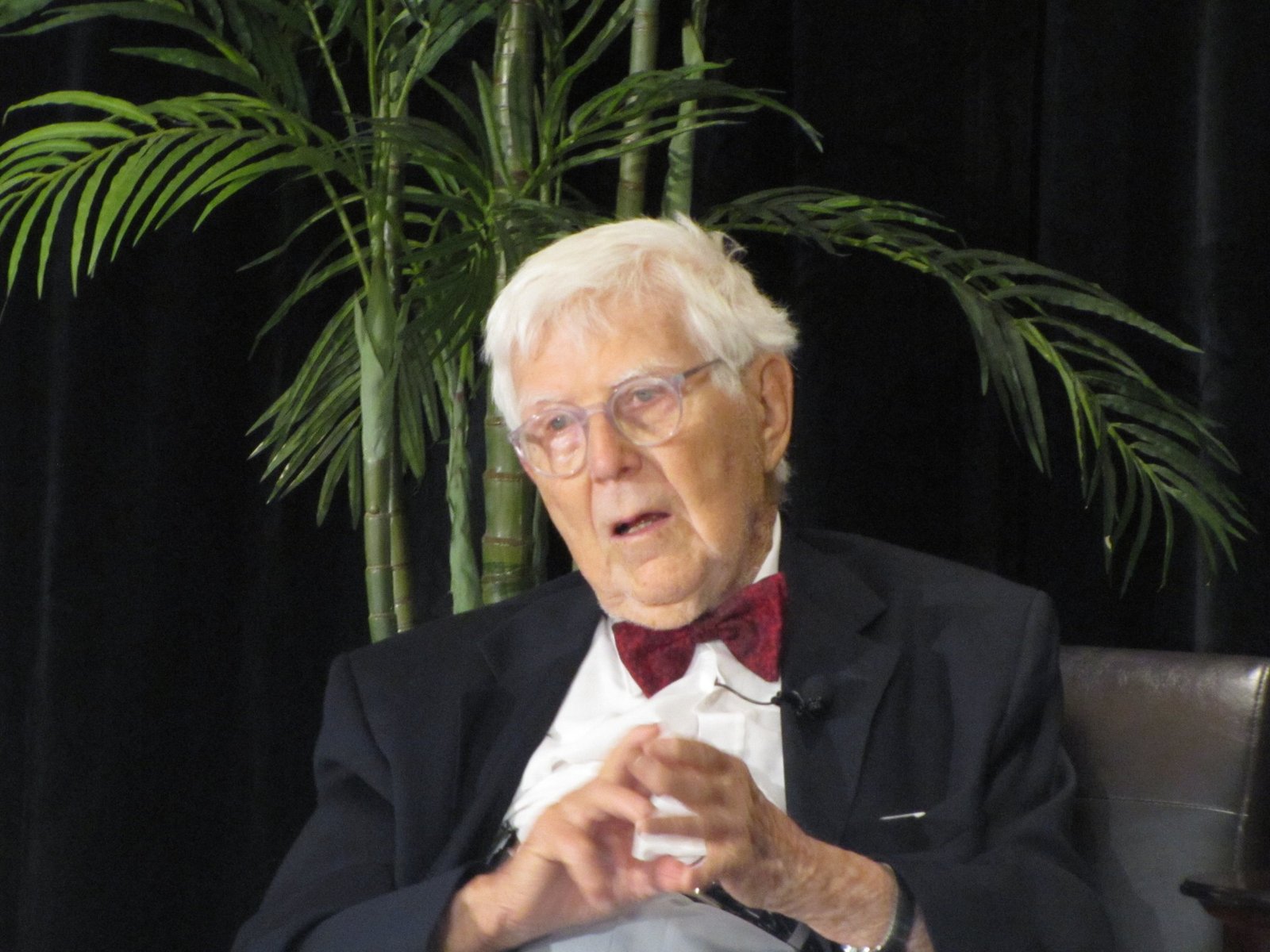
Dr Beck was a Pennsylvania-based psychiatrist who carried out research with depressed patients. In many respects, his techniques were similar to those used by Ellis, but he was especially interested in depression. He was intrigued by the psychological mechanics of the disorder - what kinds of thoughts depressed people tended to have and how these thoughts kept their depression going.
He discovered that depressed clients routinely - in fact, automatically - engaged in negative thinking about themselves, the world around them and the future. When he helped his patients challenge these negative thoughts, their condition improved. He named his approach Cognitive Therapy (CT).Beck believed that therapy should be practical and he actively encouraged his patients to experiment with new ways of thinking in their day to day lives.
In the 1960s Beck wrote about three psychological phenomena he thought were responsible for creating and sustaining depression: Negative self-schemas: A schema is a set of beliefs and thoughts a person has about a situation, other person, or idea. For instance, a 'restaurant' schema typically includes ideas about the etiquette of interacting with waiters, how to order from a menu and so forth. When a person holds a negative self-schema, they carry with them negative assumptions, such as “I am a bad person” and “I never do anything right”.
The cognitive triad: This consists of negative thoughts about the self, the world and the future.
Errors in logic: Beck noticed that the majority of his depressed patients exhibited similar negative thinking patterns. They included over-generalisation (in which a person looks at a single negative event and draws a negative conclusion about themselves as a result) and minimisation (in which a person plays down positive events in order to maintain their negative self-schema and view of the world).
Modern CBT is based on many of these pioneers' concepts, but it has been taken in new directions. In this course, you will learn about more recent innovations and offshoots of CBT, such as Acceptance and Commitment Therapy (ACT) and Cognitive Analytic Therapy (CAT). There are also versions of CBT that have been developed for specific psychological problems; such as CBT-E, which is an intervention that targets eating disorders in both children and adults.
1.4 What Problems Can Be Addressed Using CBT?

CBT can be used in the treatment of depression, anxiety disorders, panic disorder, post-traumatic stress disorder (PTSD), phobias, eating disorders, insomnia and addictions (including alcohol misuse). It can also be used in the treatment of physical health complaints such as chronic fatigue syndrome (CFS) and irritable bowel syndrome (IBS). CBT does not relieve these conditions, but it helps people cope with their symptoms and therefore improves their quality of life.
The NHS states that CBT can be just as effective as medication in the treatment of specific mental health problems, but that this is not the case for everyone. Each case is different and techniques that result in complete relief in one patient might not result in meaningful change in another.
Activity
Estimated time: 5-10 minutes
Why Might CBT Be Unsuitable For Some People?
Why might it not be appropriate for some people?
Although CBT is recommended for many client groups, it is not the right choice for everyone.
1.5 Contraindications

CBT has many advantages. It
can be helpful for people who initially wanted to try controlling their mental
illness with medication, but have not seen meaningful results. It can also
be completed in a relatively short space of time compared to other forms
of therapy, such as psychoanalysis. It can be delivered in a very
structured form - you will learn more about the structure of CBT later in the
course - which means that it can be delivered in person, via self-help
books and even online programmes. The practical nature of CBT means that
it teaches a client how to react more positively to situations in everyday
life. This enables them to permanently change their lifestyle, which is
protective against relapse. On the other hand, CBT is not a magic
bullet. In order to gain any significant benefit from the therapy, a
client must possess sufficient insight into their situation.
For instance, Someone
who refuses to acknowledge that they are thinking in a distorted way is
unlikely to engage with the therapy. Other clients might acknowledge that
they need help, but lack the motivation to complete the exercises and
answer the therapist's questions. People with severe depression may lack
the mental energy required to complete a treatment programme. Children and
adolescents can benefit from CBT. At the same time, it is important that they
have the capacity to understand the basic concepts and that they are
willing to engage with the therapist.
can be helpful for people who initially wanted to try controlling their mental
illness with medication, but have not seen meaningful results. It can also
be completed in a relatively short space of time compared to other forms
of therapy, such as psychoanalysis. It can be delivered in a very
structured form - you will learn more about the structure of CBT later in the
course - which means that it can be delivered in person, via self-help
books and even online programmes. The practical nature of CBT means that
it teaches a client how to react more positively to situations in everyday
life. This enables them to permanently change their lifestyle, which is
protective against relapse. On the other hand, CBT is not a magic
bullet. In order to gain any significant benefit from the therapy, a
client must possess sufficient insight into their situation.
For instance, Someone
who refuses to acknowledge that they are thinking in a distorted way is
unlikely to engage with the therapy. Other clients might acknowledge that
they need help, but lack the motivation to complete the exercises and
answer the therapist's questions. People with severe depression may lack
the mental energy required to complete a treatment programme. Children and
adolescents can benefit from CBT. At the same time, it is important that they
have the capacity to understand the basic concepts and that they are
willing to engage with the therapist.
As they have less control over their circumstances than adults - for example, most of them will be constrained by school and by their parents' preferences - CBT is likely to be useful only when the adults responsible for their care understand and support the process. CBT also entails homework between sessions. A practitioner assigns this homework so that the client can implement the techniques and insights they have gained from the sessions. Homework can also involve gathering data that informs the CBT practitioner's next steps.
For example
A client might be asked to keep a diary of their intrusive thoughts. If their records suggest that this is a serious problem that interferes with their day to day functioning, this signals to the therapist that they should prioritise this issue over any others in the upcoming sessions. A therapist will tailor the amount and nature of the homework to the individual client, but as a rule, the latter should expect to spend at least a couple of hours each week on between-session tasks. People with packed schedules or difficulty organising themselves can become overwhelmed. People receiving CBT need to be aware that their therapist will expect them to confront their fears and anxieties. Even though this is done in a structured way with a lot of encouragement from the therapist, it is still a daunting task. Someone with complex needs or a history of trauma might gain more benefit from a style of therapy that takes a closer look at their past and how it influences their current behaviour.
CBT focuses on the client's ability to change. This is empowering, but it does not address their situation. For instance, If a client is depressed and they live with relatives who emotionally abuse them, their depression is unlikely to completely relieve their suffering. In this example, the client would benefit from either changing their circumstances (which may be more likely if they gain confidence as a result of CBT), or family-based therapy.
1.6 Does CBT Do Enough To Address The Past?

There is an ongoing debate in therapy circles with regards to whether CBT does enough to address deep-seated issues and underlying psychological problems that are unfolding in the present - or whether it is necessary to analysethe past at all! Some psychologists and therapists believe that in order to help a person overcome mental distress and destructive behaviours, it is necessary to analyse the relationships they had (and still have) with their first caregivers.
Advocates of CBT argue that it is more constructive to focus on a person's present behaviours and work with them in breaking unhelpful cycles that hinder their quality of life. It can also be argued that CBT does in fact take the past into account - a CBT practitioner will work with the client to establish when they first began to use negative thought patterns, which often entails thinking about key events in their life to date.
In CBT programmes developed for victims of trauma, the client is encouraged to address the past and come to terms with key events. The earliest CBT therapists emphasised that a person's negative self-schema could be shaped by past events. For instance, If they were abandoned by a partner or parent, they might have started to believe that they are an innately unlovable person, or unsuited to relationships. However, it is indisputable that CBT is one of the most 'now-centred' therapies.
Activity
Estimated time: 5+ minutes
Imagine that you are a CBT therapist treating someone for depression.
Does The Past Matter In Understanding The Present?
How much would you want to learn about their past and why?
What would you do if your client seemed reluctant to talk about an earlier period in their life?
1.7 What Are The Primary Methods Used By CBT Practitioners?

Homework
Homework is a key component of CBT. It involves tasks that must be carried out by a client betweentwo sessions. For instance, If a therapist is interested in the types of self-destructive thoughts that underpin a client's distress, they may ask them to keep a thought-log or thought-diary for a few days. A common type of CBT homework involves filling in forms that map the relationship between an external event, how the client interprets it, how the thoughts give rise to feelings and then what the client does as a result. This data can then form the basis for discussion in the next session.
Formulation
Early on in a course of therapy, the CBT practitioner will put together a case formulation. This is a means of piecing together the origins of a client's problems, the thought patterns that keep them going and how they are influencing the client's life.
Behavioural activation
This is often used with clients who are receiving therapy for depression. One of the major problems depressed clients face is a lack of motivation. Behavioural activation focuses on helping a client engage with positive activities, even if they do not think that they will result in a meaningful change in their mood.
For example, A therapist might help the client compile a list of things they used to enjoy and then help them plan how they could integrate these activities back into their schedule.
Unravelling cognitive distortions
Given that a major principle of CBT is that distorted thought patterns are responsible for psychological distress, it makes sense that a key focus is highlighting a client's unhelpful thought patterns and challenging them. Cognitive Restructuring is a term used to describe the process by which a CBT therapist helps a client to understand how and why their thoughts are destructive and try healthier ways of thinking about themselves and the world.
Exposure and response prevention
Clients with OCD benefit from this technique. In brief, the client is instructed to expose themselves to a trigger that usually elicits the unwanted behaviours and then avoid giving in to their urges.
For instance, If a client feels compelled to wash their hands after touching a door handle, they will be told to 'sit it
out' and record their feelings, instead of following through on their actions. Over time, the urge to engage in the unwanted behaviour will lessen.
Interoceptive exposure
This technique is useful for clients who experience symptoms of anxiety and panic. People with anxiety frequently fall into a vicious cycle of thoughts and behaviours. When they experience the physical symptoms of anxiety, they start to worry that they herald a serious illness or even a medical emergency such as a heart attack.
They then begin to have thoughts such as “I'm dying” or “I'm going to faint” which can exacerbate the problem even further. In some cases, a client may start to live in fear of experiencing a panic attack. Interoceptive exposure encourages the client to deliberately induce these physical sensations (for example, via deliberate hyperventilation) in a safe environment, so that they no longer fear the symptoms.
Breathing exercises
Breathing exercises are not unique to CBT. However, they are often used as a useful tool in helping people with anxiety disorders calm themselves when faced with an anxiety-provoking situation. These exercises include 'coloured breathing', which invites the client to imagine that they are breathing in calming blue air and exhaling red air (associated with anxiety or anger).
Progressive Muscle Relaxation (PMR)
This is a specific relaxation technique that trains the client to relax their muscles.
Visualisation
If a client is struggling to think of positive outcomes in their life, or needs to build their confidence in advance of a difficult or daunting situation, visualisation can help improve their performance.
1.8 The Role Of The Therapeutic Alliance In CBT
In general, the relationship between client and therapist plays a key role in determining the outcome of therapy.This is true, regardless of the therapy type. However, the major schools of therapy differ in terms of how they perceive the therapeutic relationship.
For example
Fact
In the UK, one in six people experience a mental healthproblem in any given week.
Source: www.mind.org.uk
1.9 The Research Behind CBT - How Do We Know That It Works?

CBT is recommended as the therapy of choice by the NHS in the treatment of anxiety, depression, eating disorders and other forms of psychological distress. Compared with other forms of psychotherapy, it has a strong evidence base. The authors of a meta-review published by the journal Cognitive Therapy Research concluded that “in general, the evidence-base of CBT is very strong”. They examined the results of over 100 studies, evaluating the efficacy of CBT in the treatment of depression, anxiety, schizophrenia, stress and 12 other psychological problems. It emerged that CBT is particularly useful for clients with stress, anxiety disorders, bulimia and pathological anger.
There is also evidence that CBT might work as well as medication even for clients diagnosed with severe depression. An article in the medical journal Psychiatric Clinics Of North America describes CBT as “efficacious in the acute treatment of depression” and that it offers a meaningful means of preventing relapse following treatment, which “cannot be said for medications”.
There are multiple methods that researchers can use to test whether a therapy works. They may recruit two groups of people with the same diagnosis and keep one group on a waiting list (control condition) whilst the other receives a course of CBT. This may be unethical in some cases because the control group are denied therapy, but if they would be required to wait anyway (for instance, if they are on an NHS waiting list) this method can work well.
Another approach is to administer two or more different types of therapy to corresponding groups within a study and compare outcomes across each condition. Whichever method is used, there are several factors that must be kept as consistent as possible across the groups. These include the age of the participants, their psychiatric diagnosis, whether they are taking medication and the therapists' level of training and experience.
Module Summary
CBT is a talk-based, time-limited therapy that is used in the treatment of several mental illnesses, including depression, OCD and eating disorders. The underlying premise is that thoughts, feelings and actions work together in creating and sustaining maladaptive behaviours and a negative approach to life. Although CBT acknowledges that the past can play a role in the development of a negative self- image and self-schemas, a CBT practitioner focuses mainly on the present. It is backed by a strong evidence base and has been shown to benefit clients of different age groups. For this reason, it is a widely-used form of therapy favoured by the NHS.
CBT can be delivered in a highly structured format, making it suitable for individual and group therapy. It can even be delivered online via computer programs or online courses. Modern CBT comes in various types and flavours, including ACT and CAT. However, it still draws on the basic ideas put forward by its early pioneers, namely Albert Ellis and Aaron Beck. Common CBT techniques include journaling, identifying and challenging cognitive distortions and interoceptive exposure.
Homework is a key component of CBT and clients are expected to devote time (sometimes several hours) between sessions in which they implement new techniques and try new ways of thinking about themselves and the world. The therapeutic alliance is important in CBT, but it is not seen as a therapeutic tool in itself. Rather, the relationship is one of collaboration. The therapist acts as a 'wise guide', rather than an authority figure or supportive friend.
.svg)



