
5.1
Introduction

The traditional art of Indian Head Massage
is based on the ancient system of medicine known as Ayurveda,
which has been practised in India for thousands of years.
Massage has always been an important feature
of Indian family life. Indian Head Massage
is a treatment that has evolved from traditional techniques
that have been practised in India as part of a family ritual for thousands of years.
Indian Head Massage
is a wonderfully relaxing massage
that originated in India, where it has been practised
for over 5000 years.
natural therapies and encompasses the mind, body and spirit. Ayureveda simply means 'the science of life' and strives to restore balance and inner harmony to the mind, body and spirit.
today across India. It is passed down from generation to generation and is very much part of family life with children as young as six being taught this ancient skill. Babies are massaged every day and between the ages of three and seven years old children
receive weekly massage.
physical benefits it also helps the family to bond and is a way of showing affection. Head massages are also offered
in barbershops as part of
the service and
can also be found in most holiday
resorts. Indian Head Massage was
first bought to
England by Narendra Mehta. Narendra Mehta who was blind from the age of one, grew up in India and head massage was an integral part of his life.
He came to England in the 1970s to train as a physical therapist. But he missed his head massage, so, in 1978 he then returned to India to study the benefits and practice of champissage, extending
it to include neck,shoulders and face before introducing it to the UK in the early 80's. There is no right or wrong way and sequence
of movements vary from one therapist to another.
5.2 : Ayurveda
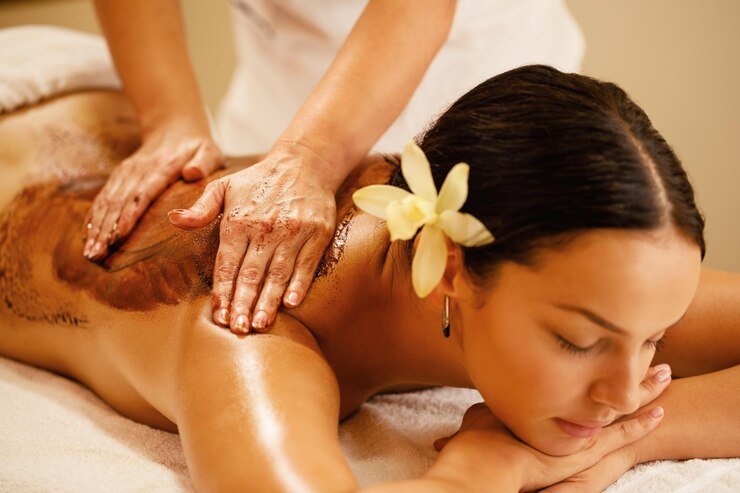
Ayurveda is recorded as the world's
oldest Indian healing
system.
The word 'Ayurveda' comes from Sanskrit
and means 'the science of life and longevity'. The Ayurvedic approach
to health is the balance of body, mind and spirit and the promotion
of long life. Ayurveda recommends the use of massage together
with diet, herbs,
cleansing, yoga, meditation and exercise. The ancient texts say that the human life span should be around 100 years and that all those years should be lived in total health, physically and emotionally. The whole aim of Ayurveda is in prevention and with promoting
positive health, beauty and long life.
and the principles of holistic
treatment, in that health results from harmony within one's self. The Ayur-Veda, a sacred book among Hindus,
written around 1800 BC, included
massage amongst its Ayurvedic principles. The Hindus used techniques preserved
in the Sanskrit texts 2,500 years ago, which detail the underlying principles of Ayurveda in maintaining balance in the body.
Ayurvedic principles
The Ayurvedic view of health is in physical, emotional
and spiritual wellbeing
and that health is maintained by the balance of three subtle lifegiving
forces or doshas: Vata, Pitta and Kapha.
Each of the three doshas has a role to play in the body:
 *Vata: This is the driving force and it relates mainly to the body's nervous
system and energy centres.
 *Pitta: This represents fire and it relates to metabolism, digestion, enzymes, acid and bile
 *Kapha: This represents water in the mucous membranes, phlegm, moisture, fat and Iymphatics.
In Ayurveda, a person is seen as a unique individual made up of five primary elements: ether (space), air, fire, water and earth.
When any of these elements
are imbalanced in the environment, they will have an influence
on how an individual feels. The foods we eat and the weather are just two of the influences on these elements.
While each individual
is a composite of the five primary elements, certain elements are seen to have an ability to create various physiological functions.
The
elements combine with ether and air in dominance to form what is known in
Ayurveda as Vata, which governs the
principle of movement and therefore can be seen as the force, which directs nerve impulses,
circulation, respiration and elimination.
The elements
with fire and water in dominance, combine
to form Pitta, which is responsible for the process of transformation or metabolism. The transformation of foods into nutrition is an example
of Pitta function.
It is predominantly the elements of water and earth that combine to form Kapha, which is responsible for growth. It also offers protection, for example in the form of cerebro-spinal fluid, which protects the brain and the spinal column. The mucosal lining of the stomach is another
example of the Kapha dosha protecting the tissues.
5.3 : Does head massage work?

Can Head Massage work?
The treatments involve
massage and acupressure techniques on upper back, shoulders, arms, hands, neck and scalp.
This relaxes tense areas and also helps to rebalance
the energy, clearing
any areas of negativity.
Indian Head Massage has reportedly many benefits, including:
*A general
feeling of well-being, calmness and deep relaxation.
*The removal of toxins from tense, knotted muscles
into the lymph system, which can then be removed
by manual lymph drainage.
 *The stimulation and improvement of circulation and lymph systems
*Improvement to joint mobility
*Higher levels of alertness and concentration
It is also said to help relieve the symptoms of:
*Tension and headaches
*Eyestrain and general eye problems
*Tinnitus and other ear problems
*Insomnia
 *Neck and shoulder stiffness
*Sinusitis and congestion
*Hair loss and thinning
*Scalp tension
*Mental tiredness, anxiety and stress.
Indian Head Massage is becoming
ever more popular in the western world and it has some advantages over various other massage treatments. Firstly, within reason,
it can be
carried out almost anywhere as it is generally carried out over the recipients
clothing. It is also a relatively short treatment and benefits can be felt even after a short 20 minute treatment.
5.4 : The Massage
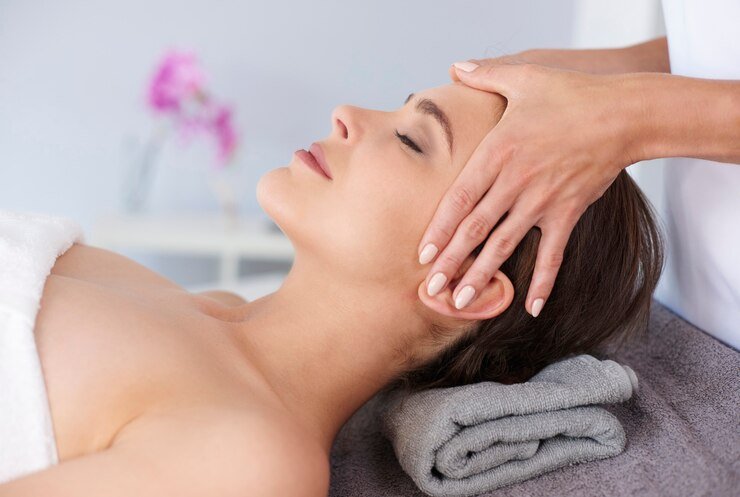
Below is a simple sequence,
which shows a simple, yet relaxing massage
for you to follow.
*It can be carried out over clothing
or you can use oils on bared shoulders, (please give your client a towel to wrap around their chest, not only for their dignity but also to help keep them warm).
*Before you start, wash your hands and remove rings, bracelets and your watch as these may scratch
your client, there is no need to remove your wedding ring unless you really want to.
*Your nails should also be short so as not to scratch
the skin.
*Make sure the chair is sturdy and has a lowback. A posture stool is ideal to use for Indian head massage
as they can be adjusted
to suit your height and also keep your client in a good position.
*Ask your client to remove any earrings,
glasses contact lens and neck chains. They should also brush through their hair to remove any hair products such as hairspray
or gel. If they have long hair they should put it up in a scrunchy
or similar for the first part of the massage.
You will need to let their hair down once you start massaging the head.
*You may also like to play some relaxing music to
help relax the atmosphere of both the room and
your client. The sequence set out on the next pages is not definitive so
use your intuition and adapt what
feels right. If your client finds a movement particularly nice then increase
it. Equally, if they don't like a technique used then don't do it. Whatever you do, enjoy what your doing and relax, if you are relaxed, then the client you are massaging is more likely to relax .
Note: The term client is used loosely as this massage is designed for you to do on your friends and family.
Lets Begin
*Stand with your hands resting on your clients shoulders
and ask them to take three or four deep breaths.
*You may wish to also take three or four deep breaths along with them yourself,
as this will help to relax you too.
*You may also like to imagine a silver or white cocoon surrounding you.
*This is a method to help protect
you from picking
up any negativity from their aura.
Upper Back
Note: Never massage
directly on the spine, you could cause some damage.
Always keep approximately one inch either side.
With one hand resting on the clients
shoulder, gently Effleurage, using the palm of the hand around
the shoulder blade in the shape of a 'C'.
Resting your fingers on the shoulders and the thumbs either side of the Spine sweep your thumb pads up to your fingers. Sweep up to each finger in turn, starting with your index finger and working your way out to your little finger.
Repeat this movement three times, slightly increasing
the pressure with each sweep.
Now using Petrissage, work on the shoulders. With your hands on the shoulders pick up the muscles along the shoulder working from the neck outwards.
Starting at the base of the neck using your thumb pads, apply pressure
and then gently circle your thumbs. Do this for a few seconds then move along about a fingers width and repeat. Do this all along the shoulder.
Then using your forearms, iron down across the shoulders
and the tops of the arms. You may find it easier to make a loose fist with your fingers for this one. Do whatever feels right for you
Now use a Tapotement movement
called hacking. To do this keep your forearms straight
and letting your hands relax, gently strike down towards the back with the outside edge of the little finger of one hand. As this hand bounces up the other falls in a rapid alternating movement.
Starting at the shoulder move up and down the top of the back. It is a good idea to practise this movement on a cushion
first. (Only use this movement on fleshy not bony parts).
Remember this should not be heavy but quick light strokes.
Finish the back off by calming the area with some more soothing effleurage
strokes around the shoulder blades. Now gently stroke down either side of the spine using the index and middle fingers.
This should feel like water running down the spine. Do this for as long as you feel necessary.
Return to the shoulders and again gently pick up the muscle along the shoulder
working from the neck outwards using the fingers,thumbs and palms of the hand .
Upper Arms
Effleurage up and down the arms from the shoulder
to the elbow and back up again. Do this three or four times to warm the area. Moving to the right arm gently sandwich the top of the arm with the flat of your hands. Squeeze gently once at the top, once in the middle and finally just above the elbow. Now with your fingers and thumb pads gently squeeze the same area. Then repeat both movements
on the left arm.
With a hand on each arm cup the muscle gently squeeze and carefully
push the muscle away from you. Repeat this movement three or four times. Gently iron down across the shoulders
and down the arms using the forearms.
The Neck
*Supporting the front of the forehead with one hand effleurage along the top of the shoulder and across the back of the neck.
*Repeat two or three times.
*Then change hands and repeat on the other side.
*Now effleurage along the neck, at the hairline. Please note, this area can be very tender. Repeat this movement
two or three times.
*If you are using oils and your clients shoulders
are exposed you might like to effleurage
the whole of the back and shoulder area to warm it up.
The Head
*With alternate hands gently effleurage (stroke) from front to back across the head, starting
at one side of the head and finishing at the other.
*Then, supporting the head with one hand and using the ball of the hand use a friction movement around the ear. repeat on the other side of the head.Using the finger tip pads apply frictions to the whole head.
*This is a very similar action to rubbing in shampoo and is quite invigorating.
*Making sure that your nails are short and smooth,
use a light clawing movement
and run your fingers through the hair working from front to back then lightly tap the tips of your fingers all over the head.
*Now using stroking movements smooth the hair back down again.
*Supporting the head with one hand apply very slight pressure for about three seconds with the finger tips starting
towards the front just above the ear and then move back a couple of centimetres and apply pressure again.
*Keep moving towards the back of the head then return to the front of the head and start again but this time across the topside of the head. repeat again on the other side of the head. Again, finish the area with some calming effleurage
all over the head.
To finish
Gently effleurage the back and shoulders again and then squeeze along the shoulders
from the neck outward.
5.5 : After the Massage

Aftercare advice should be given directly after the treatment.
It is important for your Client to follow their aftercare advice so that the full benefit of the treatment
will be gained.
Remember that Indian
Head Massage can have different effects on different
people as we are all individuals and unique in our own way.
*When your client is about to stand always look to support them if necessary.
*Your client should be encouraged to rest and relax after their treatment. This will ensure that the body is able to heal itself.
*Your client should drink plenty of water to help speed up the removal of toxins from the body.
*Coffee, tea and cola type drinks should be avoided as they contain caffeine which is a stimulant and therefore will not help your client to relax.
*You
should suggest that your client should not smoke or drink alcohol for about 24
hours as the treatment is a
detoxifying one and smoking and drinking will reintroduce toxins into the body.
*It may be wise to ask your client to wait for about fifteen to twenty minutes after the treatment before driving home, especially if they feel sleepy.
*Suggest
that your client protects their hair from the sun by wearing a hat to prevent
it from becoming dry.
Hair Care
After the Indian head massage your clients should also be given advice about their hair care:
*Suggest
that their hair should be brushed regularly to help distribute the natural oil
(sebum) and stimulate the blood circulation to the scalp.
*Suggest that a well-balanced diet is eaten with a fair amount of water intake. Also fruit and vegetables to provide nutrients
that will ensure healthy, shiny, strong hair.
*Suggest that they avoid chemical processes
such as bleaching or a perm, which can damage
the hair and cause excessive
drying.
*Suggest
that they do not overuse hairdryers, heated rollers or curling tongs as they
are very drying to the hair and will cause split ends.
*Suggest that they regularly
condition the hair and use conditioning treatments. Those containing keratin are especially recommended.
After an Indian head massage
your client will usually feel relaxed and reap the benefits of the treatment, but occasionally a client may experience a contra-action. A contra-action is a reaction
that may happen during or after the massage treatment.
They include:
*Tiredness can be caused by the release of toxins. The body will need to rest to enable its healing energies
to carry out their work effectively. After the tiredness
has disappeared your client should feel refreshed
and full of energy!
*Your client may experience a heightened emotional
state - feeling a little emotional, perhaps
even tearful. This is due to the cleansing of the mind and emotions
caused by the rebalancing of the chakras. It is a good way for the client to release tension.
*Your client may experience aching or soreness
in the muscles, this is due to the release
of toxins and the body's nerves responding
to the deep massage work, providing you have massaged
with due care. These reactions
are normal and show that toxins are being expelled
from the body so that it is rebalancing and cleansing itself.
Module Summary
In this module you have learned
how to give a proper Eastern head massage.
You have learned about the heritage and culture that inspired Indian or Eastern head massage techniques. We have discussed
the Aryuveda principles about physical, spritiual
and mental well being.
You now also know how to give a proper massage on the head whilst paying attention to other upper body parts such as the neck and shoulders. You have also viewed an instructional video to help with referencing proper technique.
 |
.svg)



