
2:1 Introduction
The word 'anatomy' refers
to the bodily structure of an animal
or plant.
The human anatomy is interesting and complex. An
insight into the human body and anatomy is necessary in order to understand how massage therapy
benefits the body and the organ systems.
To start with, our body is made up of cells. Groups
of cells with similar structures and functions
make up tissues. Groups of similar tissues form organs and organs that
help in executing the same function
form organ systems. The human anatomy is a comprehensive set of organ systems
that helps us breathe, move,
respire, grow, excrete,
reproduce and respond
to stimulus. These
are the life processes that
organ systems help us perform.
We will now take a close look at each organ system
in turn:
2:2 The Nervous System

The nervous system refers to the spinal cord, the
brain, the sensory organs (the eye, nose, ears, tongue and skin) and all the
nerves (also called 'neurons').
The nervous system permits us to perceive,
comprehend and respond
to our environment.
The Central Nervous System and the Peripheral
Nervous System constitute the overall the nervous system. The brain and spinal cord function as the primary
control centre. The peripheral nervous system is the entire network of nerves that forms the connection between
the body and the brain.
The Brain
The brain of a human adult roughly weighs around
1.3 to 1.4 kilos and consists of more than 100
billion nerves that supply it with information. The brain is located in
the cranial cavity and is protected by the skull.
The brain is divided into three main parts: The Cerebrum, the cerebellum and the medulla oblongata. The cerebrum is the
largest part of the brain and is responsible for thought, perception, creativity, planning, problem
solving, reasoning, recognition and so on.
FACT
The brain is made up of about 75% water!
Source: nursingassistantcentral.com
The cerebellum is also called the 'little brain' is
similar in structure to the cerebrum with lobes and two hemispheres. The cerebellum is located at the top part of
the brain stem is responsible for coordinating
voluntary movement, posture, balance, speech and motor behaviours.
The medulla oblongata controls involuntary
(autonomic) functions in the body including heart and blood vessel function,
digestion, sneezing, vomiting and so on.
The Spinal Cord
The spinal cord measures about 43 cm in length and
is housed in the backbone (or spinal column) that measures about 70 cm in
length. The spinal cord consists of neural pathways that act as information highways to the brain.
It consists of four parts called the cervical, thoracic,
lumbar and sacral segments. The spinal cord relays messages relating to pain, vibration, movement, temperature, touch and so on. It's important
to remember that the spinal cord finds it difficult to heal itself because the
nerve cells that comprise its structure
are complex. Hence, they are unable to regenerate themselves.
Nerves
There are three types of nerve sin the body, the
afferent, efferent and the inter-neurons. Afferent nerves transmit information from the sensory receptors in the
body to the brain. They are involved in transmitting messages that involve
sight, sound, smell, touch and taste. Efferent neurons (also called motor neurons) transmit messages from the brain to muscles
and glands (also called effectors). The inter-neurons consist of a complex
network of neurons present in the central nervous system. They integrate information from the afferent nerves and transmit messages
through the efferent neurons.
'Neuroglia' cells are 'helper s' that help insulate, protect
and nourish the neurons. Each nerve cell is
surrounded by 6 to 60 neuroglia cells. Nerve cells are in reality bundles of
axons (long thread-like structures
responsible for transmitting information).
2:3 The Skeletal
System

The skeletal system
is responsible for imparting structure, movement and protection to the
organs.
Bones are firm and strong in texture but they have
their own blood and lymphatic vessels as well as nerves.
compact and spongy bone. Compact bone is found
in limbs like the arms and legs and is made of hard, dense tissue. The
spongy bone is made of red bone
marrow and is found at the ends of certain bones and in the centre of others.
It's made of a light, honeycomb-like
structure and is flexible.
rebuild itself with the help of living tissues. Bones also store calcium.
blood cells. It destroys old red blood cells while forming new blood cells in the body. There is also 'yellow
bone marrow' that is found in certain bones; it mainly consists of fat.
In the event of unexpected blood loss, the body converts yellow bone marrow to red.
The spine or vertebral column is made
up of 26 separate, irregularly shaped bones that are stacked one on top of the
other. Strong ligaments connect your spine and help keep the spinal cord in
place. Flat and round 'intervertebral discs' are positioned between the
vertebrae.
The ribcage houses
the heart and the lungs and consists
of 12 pairs of curved,
thin, flat bones.
The bones of the ribcage are divided into true, false and floating
ribs. 7 pairs of true ribs connect
to the spine at the back and
to the breastbone (sternum) in the front. They are connected by strong cartilage called 'costal cartilage'.
There are three false ribs that connect to the
spine but not directly connected to the sternum. They are shorter than the true ribs. The final 2 pairs of rib bones
are shorter than true and false ribs and they
do not connect to the sternum or to the other ribs. The ribcage not only
protects the heart and lungs from injury and damage but also protects
part of the spleen and stomach. The muscles
between the ribcage (intercostals muscles) expand the lungs as we inhale.
The Pelvic Girdle
The pelvic girdle (also called the 'bony pelvis')
is made of a complex basin of bones that supports the trunk and connects to the lower limbs. The pelvic girdle is
responsible for protecting the intestines, reproductive organs and the urinary bladder.
The pelvic bone consists of a pair of hipbones connected to the pubic
symphysis in the front and the sacrum
at the back. In females,
the pelvic girdle is broader
and shallower compared to males in order to facilitate childbirth.
The Pectoral Girdle
The pectoral girdle is a set of bones that form the
shoulder joint; it's often referred to as the
'shoulder girdle'. The pectoral girdle is made of the clavicle (collar
bone) and scapula. The bones work
with several muscles in order to produce a full range of motion in the arms.
The shoulder girdle is not a full circle but is semi-circular in shape. The s-shaped clavicle
bones impart structure to the pectoral girdle and keep
it away from the trunk.
The skeleton consists of two parts: The axial
skeleton (consisting of 80 bones) and the appendicular skeleton (consisting of
126 bones). The axial skeleton consists of the skull, spine and ribcage and helps maintain posture. The appendicular
skeleton is made of the pectoral and pelvic girdle, upper and lower limbs. The appendicular skeleton
is responsible for facilitating movement and protecting the organs from damage.
Ligaments
Ligaments are dense batches of connective tissue
that connect bones and are made up of protein
structures called collagens. They are elastic
and flexible and can change shape during stress and return back to their original sizes.
Ligaments help define range of motion and stabilise joints. They serve to protect joints and bones as they
are able to absorb shock. The cross-hatched pattern in ligaments prevents bones from moving beyond their range of
motion.
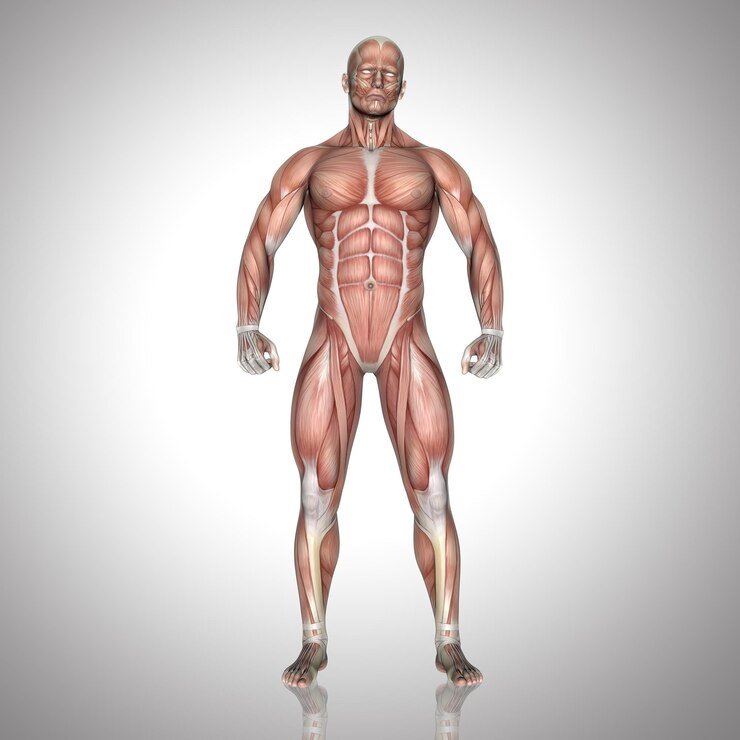
The muscular system is a set of organs working
together to permit movement, maintain posture and circulates blood all over the
body.
Muscles help bones move and are also form a part of
important organs like the heart. There
are three main types of muscle tissue:
Skeletal Muscle
Our body contains about 600 skeletal muscles that
contribute to about 40% of our body weight. They cover the skeleton and impart
shape to the body. Skeletal muscles contract to produce voluntary movement
and also generate
heat that is crucial to maintaining body temperature.
Cardiac Muscle
As the name suggests, cardiac
muscles are found only in the heart. These are self-contracting and work non-stop without pausing. They
contract to push blood out of the heart and relax to allow blood in. They are wider
compared to standard
muscle cells and are Y-shaped
in structure.
Smooth Muscle (also called visceral muscle). These
make up the walls of blood vessels, hollow organs
(like the intestines and stomach) and line up respiratory passageways. They
work automatically and contract to push food through the body and urine out
from the bladder.
Cartilage
Cartilage is a dense connective tissue made of
cells called 'chondrocytes' and is found in joints between bones, end of ribs, between vertebrae and in bronchial
tubes. Since cartilage is devoid of blood vessels,
it takes longer to heal compared to other tissue.
It's made of elastin and collagen
fibres and nutrients diffuse through its dense surface. Cartilage is
responsible for preventing bones from
rubbing together at joints.

The digestive system is a group of organs that work together to convert
large, insoluble molecules of food into small, soluble molecules of food.
The digestive system absorbs and transports the
nutrients to the body. If we shook out the digestive system, it would measure
about 30 feet in length,
mostly due to the winding
intestines.
Digestion can be split up into 4 main processes:
 *Ingestion
 *Digestion
 *Absorption
 *Excretion
Ingestion
Ingestion is the intake of food into the alimentary
canal (the food canal that begins at the mouth and ends at the anus). The teeth and mouth play a crucial role in
ingestion. The teeth help break up food particles and
the saliva helps soften the food into a 'bolus' which is easy to swallow. The
tongue also contains different
'papillae' (sensory muscles) to help grip and taste the food. In addition,
saliva contains certain enzymes called 'amylase' which helps in the breakdown
of carbohydrates.
The oesophagus is also called the food pipe and
delivers the food bolus from the mouth into the stomach. It does this by means
of muscular contractions called 'peristalses'. At the end of the oesophagus, there are a pair of sphincters
that are responsible for preventing acid reflux from the stomach from flowing back into the oesophagus.
Digestion
The actual digestive
process is divided
into two main types: Mechanical digestion as well as
chemical digestion. Mechanical digestion consists of processes that include
churning, mixing,
grinding and chewing. Chemical
digestion, on the other hand,
refers to the action of bile, enzymes, acids etc on food. Both processes
help in the breakdown of food in order to promote absorption.
action of amylase) but mostly occurs in the stomach and small intestine.
The function of the stomach is to store food, break
it down into 'chyme' (a liquid mixture of food and gastric juices) and slowly push it into the small intestine. The
gastric juices (including hydrochloric acid)
help kill bacteria in the food.
acid levels become excessive. After being processed
in the stomach, the food passes into the small intestine. The pancreas (this is
a tadpole- shaped organ located just
behind the stomach) secretes 'pancreatic juice' into the duodenum that aids the breakdown of proteins.
Absorption
The initial part of the small intestine is called
the 'duodenum' and is about 10 inches in length. The length of the small intestine is about 6 m and it is responsible
for absorbing nutrients from the food into
the blood. The intestinal wall is lined with tiny, finger-like projections
called 'villi'. The digested food
gets absorbed in the blood through a process called diffusion.
The liver performs multiple functions (about five
hundred of them) and the primary one is to process nutrients that have been
absorbed by the small intestine. The liver also secretes bile which helps in the breakdown of fats. The gall bladder
concentrates and stores bile and then releases it into the duodenum.
Excretion
The digestive system is also responsible for
elimination of unwanted waste products from the body. After food is absorbed by
the small intestine, it passes through the 'colon' or large intestine which is about 6 feet long. The colon extracts
water from faeces and empties it through peristalsis (muscular waves) into the rectum from where it
finally passes into the anus. It takes roughly about 36 hours for the colon to
process faeces.
The anus is surrounded by sphincter muscles that
facilitate stool control. The pelvic floor muscle helps create an angle between
the anus and the rectum that also helps control over bowel movement.

The reproductive system is a set of internal as well as external organs
that work together for the purpose of reproducing or procreating.
The reproductive system is different
in males and females.
The Male Reproductive System
Sperm cells (male sex cells) and testosterone (male
hormones) are produced by an organ called the
testes which is located in an external pouch called the scrotum. The
testes are kept at a lower temperature than the rest of
the body in order to aid sperm production.
The penis becomes erect during
intercourse and releases sperm cells into the vagina. The penis is connected to
the pelvis through tough ligaments. The penis performs both reproductive as
well as excretory functions. Along with releasing
seminal fluid, it's also responsible for releasing urine.
Female Reproductive System
The female reproductive system consists of a pair
of ovaries that produce egg cells. The eggs are released into the uterus through the fallopian tube (blocked
fallopian tubes are often responsible for fertility issues).
If the egg is fertilized by a sperm,
then they fuse together to form a zygote which gets embedded into the uterine
wall. Over subsequent weeks, the zygote transforms into a foetus which is later pushed out during delivery
through the cervix and then the vagina.
uterus to the vagina. It's also responsible for producing mucus that facilitates the mobility of sperms during
sexual intercourse. During pregnancy, the cervix is tightly closed
in order to protect the foetus. If the egg cell remains unfertilized, then it is shed
along with the uterine wall through a monthly process called 'menstruation'.
The vagina is a muscular,
elastic tube that contains a flexible, soft lining. The main function
of the vagina is to provide
lubrication and sensation. In addition, the vagina is also a conduit for
menstrual flow and a passageway for
the foetus to be released from the uterus.

The respiratory system is a set of organs that work together
to burn food in order to
release energy.
The lungs take in oxygen and expel carbon dioxide
from the body. The cells in our bodies require a constant supply of oxygen to stay alive and perform functions.
FACT
The lungs are the only human organ that can float on water
The nasal cavity is lined with moisture and mucus to help trap dust particles and filter the air before it
enters the trachea.
Similarly, air exiting
the nose returns
heat and moisture
to the nasal cavity.
oral cavity. The oral cavity lacks the mucus and tiny hairs that trap dust but since the diameter is larger, you
can breathe in greater volumes of air quickly.
food from the mouth into the oesophagus. The pharynx has a small flap called
the epiglottis that switches food into the oesophagus and air into the larynx.
of the airway that connects
the pharynx and the trachea. The folds of mucus membrane vibrate to
produce sound. The thyroid cartilage is enlarged and visible in adult males and
is referred to as the 'Adam's Apple'. The trachea (windpipe)
is a 5-inch muscular tube lined with C-shaped hyaline rings of cartilage.
The trachea facilitates the passing of air from the pharynx
to the thorax. The C-shaped
cartilage helps keep the trachea open to air at all times. The mucus in
the epithelium of the trachea helps trap contaminants
and dust and prevents it from reaching the lungs. The cilia (tiny hair-like
structures) flick away the mucus
towards the pharynx.
At the posterior end of the trachea, it branches
out into two structures called the primary bronchi. Bronchi further branch out into microscopic structures called
'bronchioles' that transport air to the alveoli in the lungs. Alveoli
are small air sacs that facilitate gas exchange. The bronchi and bronchioles are elastic and contractile due to the presence of smooth muscles.
located lateral to the heart and above the diaphragm muscle. The diaphragm
is a skeletal muscle that helps form the floor of the thorax. Due to the position of the heart, the left lung
is slightly smaller compared to the right one. The interior of the lung is lined with spongy tissues and
about 30 million alveoli that permit gas exchange between the blood capillaries lining the lung and the
tissues of the body.
we inhale and release carbon dioxide that is expelled from the lungs and
through the nasal cavity. The respiratory process is controlled by the brain
and partial gas pressures are kept within optimal
ranges; this is referred to as 'homeostatic control of respiration'.
2.8 : Endocrine system

The endocrine system comprises organs
that govern a number of biological functions including reproduction, energy
level monitoring, growth and sexual development, muscle and bone strength and
response to injury and stress.
The endocrine system is responsible for producing,
storing and releasing special chemicals called
'hormones' that help our bodies function at its best.
Glands
The endocrine system is made up of glands (blocks
of special tissues) that secrete hormones. Glands may be classified as 'exocrine' (they are equipped with ducts to
the body surface) or endocrine (ductless glands). Glands are responsible for secreting sweat, saliva, tears among several
others.
Hormones
Hormones (secreted by glands) are regulatory
chemicals which stimulate cellular function. Hormones are responsible for
coordinating complex biological functions like growth, fertility, metabolism
and immunity. Hormones can be compared to biological messengers that help
distant parts of our bodies communicate with each other.
Whenever there is a signal from the brain, hormones
are secreted by glands directly into the blood. Testes and ovaries are some well-known examples of glands that
secrete the male hormone 'testosterone' and female hormone 'oestrogen'
respectively. Hormones target specific 'target' cells that have in-built receptors to that specific hormone.
Here are some important glands that form
the endocrine system:
Adrenal
gland: This gland is located
superior to the kidneys and secretes a hormone known as 'adrenaline'. The outer part of the adrenal gland (the adrenal
cortex) secretes hormones like cortisol and aldosterone. Cortisol helps control
metabolism as well as helps your body cope with stress.
Aldosterone is an important
hormone that controls blood pressure.The pituitary gland located in the hypothalamus in
the brain is the size of a pea and secretes several important hormones. These hormones are responsible for
controlling body functions including temperature, fluid balance, growth,
puberty and thyroid stimulation.
Thyroid gland: This is one of the largest glands and is located in the neck. It is responsible for regulating metabolism (your body's
ability to convert food into energy).
2.9 : The Circulatory System

The circulatory system consists of organs working together to transport
materials around the body.
The circulatory system supplies the cells with
nutrients (like glucose), oxygen and water and takes away carbon dioxide and
other wastes.
The main components of the circulatory system are the heart, blood vessels (arteries,
veins) and blood. The heart pumps blood to all the
cells and keeps blood moving. On an average, the heart beats about 3 billion
times during our lifetime! Arteries take away oxygen-rich blood to the cells
away from the heart and veins bring back deoxygenated blood from the cells
towards the heart. Capillaries are microscopic blood vessels that connect
arteries and veins.
Blood
An adult has an average amount of 5 quarts of
blood; blood actually consists of solids, liquids as well as small amounts of gases.
Blood Cells
Red blood vessels transport oxygen, carbon dioxide
and water while white blood cells are responsible for fighting germs. There are about 5 million red blood cells in one drop of blood!
There is a third type of blood vessel called 'platelets'. They perform the important function
of clotting blood on wounds. The liquid part of blood is called plasma and this is produced in the liver.
One drop of blood contains 5 million red blood
vessels, 10 thousand white blood cells and 250,000 thousand platelets.
2.10 : Integumentary System
The Integumentary system consists of hair, skin, nails and the exocrine
glands. Skin
The skin is the largest organ in the body and
weighs roughly 10 pounds and measures 20 square feet for the average
person. The outermost
layer of the skin surface
is called 'the epidermis'.
any blood vessels
and receives its nourishment and nutrients from the dermis layer which contains
blood vessels. The epidermis is made up of 'keratinocytes', a special type of cell that stores the protein
keratin. Keratin makes the skin scaly, tough and water-resistant. About 8% of the epidermis
is made of melanocytes – a pigment
that helps protect
the skin against UV radiation and sunlight.
Dead keratinocytes are shed periodically and replaced with fresh cells from the dermis layer. The dermis
layer is made of dense, connective tissue along with blood vessels, nervous tissue and blood.
Hair
Hair is an accessory organ that is made of columns
of dead keratinocytes and the structure can be
broken down into the follicle, root and shaft. The hair root is found in
the follicle and the shaft is the part
of the hair that extends outward from the skin surface.
Nails
Nails are also an accessory organ made of hardened
keratinocytes and they are found in the posterior
ends of fingers and toes. Nails grow from the dermis layer from the 'nail
matrix' that surrounds the nail root.
The nail root is found under the surface of the skin and the nail edge is the part that grows beyond the finger or toe.
elimination of waste products (like sweat), regulate body temperature and
protect the body from the external environment. Other functions include storage
of water and fat and the performing the role of a receptor for pain, touch,
pressure, heat or cold. The skin is also the first line of
defence against disease; pathogens like viruses and bacteria are unable to penetrate
the tough layer of dead keratinocytes.

The urinary
system consists of kidneys, urinary
bladders, ureters and urethra.
The pair of bean-shaped kidneys filters wastes from
the blood and sends it to the urinary bladder through a pair of tubes called the ureters.
When the bladder
is full, the waste is released as urine
through a tube called the urethra. The left kidney is located slightly higher than the right kidney due
to the shape of the liver; it's lower on the right
hand side and higher on the left.
Module Summary
In this module you have learned
about the anatomy of the human body, understanding that we have different
systems that all work in synergy to ensure that the body functions properly.
You can now identify different
body parts, skeletal muscle and internal organs- knowing the role of each one.
Massage therapy requires a full understanding of human anatomy to become a
master of your trade. We have also discussed the difference in reproductive
systems in men and women.
 |
.svg)



