
3.1 Introduction
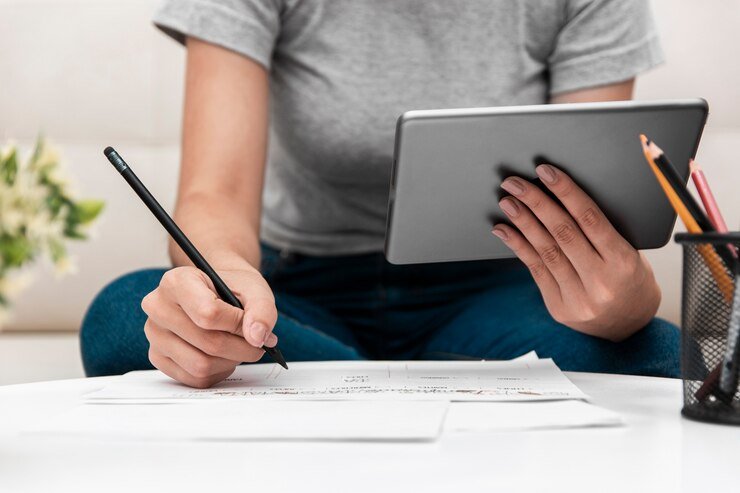
Shorthand is a handwriting technique that allows users to quickly take notes, utilising various letters, characters or symbols to speed up the process rather than writing them out in full. Shorthand is particularly useful for capturing a lot of information being shared verbally, or taking notes you don't want other people to be able to understand!
Writing in shorthand is also known as stenography, derived from the Greek word stenos, meaning narrow, and graphein, meaning to write. There are various different methods and formats, each of which requires you to learn and practise letter, word and sound abbreviations which make it quicker to write and capture information.
History and Origin
The exact origin of shorthand is unknown, but some of the earliest recorded examples of shorthand come from the ancient Kemetians (more commonly known as Egyptians) who developed two alternative forms of writing to their Hieroglyphs, known as Hieratic and Demotic.
Kemetic Scripts
Hieratic, derived from the Greek grammata hieratika, meaning “priestly writing”, was developed around the same time as their Hieroglyphs and the use of the term first appeared sometime in the 2nd century AD. It was used for religious documents, administrative, legal, mathematical, medical and literary works.
Hieratic script was written right to left and used a simplified version of the characters, animals and symbols that appeared on Hieroglyph. Researchers discovered that highly complex symbols communicated with Hieroglyphs were shortened to very simple, single strokes in Hieratic. This method of taking a complex communication symbol, like a glyph, and making it simpler and much quicker to write is the essence of shorthand - imagine if you had to write in hieroglyphics, drawing out images of birds, plants and people.... you would want to develop a simpler method too!
The alternative Egyptian script, Demotic was known as “Demotic sekh shat”, meaning “writing for documents”. Greek civilisation used this ancient script for many years in their courts until it was eventually replaced by the Coptic alphabet. Demotic was used for legal, literature, scientific and religious documents.
Language Evolution
Scholars were able to use their knowledge of Demotic to decipher the Rosetta Stone, a huge stone discovered in Egypt that was inscribed on in Hieroglyphs, Demotic and Greek, which helped them to understand Hieroglyphs. This may seem insignificant until you realise how essential this ancient Egyptian language was to the creation of English as we know it today.
To see the progression from Hieroglyphs, to Demotic, to Coptic is like seeing a linguistic 'Chinese whispers' unfold. Following the mutations of the letter forms over the years, one can see the relationship between the ancient Kemetic/Egyptian scripts that went on to influence our language today. Indeed, as language scholars have confirmed, ancient Egyptian hieroglyphs, being transcribed in shorthand to different languages, had a very direct link to the creation of the English language.
3.2 Shorthand Systems

The standardisation of our own alphabet from the Greek Coptic letters into the modern Latin (Roman) alphabet has made language globally accessible and universally comprehensible for a massive audience. But, just like the development of the QWERTY keyboard it does not necessarily make it the best possible version, depending on what you want to use it for!
Standard Script or Speed?
If you want to hand-write a note and you need others to understand it then the Roman letters (the mscript we were all taught at school, and you are reading now), is perfect. However, if you want to write quickly, efficiently and fluidly then other forms of writing are much more suited. Shorthand systems have been developed to speed up the process of note taking. Through a gradual process of learning and practising new letter forms individuals are able to dramatically improve their writing speed and efficiency.
There are several well-known standardised methods of shorthand you can learn, but they do take significant practice and to become an expert takes diligent study. However, learning the basic concepts and even just learning a few abbreviations and shortcuts can still have a huge influence of the speed, style, accuracy and confidence in your note taking ability.
Individual Effectiveness
By understanding the basic concepts of shorthand, and applying what works for you, it is easy to develop your own style and efficiency. The neatness of your own writing, the type of notes you need to take and various other personal factors should be taken into account when curating your own shorthand style. While some people like to be 'certified' in a specific method, employers are often much more impressed by results and initiative. Taking the time to develop industry specific and relevant shorthand abbreviations, which could even be shared among your team, highlights the
ineffable skills of 'going above and beyond' and 'thinking out of the box' which are highly prized by virtually all employers.
3.3 Shorthand Styles
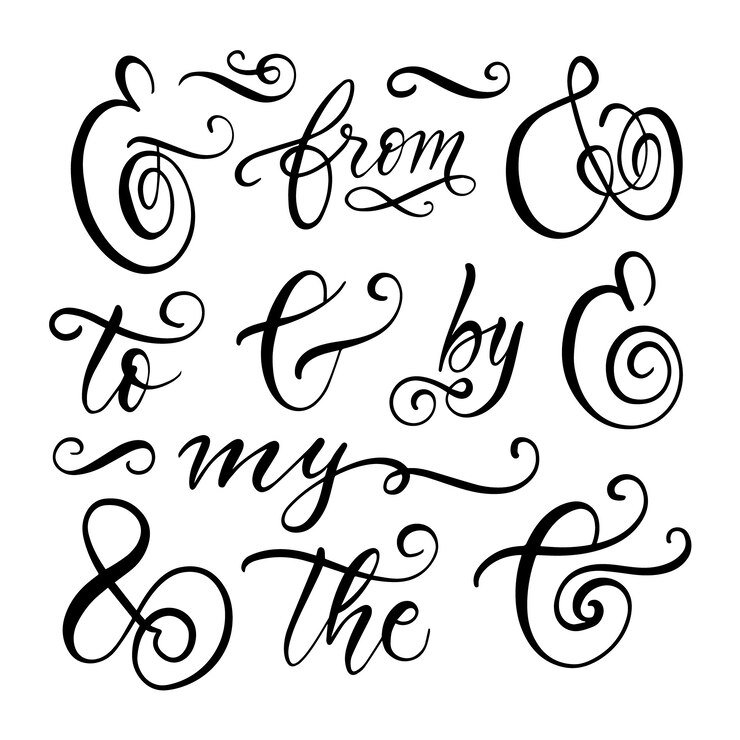
There are a few different shorthand systems commonly used today, each of them have their own specific benefits and uses. You are also already using shorthand without being aware, symbols such as £, © and even numbers, e.g. 7 (seven) are already shorthand for words which we commonly use. Shorthand styles and systems simply expand on the idea that we can take any image, symbol or combination of pen strokes to help us remember a word, idea or piece of language.
Pitman Shorthand
Pitman Shorthand is the most popular system used in the UK. It was invented by Sir Isaac Pitman in the 1830's and has since been altered for use with various languages other than English. This shorthand system is phonetic, meaning symbols represent sounds rather than letters. In essence, Pitman is written as though it were being spoken aloud. As Pitman developed his system by using a pen with a nib, one of its noticeable features is that different types of sounds are represented by different thicknesses of pen stroke.
For example
Light sounds like “p” and “t” are displayed with a light stroke, while heavy sounds like “b” and “d” are displayed with a thick stroke. This necessitates the use of a fountain pen, or as many people prefer, a pencil works just fine.
Vowels are displayed using dots, dashes and other marks written next to consonants. Vowels that come before consonants in a word are written to the right of the consonant, vowels coming after the consonant are written on the left. To see Pitman written out is visually comparable to written Arabic.
New Era Shorthand
Although immensely popular and hugely successful this system was gradually replaced and updated into a modernised version called New Era (or Pitman 2000). This is easier to learn and more accessible for most people. Specifically there are also lists of the most common words providing an effective shortcut to getting quick results without the painstaking effort of learning an entirely new script, which is essentially like learning a new language.
Pitman Concepts
Basic Strokes: the high speed comes from learning the basic strokes and practising until they are incredibly fast.
Rule based system: there are a lot of rules to learn which you can eventually apply to words you have never seen before.
Words make shapes: applying the rules builds up the shape of specific words, called outlines. Learn outlines: initially you focus on learning the strokes, rules and outlines - like a child learning a new language.
Extras: the speed, legibility and readability are enhanced with marks which add information, like vowels and syllable breaks.
Vowels: some vowels (AEIOU) are more important than others, depending on when they fall in the word, you can choose which ones to include with the placement of dots.
Familiarity: as you get more comfortable with the rules and requirements your own 'squiggles' become easier to recognize and decipher, like reading music, after a while you don't need to think about it for it to make sense.
Strict: you need to be strict and learn the rules and get plenty of practice to make the system work or your shorthand outlines (words/sounds/meanings) will quickly degrade into nonsense as they deteriorate at higher speeds!
Systematic: there is a process for breaking the words down into the sounds, or syllables, individually.
Fact
Pitman can increase writing speed from 40 words per minute to over 100 wpm, with the record 350 wpm.
Source: pitmanlondon.co.uk
Gregg Shorthand
An alternative to Pitman, named after John Robert Gregg, was created in 1888, and it is the most popular system in the US. Where Pitman distinguishes between different sounds with the thickness of the lines produced, Gregg uses different lengths of stroke to represent different sounds. Gregg is also a phonetic writing system. Many words have brief forms, where the full word is broken down into immediately recognisable phonetic sounds to speed up the process of writing.
For example
Please becomes pl.
Although Gregg has a simpler and shorter alphabet than Pitman, it is more difficult to grasp this system and takes a longer time. Using Gregg people can write over 200 words per minute, with the record being 280 wpm.
Teeline Shorthand
A much simpler derivative of Pitman is Teeline shorthand. Teeline shorthand is commonly used in the UK by journalists. Although slightly lower than Pitman with a top speed closer to 150wpm it is much easier to learn. Teeline allows for more personal variation and development of your own abbreviations and words lists and groups. Teeline focuses on reducing word complexity and is simply a variation of the normal Roman alphabet, greatly reducing the time to learn a whole new script style. Rather than learn a whole new style of phonetic language
Teeline is a more efficient way of capturing the essence of words to make it faster to write and relies on simple spelling changes:
-Vowels are removed (unless they are at the beginning or crucial for meaning)
-Silent letters are ignored
-Common sounds (like prefixes and suffixes, e.g. '-tion', '-ing' are abbreviated)
-Letters are written in single flowing strokes
-Things are spelled how they are pronounced if it is simpler than the correct spelling
-Personal symbols and abbreviations are encouraged
Fact
Alistair Campbell, Tony Blair's UK government Spin- doctor, uses Teeline at 120 wpm.
Source: scotsman.com
3.4 Benefits of Learning Shorthand Speed

Writing longhand, a skilled typist can produce around 60 words per minute (wpm). A student who has just completed a course in Pitman can produce 120 wpm.
Capture Information
Writing in longhand it is simply impossible to capture all the essential information during a lecture; for instance you simply cannot write that fast. Shorthand allows you to record more important details quickly and easily.
Financial Incentives
Being able to write quicker saves time and money and increases productivity.
Accuracy
When it comes to minute taking, in meetings or for court stenographers, shorthand is the only reliable system of recording the spoken word accurately because its speed can match that of the talker.
Concentration
Learning shorthand is known to improve focus and concentration as extra brain power is dedicated to the task at hand.
Job Opportunities
Being able to write in shorthand is a useful skill that many employers appreciate.
For example
Newspapers often deem shorthand as an essential skill, and those with this ability will be prioritised to cover important news stories over other employees.
3.5 The Disadvantages of Shorthand
.jpg)
Difficult
Shorthand is a rewarding system of note taking but it's slow to learn, as it is almost like learning a new language.
Initially Slower
Until you become more conβident and skilled with shorthand, it will take a while before it is actually faster than writing longhand.
Translation
If you need to write up your shorthand notes or share the information in written form with someone else, you will have to translate it into English, this obviously takes more time and effort.
Limited Application
While shorthand may be essential for journalists, secretaries and court stenographers, other people can simply choose to record speech using a Dictaphone or other electronic device, recording all the information they need with complete accuracy, then have it transcribed using speech to text software.
Activity: Natural Writing Speed
Estimated time: 2 minutes
Some people write quicker than others; working out what your natural writing speed is will give you a benchmark to improve from! The flexibility of your fingers, fluidity of your pen and mental dexterity will influence your speed.
We are going to start with the easiest shorthand symbols, that you already know!
Get a blank piece of paper and a timer
Write out the numbers: 0, 1, 2, 3, 4, 5, 6, 7, 8 and 9 as many times as you can for one minute
Ensure each one is legible and well formed, not simply scribbled
Write them in any order, it is not important
After one minute count how many you have written.This is your current shorthand speed
Since each letter represents a word, you are already writing shorthand, although with limited application.
3.5 Writing Tools
.jpg)
The fluidity and therefore speed with which you can write also depends on the pen and paper you are using. It often takes a little experimentation to find the equipment that meets your unique physical requirements. Specifically if you are left handed you may find choosing the right tools a painstaking process as pens are typically crafted for right hand use.
Pens and Pencils
Traditionally Pitman is performed with a fountain pen - while a step up from a quill this is still a messy and troublesome device and many people go for the ease of use of a pencil instead. A pencil is a much more practical solution - softer 2B to 4B pencils allow you to vary stroke thickness much like you can with a fountain pen.
Some fibre-tip pens, especially those designed for calligraphy, can also be used - it is a matter of personal preference, try out several designs to get the grip, flow and comfort you need. Quality biros will also allow the thick and thin line variation you need - but beware of choosing a pen that you need to press down hard with to get the thick strong line - your shorthand tools need to do a lot of mileage and gentle strokes with fine control will help your preferred tools last much longer and prevent you denting the page.
Whichever tool you prefer to use you need to have an accessible supply - sharpening a pencil or refilling ink is not practical when you are writing full speed during a meeting!
Hands, Fingers and Grip
You need to increase the level of control, flexibility and precision you achieve with your tool of choice. This usually entails changing the grip you mastered as a child and adopting a lighter more accurate touch. Hold the pen or pencil near the nib to increase your control of the line thickness and directionality as this will hugely increase your accuracy, which is critical, especially at the beginning when you master the standard outlines.
Rest the weight of the tool on your middle finger helping you manipulate it with your delicate fingers and not having to move your entire hand or even arm, which would waste precious effort. Rest the tip of your little finger on the paper, not the entire hand, to give you stability and allow your hand to glide (if you are left handed this will take some skill to master to prevent you smudging ink as you move).
Your other hand is able to hold the paper still and turn it over when you need a clean page, creating a fluid two handed process optimised for speed and efficiency. Keep your touch light, precise and gentle and initially work on accuracy and fluidity, not speed, this only comes with practice - if you hold the tool too tightly the muscles in your hand and fingers will get tired and you lose dexterity of the fine motor control needed.
Activity: Gentle Touch
Estimated time: 5 minutes+
-Find a pen or pencil you want to work with, ideally go out and buy yourself one that works well for you, but for now any soft pencil or pen with a good flow of ink will do.
-Sit comfortably and very gently hold your pen or pencil
-On a fresh piece of paper gently pull your chosen writing device along holding it as lightly as possible
-Don't worry if it falls out of your hand, you are practicing lightness of touch and minimal effort
-Make long strokes to get the feel for the tool
-Now make sort strokes, lines, curves and dots by moving your fingers, not your hand
-Fill the entire page with all sorts of thicknesses, lengths and angles of stroke
-Get familiar with your new gentle grip and precision control
-Also practise circles, in shorthand practices you do not rub out mistakes, simply circle them and do it again This will feel odd at first, but with practice you will find the grip and movements that allow the minimum effort with the maximum control.
3.6 Paper and Pads
While there are no specific requirements for paper (except margins!) you will get through quite a lot, especially during the practice stages. Find a type of pad which has pages which are neither too thick nor thin, are easily turned and are a colour and line style you enjoy. Reporter's notebooks, spiral bound at the top, are often used for shorthand as they are cheap and portable but they often lack the margin, which you may need to draw on by hand.
Ensure the pages are smooth and work well with your pen of choice, cheap scratchy pens and thin paper that rips will frustrate you and reduce your confidence. It is worth spending a little time, and money, on choosing the right equipment for you. Also practice turning pages, it is more skilful than it sounds and requires well timed thumb and finger dexterity!
Avoid heavily coloured paper, as it can make your vision tainted when you look up, and don't chose very thick pads as it creates strain on your wrist from the extra height above the surface you are leaning on. One critical element is the paper margin which should be about 2cm - this is used for making corrections and adding extra notes and is vital. The margin is used to create keys; extra notes and amendments and is essential for improving your shorthand.
3.7 Posture and Practice
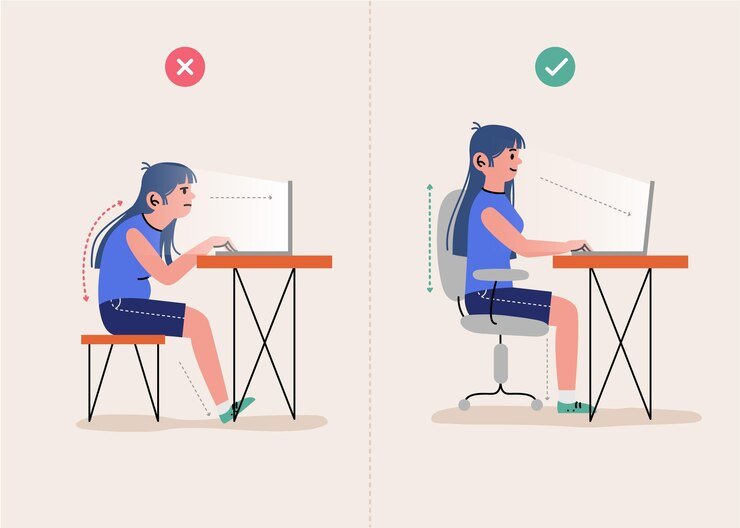
The key to shorthand success is practice, simply learning it is not enough, nowhere near. You need to get as much practice as possible and work on it to improve.
Are You Sitting Nicely?
Just like with typing it is important to ensure your posture supports you. Sitting badly for any length of time will create unnecessary stress and strain on your muscles and can lead to injury. It will massively put you off putting in the number of practice hours necessary if each time you write you feel achy and tired afterwards.
Tips:
-Sit on an office or well supported chair (with adjustable backrest and height)
-Place your feet irmly on the floor and legs uncrossed (knees slightly higher than hips or equal height)
-Sit facing a table or surface (square-on) which allows you to comfortably lean over but not stoop over the paper
-Keep your back straight (avoid curving the spine) and transfer your weight down the spine (do not lean on your arms)
-Ensure your non-writing hand is comfortably on the work surface and ready to turn the page
-Get your writing arm comfortable and put the paper pad at right angles to it (let your arm dictate the angle
Personal Resources
Creating your own notebook of rules, abbreviations, resources and other useful concepts is an excellent way of keeping track of the new knowledge you are gathering. Having a small note book of the new ideas you are gathering means you can look at it frequently and keep things fresh in your mind - this is how your brain learns best on subjects which have a lot of detail, like new languages or ways of writing.
In the next module we are going to be doing writing drills, use these as the basis for your own practice but also make up your own. You can drill yourself in your spare time and the more you do it the quicker you will get. Copying out the outlines repeatedly is the best way to 'force feed' them into your mind.
Activity: What's right for you?
Estimated time: 5 minutes
Before embarking on the mammoth task of learning and then mastering shorthand it is very useful to understand which style would suit you better in terms of your personal requirements.
Reflect on the following questions to see what your needs and preferences are:
-How fast do I need to be able to write?
-Do I need a formal qualification?
-What type of note taking do I need perform (e.g. minutes, interviews etc.)?
-How often will I need to take notes?
-Is shorthand the most effective way of capturing what I need (e.g. versus Dictaphone)?
-Am I more of a visual or auditory learner?
-Will my notes be on a wide range of subjects or just a few topics?
-Do others need to be able to read my shorthand?
-How much study and practice am I willing to put in?
-How neat and effective is my handwriting already?
-Do I have the manual dexterity to write neatly enough?
-Do I understand the concepts of syllables and phonetics?
-Do I enjoy learning specific systems or prefer to make up my own rules?
-Do I intuitively already have a preference?
Module Summary
In this module you were introduced to some of most common styles and scripts for taking shorthand notes. We briefly touched on the evolution of complex diagrammatic languages, like hieroglyphics, into their simpler more usable derivatives. Shorthand is typically the simplification of one style into another which is easier and quicker to use to take notes, thereby increasing note taking efficiency.
We touched on the basic concepts and rules of the most common form of phonetic shorthand, Pitman. This uses sounds and strokes to visually represent linguistic phonetics. It has been refined and advanced into more modern version, specifically New Era shorthand. Pitman is a systematic, strict and rule based shorthand which requires extensive study and practice but can deliver lightning fast writing speeds with incredible accuracy.
The second style of shorthand we covered was Teeline. Although derived from Pitman, Teeline in fact relies on simplification of words based on how they are written and abbreviations. The removal of vowels and letters which do not add to the word, plus the adaptation of our usual alphabet, makes this style much quicker to learn and start benefitting from.
The final section of this module reviewed the writing equipment you need and the critical importance of posture and practice to get any decent shorthand speed. In the next module you will start writing with the two most common methods, Teeline (spelling based) and Pitman (phonetic) which will also influence your final decision about which style to study further and practise - the skill is in the practice, we can only take you so far with the information!
.svg)



