6.1 Introduction
We tend to think that
anything natural must be safe to use generally but this is not correct at all. Even the most natural of oils can
be dangerous. Oils should not be used in excess and they should always be
diluted. In addition, oils should be stored safely to prevent children or pets
from accessing and swallowing. The following are necessary
safety precautions: The only oils suitable for use
when it comes to healing are those that are 100% pure essential oil.
There are many pre-mixed oils
available and these have been diluted safely for use. It takes a bit of
research to find the best oils but it's worth it. Try not to buy oils in
grocery stores even if they have a good range. They are not likely to be the
pure oils you are looking for. A little research soon reveals
reputable brands and even if they are a little costlier, remember that you are
only using a few drops at a time.
The cheaper blends are likely to do more harm
than good if using and when low quality grade oils are included, or, if it's
been watered down. Check labels regularly, it should say 100% pure oil or,
therapeutic grade. They should also list the ingredients. Some oils will even
have the distillation method used and the region where the plants were
cultivated.
The region of origin will
influence the components within and the plants natural defences will differ
from plants coming from other areas. Other considerations – storage, rain fall
and even soil type will affect the quality and the components of any oil. Companies these days are all
about saving money and they do so by favouring solvent extraction, this is
often the method of choice for those oils of lower quality. If purchasing, you
will not know how much residue was even left, so steam distillation is a better
option.
Having said this, do remember that not all oils are able to survive
this process. It's easy to get confused with
fragrance oils and essential oils. Fragrance oils are just as stated, they are
all about the scent and do not have healing properties. They are synthetic and
could harm health. Those that are pre-blended are not necessarily poor quality
but it is still important to know what is in the oil. The more expensive oils
may be mixed with those less expensive.
A classic example is the rose oil We already know how expensive
this can be. It is often mixed and providing you know what it is mixed with,
you can work with it, adapting treatments. A little bit of knowledge goes a
long way when it comes to aromatherapy oils. As a professional, you may determine
that you need to buy the most expensive oils but actually, the price should
merely be an indicator of quality. Those that are very cheap should be avoided
because they are usually synthetic blends, those that are very expensive may be
because of the cost involved in obtaining the quantity of plants necessary, and
in this case, buying cheaper products will not do at all.
With experience, you will be able
to spot those companies that are not wholly honest. Once you have found a
reputable company, stay with them. But always ensure that their best practice
continues. Aromatherapy is suitable for most
ages, but it is important to not treat babies less than 10 weeks old. This is
simply because it is possible to cause long-term sensitivities as their young immune
systems are not fully developed.
After ten weeks, it is possible
to use a gentle oil such as lavender, providing it has been diluted. Never just
apply without providing a small patch test on a baby's skin. If you have any
concerns as to whether to use essential oils on a baby's skin or indeed, on
anyone with particular health conditions, opt for using diffusers instead. Age and size are a factor when
determining the types of oils and the dosage. Understandably, a small child
would have a smaller dosage. The percentage should be 0.5 to 1% overall. Some oils are photo toxic.
This
may sound worrying but you should simply advise the client to not sit out or be
in the sun for any length of time as the oil may cause problems with UV light
or direct sunlight, making the skin extra sensitive. It can cause
discolouration or even a rash. This is particularly true of citrus oils. Do
advise your client that they should not expose the skin to sunlight for a
minimum of an hour but preferably two hours. Do not use undiluted oils on the
skin, an exception to this rule is lavender or tea tree oil. These are useful
for bites, stings, spots etc.
When you are working with
essential oils, it is vital that you keep the oils away from your eyes as it is
very easy to touch your eyes without thinking and it will be unpleasant. If it
happens, rinse your eyes thoroughly with cold water immediately. Do ask your clients to complete a
health form prior to treating. The more you know about the
client, the better your treatment will be. Some oils will act as a stimulant so
if any client suffers from epilepsy as an example, using the wrong oils could
be a problem, so you must be sure to double-check the oil used. In the same
way, someone who has a compromised immune system, a very serious illness or who
is pregnant, must take care not to use the wrong oils.
For anyone with sensitive skin,
it is wise to dilute the oils down to below 1%.
Do not use the same oil blends
for a prolonged period of time either as this can cause problems. Many oils
have similar properties so it is easy to rotate.
Patch test
For new clients – especially
those with a sensitive skin, try a patch test before using oils just in case
they react. To do so, place one drop of diluted essential oil on the inside of
the wrist and then cover this spot with a plaster. The client should come back
after two hours and then check the area. If there is any redness, do not
use those oils. Some oils will affect the skin very quickly and so advise the
client if this happens. They should apply almond oil immediately to the area
and then wash it all off with cold water.
6.2 Storage
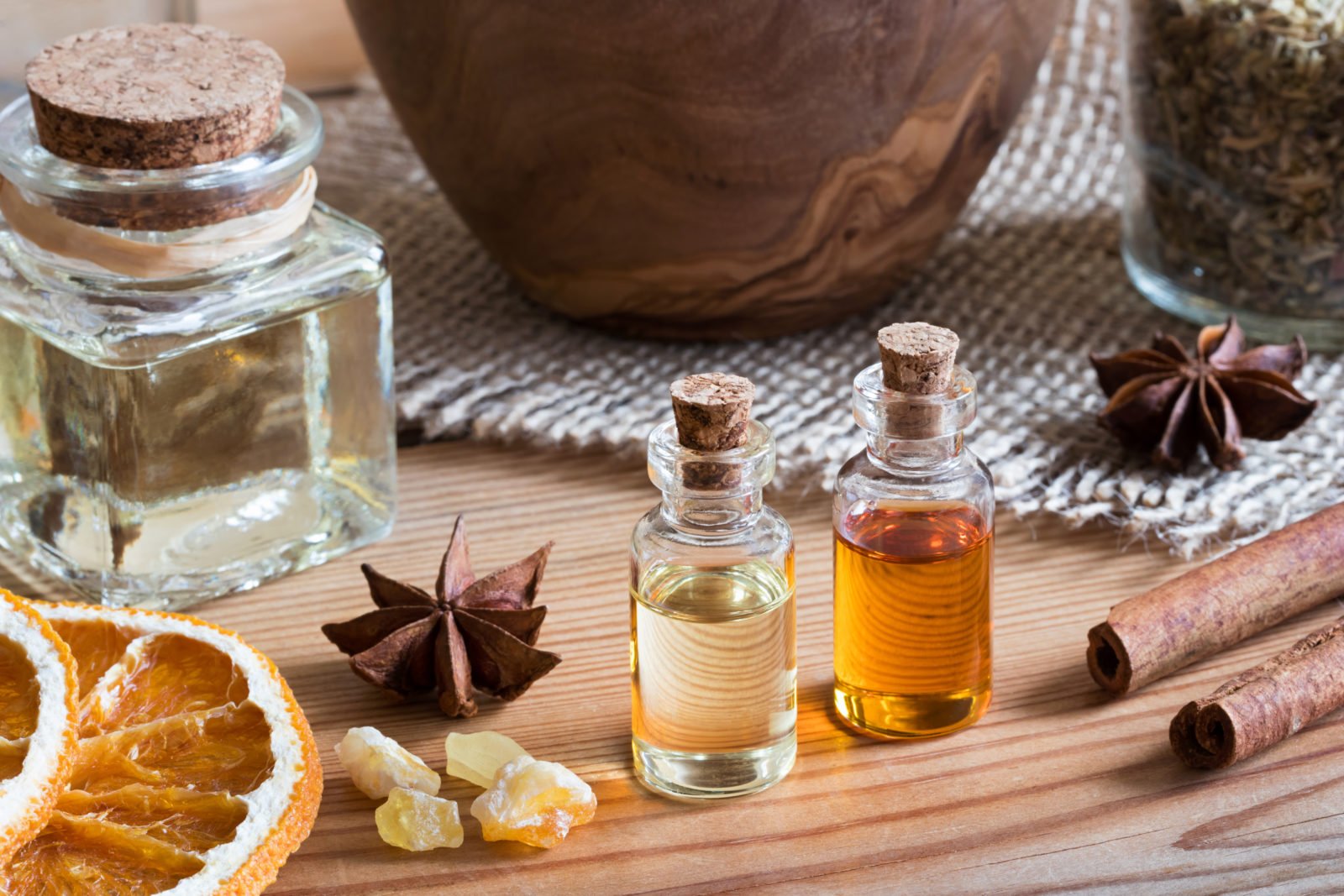
Heat and light will affect oil
and so they should always be stored in a dark glass bottle and kept in cool to
moderate temperatures. Oils are volatile and can
evaporate quickly. Most oils are likely to deteriorate over time and really
should be used within one year. To prolong the life of the oils,
store in the bottom of the fridge. Once any essential oils have been
mixed with a carrier oil, it is important to note that their shelf life is
greatly reduced. The blends should also be used within a few months.
When stored correctly, some oils
can be used for 2 to 3 years even after being open and when the oils have been blended, there is a lifespan of approximately 6 to 12 months depending on their
unique properties and storage facilities. Carrier oils can also go rancid and
are likely to keep from six months to 2 to 3 years depending on the oil. If you're working with avocado oil, know that it is likely to go rancid much more
quickly than the others. So buy smaller bottles because they have a shorter
shelf life and, to avoid wastage.
It is far more preferable to mix
up the blends as and when is needed rather than making large quantities of
blends and then having to throw them away. You will know if carrier oils and
essential oils are no longer alright to use as there will be a change in scent
and texture. This will indicate if the oil should be thrown out. Never use
rancid oils because they can cause irritation. There is always a temptation to
use a large number of oils as if to gain maximum benefit.
But it's more important
to check that the oils work in balance. Six oils really are the maximum
necessary per blend. Otherwise, it can get all too complicated. After a while,
you will know if you have made an error when blending because the aroma will
not smell right. Remember: Use a smaller quantity
of oils to ensure that there are no adverse reactions. As you can imagine, if you
present six or more oils together, and there is an unpleasant reaction, it is
harder to establish the culprit.
Glass jars are far better than
plastic ones when you are making up blends. It is also more difficult to reuse
plastic bottles as the oils may affect the plastic. Equally glass jars can be
washed out in soapy water and re-used. Do remember that once you have used a
glass jar to store your blended oils in, you will not be able to use it for any
other liquids or foods. Start always with the lowest
solution and increase as necessary. Oils are highly concentrated and the
stronger the concentration, the more chance there is of irritation occurring.
More is not necessarily better. Too high a dosage and the client can react
unfavourably or, develop an allergy.
6.3 Blending

oil it can be great fun to start
making your own blends, not just your clients but for your personal use too. It simply needs you to choose
your carrier oil and consider what you are trying to achieve. When blending,
have all the ingredients ready in front of you before starting. Choose the required essential
oils and consider their properties fully. Add drops directly to the dark, glass
bottles, use the viscous oils first (thicker oils). Replace the lid, and roll
the bottle between your hands as this blends the oils together.
When you are
ready, take the lid off and add the base oil. Replace the lid and turn the
bottle upside down several times. Then vigorously rub it. Label the bottle when
finished. You must always shake the bottle
prior to use . The essential oils chosen should
be based upon the attributes and effect required. To start with, follow set
recipes and then calculate the number of drops needed. For those clients on chronic
medication or who have substance addiction, use only half the dosage.
Essential oils will oxidise when
they come into contact with the air and for this reason, never leave the bottle
open. The oils should not be mixed in an open bowl but mixed directly in the
chosen bottle. If the seal has gone on any of the bottles, dispose and replace
any broken or cracked lids. Although this has been said
previously, it is worth reminding that you should use the pure essential oils
only when dealing with clients. Cheaper oils are lower grade, reconstituted or
chemical copies.
So purchase your oils carefully and ask questions about the
types of oil if unsure. Remember that any scent can be
chemically reproduced so do not rely on smell alone. Importantly, the manufacturing of oils and the selling of them is not fully governed by law so
even labels may be misleading. Because essential oils are very potent and
should be diluted, do be careful as to the base oils used. Practice, practice,
practice.
MODULE SUMMARY
This module discussed the
importance of storing oils safely. They should be kept away from children and
pets. You learnt that oils should not
be used in excess and they should always be diluted. Make sure to research oils
to find the best ones. The labels should say 100% pure oil or therapeutic grade
and should also list the ingredients. Ask your client to complete a
health form - the more you know about them, the better your treatment will be.
Remember to try a patch test before using oils just in case they react. In the next module, we discuss
buying the oils which will have the most use.
.svg)