
14.1 Introduction

This module will explain the most commonly used abbreviations in marketing.
Learning these abbreviations is a must for anyone who is going to deal with
them, even if you are not a marketer or advertiser yourself. Even business
owners and managers who work with these people can get a lot out of learning
and understanding these abbreviations.
Marketers and advertisers need to know what each of these abbreviations mean,
so that they are better able to understand what is being talked about.
Furthermore, anyone who is studying marketing needs to be able to recognise the
abbreviations that are used by professionals in the field.
14.2 FAB
.jpg)
FAB is short for Features, Advantages, and Benefits, and it is used to
describe a product or service.
FAB analysis is completed by marketers who want to learn more about the product
or service and its benefits to the customers. This analysis allows marketers to
design marketing and advertising campaigns that are highly targeted and focused
on customer benefits instead of the business. Take a look at the breakdown of
this analysis below:
F -
Features
Marketers must independently look at the different features of the product or
service that they are promoting. They need to know what features the product or
service includes and what they are meant for. This information can then be
applied to adverts.
A - Advantages
Marketers need to find out the advantages that the product or service offers to
the customers. They need to list down how their product or service can help
solve customer problems. Once this information is learned, the marketer can
highlight it in the advert.
B - Benefits
Marketers also need to find out the benefits that their products offer to
customers and analyse how their promoted products and services prevent future
problems for customers. They also must highlight how to give the customer some
type of gain.
A FAB analysis is of great help to marketers who are aiming to attract
customers in the most effective way. This analysis allows marketers to look at
the product and service from a customer's point of view. When marketers look at
a product through a customer's eyes, they are better able to judge it based on
its appearance, uses, and features.
This analysis is a great tool for marketers to design highly targeted campaigns
that focus on customers. It also allows marketers to find out the benefits of
each of the features and present them as advantages to customers. It also helps
marketers focus on what is most important to customers. If a particular benefit
is what the audience is looking for, then with the help of this analysis,
marketers will come to know about it, and then feature it in their adverts.
Furthermore, a FAB analysis makes it easy for marketers to design strategies
that are focusing on customers and keeping them at the centre of their efforts. No one buys products and services just because they liked an advertisement or
marketing effort if they do not need the product or service. They buy the
product because they find a good solution to their problem with it.
Therefore,
when a marketer uses these advantages to attract customers, they are able to
achieve better results for the company. They need to tell the audience that
their product will enhance their status, add convenience to their lives, or
enable them to complete more work in less time. Things like these appeal to the
audience and if a marketer makes use of this analysis, they are able to make
their marketing efforts successful.
14.3 AIDA

It does not matter how advanced advertising becomes, its main purpose
remains the same; to capture the audience's attention and to entice them to
perform an action.
In order for advertisers to make their ads work, they need to capture the
audience's attention. This is exactly what AIDA is all about. AIDA is an acronym that is commonly
used in advertising, and you will certainly hear it when working on most
marketing campaigns.
This acronym stands for:
- A – Attention
- I – Interest
- D – Desire
- A – Action
In order to make an ad work, an advertiser needs to take the audience through
these four steps or experiences. When advertisers are designing adverts, they
need to keep in mind this acronym and ensure that they are following it every
step of the way.
Attention
In order for advertisements to work, advertisers must ensure that they are
using the right words, images, stories, messages, and techniques to entice
people to take an action that they desire. In other words, you want to grab the
attention of your target audience. It is not always easy to make people buy and
spend money, and you need to convince them in the most attractive way to open
their wallets. Advertisers can use words and images that capture people's mind
and attention, and then they can move forward.
Interest
When it comes to gaining the audience's interest, you need to do a lot more
than just capturing attention. You need to make them interested in your idea
and you need them to hear your message. In order to do so, you have to offer
them something that they can benefit from. You can also gain their interest by
solving a problem. It is also important to ensure that the message is presented
to them in a simple way. Advertisers should avoid twisting the message because
their main aim is to present the readers with the message that would develop
their interest in their offerings. The message that the advertiser is sending
out needs to be clear and prominent.
Desire
Desire is another important part that advertisers need to pay close attention
to. If the audience does not show desire to buy the product or service, then
the advertiser's job is not complete. Advertisers need to tell the audience the
real way that they can help them. They need to tell them how their product is
going to make things easy for them. Making the audience want the products means
that you need to clearly tell them how the product will benefit them.
Action
Action is one of the most important parts of advertising. If the advertiser
develops the audience's interest in their products and services and makes them
desire it, then they need to add a call to action to tell them exactly what
they need to do to get their customers to purchase. Without adding a call to
action, the purpose of advertising is lost and the audience is unaware of the
right way to get the product/service.
With the help of AIDA, advertisers
can design ads that get results for them and make their efforts successful.
14.4 USP

USP stands for Unique Selling Proposition, which is an important concept in
marketing.
Businesses that want to sell their products and services need to be different
from their competition. In other words, companies need to stand out from the
crowd so that customers choose their products and services over competitors.
Customers are also looking for products and services that are unique, which is
the reason that USP matters a lot. A unique selling proposition or point allows
businesses to make their distinct position on the market. So, when people want
to buy something, they can easily pick the brand that is most unique and offers
them better solutions.
It is quite common for customers to face difficulty when they are out buying
new things. They might compare one product to another in order to buy the one
that is best suited to them and their needs. Therefore, the products that have
a USP will almost always stand out from those that do not. A USP makes a
product more desirable and different from the alternatives available in the
market. For instance, if an advertiser tells the audience that their hair
straighteners come with heat protective spray, then customers will be more
likely to buy the straightener because they will not need to buy a separate
heat protecting spray.
It is the job of an advertiser to help make the purchase process easier for
customers and a USP does exactly that. It helps people know what is better for
them and which product they should go for. Therefore, having a USP is an added
benefit to the audience, who often require help from an expert.
A USP is also important for
businesses to make their unique place in an overly crowded marketplace.
If someone is selling coloured pens, then there will be hundreds of other
brands selling the same thing. This means that your chances of getting business
will decline. Therefore, the thing that can help you grab customers' attention
is a USP. An advertiser needs to look into the product and its features to find
something unique. If the coloured pens have easily erasable ink, then the
advertiser should tell the customers about this unique feature so that they can
choose the coloured pens that you are trying to sell.
It is also important for advertisers to reach out to ideal customers and to do
so they need the help of the product's USP. With the help of the USP, an
advertiser can define the exact benefit of the product, giving customers a
point of differentiation.
Finding a USP for a product or service is not easy. You need to look into the
product, its features, and the benefits it offers to the audience. An
advertiser needs to be creative when trying to come up with a USP. A USP needs
to be unique, so advertisers need to ensure that they are not picking something
that is already taken.
A good way to come up with a USP is to think like a customer. Advertisers need
to look at the product or service that they are selling to think of things that
a customer would want in the product/service. The advertiser needs to ask
themselves questions such as, 'what do I need in the product?' and 'what
benefits am I getting?'.
By asking questions such as these, it will allow
advertisers to find the exact thing that their customers will get influenced
by. Find a sales feature of the product, and it cannot just be about price. You
cannot always beat your competitors on price. Your competitor might be offering
the same thing for a lot less. In situations like these, it is best for
advertisers to find another feature that will make people buy the product.
Another thing that makes it easy for advertisers to find a USP is to find out
what motivates the customers to buy or make a purchase decision. In order to
find this information, an advertiser will need to conduct extensive research.
If the customers of a particular business are attracted to make a purchase when
the prices are low, then the advertisers need to take this factor into
consideration. The advertiser should conduct a psychologically oriented
research which tells them about customer behaviour and preferences, and the
reason that makes them want to make a purchase.
Another way to come up with a perfect USP is to conduct interviews with
customers to find out why they choose a particular product instead of their
competitors' products. An advertiser should ask customers the reason behind
their purchase decision. Their answers will give the advertiser an idea about
the difference in their products, which will make it easy for them to get a
great USP.
14.5 B2B and B2C
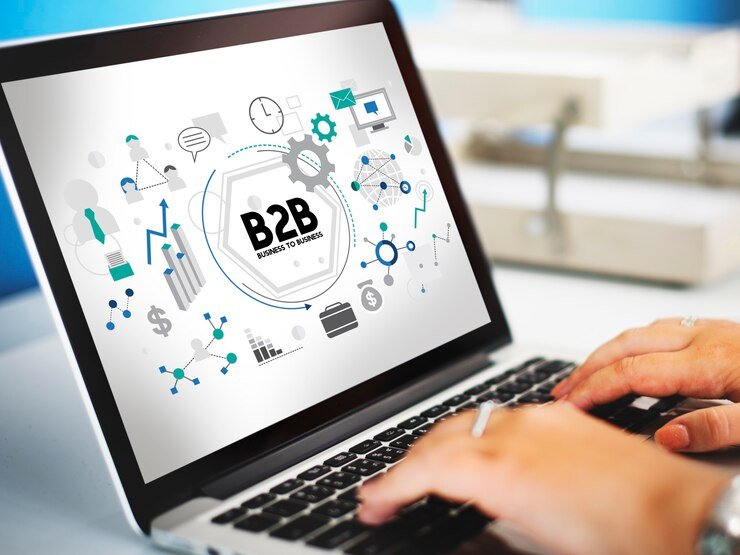
B2B, or business to business, and B2C, or business to consumer, are two
marketing terms that are used to describe what type of business marketing the
company does.
B2B marketing is done to advertise products from one company to another. For
instance, if you have a small manufacturing plant that produces widgets for
lamps, you would not sell these directly to a consumer. Instead, you will sell
directly to lamp manufacturers that use your widgets to create their lamps.
Therefore, your marketing efforts fall under B2B advertising.
B2B advertising is different to consumer advertising, and instead of the tricks
of the trade you have learned thus far, some of these, such as creating adverts
with bright colours, flashy words and photos or illustrations usually do not
have a place here. Instead, you will want to focus on the facts, such as
material make up, as well as the benefits; this will help to put your product
ahead of competitors.
Using the example above, when selling widgets to another company, you will want
to place information in the ad such as 'made of iron' or '18 cm circumference'.
This plan may not work well for B2C advertising.
The advertising information that has been presented to you thus far in this
course is largely B2C, or business to consumer marketing. These are companies
that sell items directly to consumers such as Nike, Victoria's Secret, and
Tesco.
14.6 PPC

PPC, or pay-per-click, is a term that is used when doing digital or Internet
advertising.
Essentially, a pay-per-click advert
will pay you a set amount of money every time an ad is clicked, plus it will
bring customers to your website.
These work by displaying adverts online when a potential customer searches for
a certain keyword that matches a keyword list that you or your marketing team
create. When a person searches for a keyword on the list, the adverts begin to
appear on sites. When a customer clicks the advert, they will be directed to your
website, and thus, your products and services are directly in sight of your
potential customers.
14.7 ROI

ROI, or Return On Investment, is an acronym that you will see and hear often
as you talk to those in the marketing field.
This acronym is a measure of performance that marketers use to evaluate how
profitable and effective their adverts are. All companies put an investment in
their advertising efforts, and expect to get a return on this investment.
ROI follows a specific formula, which is the gain from the investment minus the
cost of the investment. This is then divided by the cost of the investment. A
ratio or percentage is the final result. If this number is negative, then it
means the company is losing money, but if positive, the company is gaining
money. Keep in mind, however, that the ROI may vary based on the input of costs
and gains.
Today, a marketer will measure ROI
with each and every channel or tactic that is used as they plan their
marketing, including PPC, or pay-per-click, and content marketing.
14.8 CRM

CRM, or customer relationship
management, refers to the strategies, technologies and practices that a company
may use to analyse and manage the data and customer interactions throughout the
lifecycle of the customer.
The goal here is to improve the relationship with the customer, retain the
customer and drive sales.
These CRM systems have been designed to compile customer information across
several channels or points of contact between the company and customer. These
may be via telephone, the company website, direct mail, live chat, social
media, or other marketing materials. A CRM system can also give a business
information on the details of a customer's demographics, their buying history,
preferences and even concerns.
Since CRM is so important to a business, there are a number of software options
available to companies. This software, which commonly collects information and
documents about customers and consolidates it into a single database, greatly
helps companies access consumer information and get to know their target
audience. This type of software also has features such as automating workflow
processes, performance tracking and recording customer interactions. Here are
some of the other common features of CRM software:
Marketing Automation
Many types of CRM software suites include marketing automation. This allows the
user to automate tasks that are repetitive, which helps to enhance the
marketing efforts of a company to customers. For example, imagine that a sales
prospect comes into your CRM software system. The system can automatically send
this prospect the required marketing materials, which may turn this prospect
into a customer.
Sales Force Automation
Sales force automation is also known as sales force management. This is meant
to prevent duplicate efforts between the customer and salesperson. CRM software
can help do this by automatically tracking all of the contacts and follow-ups
between both sides.
Contact Centre Automation
There is also contact centre automation available, and in this case, it is
designed to reduce the tedium of the contact centre's work. This may include
features such as pre-recorded audio that can assist in solving customer
problems. These tools can also become integrated into an agent's desktop tool,
which can help to cut down on the wait time before talking to a customer
service representative.
Location-Based Services
You already know that location is an important part of advertising and
marketing, so some CRM systems include location-based services, and marketers
can use this to create campaigns based on a physical location. This may also
utilise GPS technology, as marketers have found that geolocation technology can
also be used as a contact management or networking tool to help to find sales
prospects in a certain area. This will also help advertisers to know where to
focus their advertising efforts.
Module Summary
These are just a few of the many abbreviations that are commonly used in the
advertising and marketing industry.
It does not matter what role you play within your business, knowing these
acronyms and abbreviations can make a big difference in how you understand the
marketing and advertising tasks that your company takes on.
As marketing and advertising are such a big part of your company, you will be
contributing to the overall success of your business as you work together to
improve your reach and improve the way you work with your customers.
.svg)



