Cross contamination is when bacteria is spread between food, services or equipment.
Food that has been cross contaminated can also cause allergic reactions if eaten. For example using the same equipment while preparing food containing nuts and other food that does not contain nuts can cause cross contamination.
Cross contamination is the biggest cause of food poisoning!
The main causes of cross contamination can be found behind the pictures…
Raw food touching ready-to-eat food or equipment
Using the same equipment for raw and ready-to-eat food
Poor personal hygiene
With some simple precautions you can easily avoid cross contamination…
Wash your hands thoroughly (following guidance in the Personal Hygiene section)
Use different equipment for raw and ready-to-eat food
Clean and disinfect work surfaces, chopping boards and equipment thoroughly before and after use
Keep raw and ready-to-eat food separate, including packaging materials.
Store ready-to-eat and raw food in separate fridges, if possible.
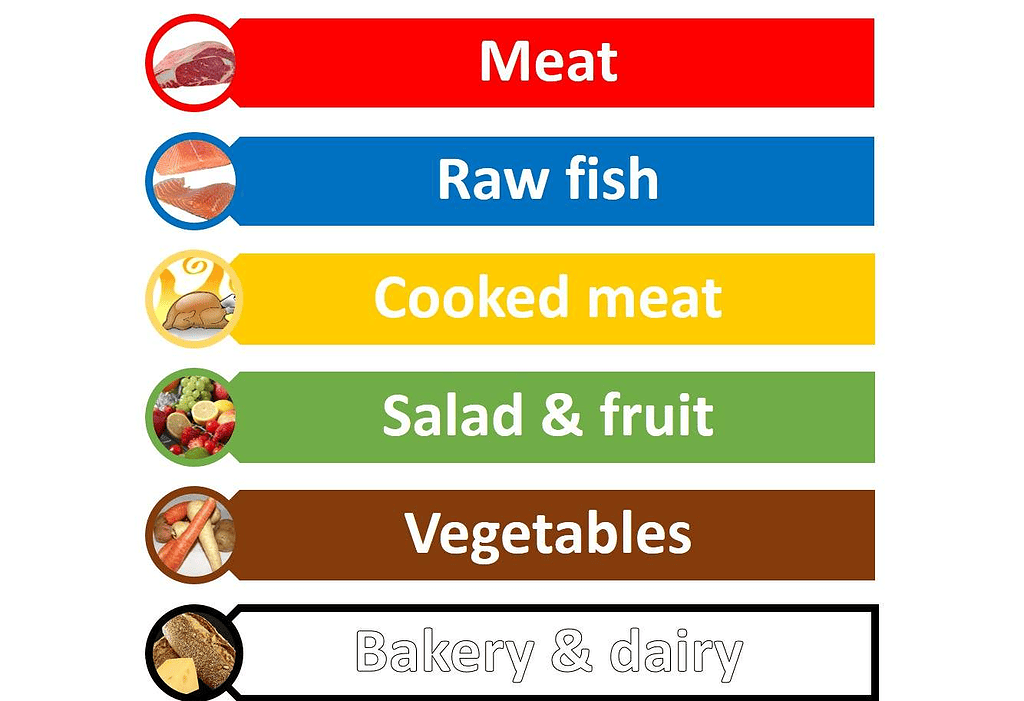
Commonly used colour coding scheme in kitchens.
Colour Coding
Many kitchens use a colour coding system for equipment and utensils to make sure everyone follows the same processes. There should be a sign on the wall to say what colours you should use for each food type.
Safe storage of foods in fridges.
Here are some simple tips about which shelf to use to reduce the chance of cross contamination when storing foods in the fridge at home or work.
Top Shelf
Dairy products
Cream, yoghurts, butter and cheeses. These are lower risk foods which might be consumed without any further cooking or preparation.
Middle shelf
Leftovers and cooked foods
This could also include packaged ready meals, jars and sauces, cream cakes and other low risk foods. They may be heated or require some preparation but are still not considered high risk.
Bottom shelf
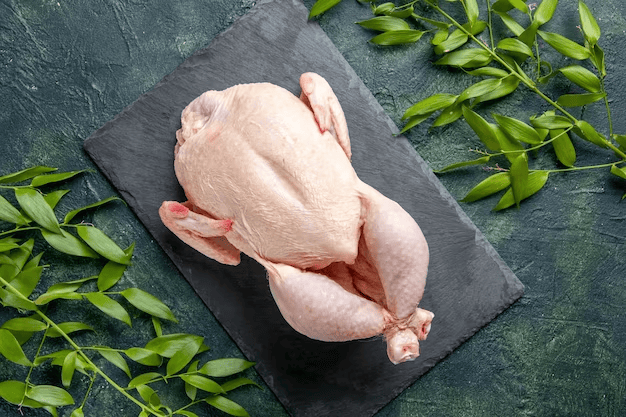
Raw meat
Raw meats such as poultry and fish should always be stored as low down in the fridge as possible. They should be kept in sealed containers. Don’t trust the packaging from the shop. Your packet may look fine, but it may have been dripped on by another packet whilst on the shelf in the shop. Always wash your hands after handling packets of raw meat. If you can’t fit the packet in a sealed container then place it on a tray and make sure you wash it after every use.
Drawers
Salads, fruits and vegetables
Most fridges in the home have salad or crisper drawers. But remember if you have raw meat stored on the bottom shelf, it is a high risk food and if the packaging leaks then juices may drip down and contaminate the drawers. If the fridge has more than one drawer, consider using one for raw meat to prevent this from happening.Drawers can be removed for easy cleaning and safe transport of foods without dripping or spilling.
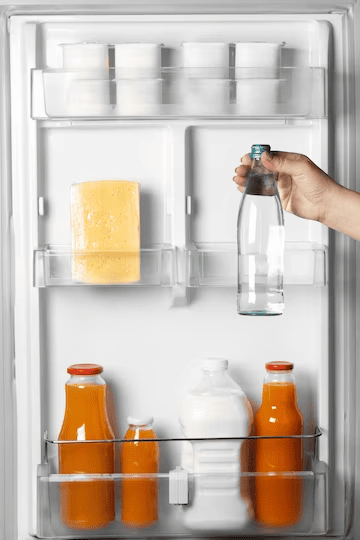
The door
Milk cartons and sauces / jars
Any storage shelves in the fridge door will experience the highest temperature as they are open to the air every time the fridge is opened.You should never store high risk foods like raw meats or cooked prawns in the door.Make sure any items in the door are well secured. Falling glass jars can be a real hazard.It is recommended that milk is stored on the top shelf. But if it doesn’t fit and you have to store it in the fridge door be extra careful and buy smaller cartons more often to reduce the chance of it going off.
Care Homes and Catering establishments
Industrial fridges, cool rooms or multiple fridges
Care homes or catering establishments may have industrial sized fridges or several fridges. There should be a plan or layout which you can follow to make sure you store foods correctly



.svg)



