
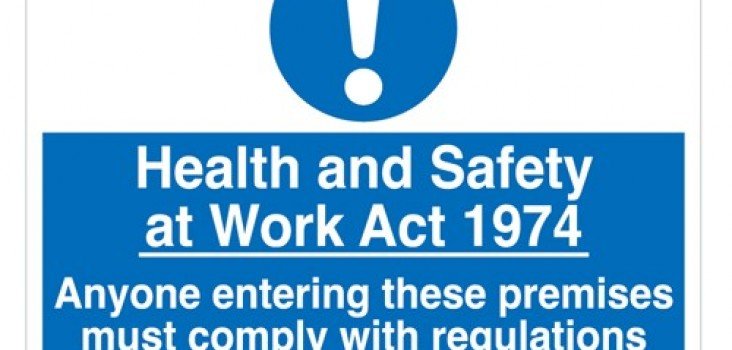
The umbrella legislation is The Health and Safety at Work Act 1974.
-Essentials/assets/ITRXthEmOX4MV3vS_vdMQk33WyVDRHfnf.jpg)
Under the Health and Safety at Work Act 1974, the Employer has a legal duty to provide safe systems of work and this includes the provision of appropriate PPE.
The employee has a legal duty to use the PPE supplied in protecting him or herself and “others who may be affected by what he or she does, or does not do.”
EMPLOYERS
What employers must do for employees:

- Decide what could harm you in your job and the precautions to stop it. This is part of risk assessment.
- In a way you can understand, explain how risks will be controlled and tell you who is responsible for this.
- Consult and work with you and your health and safety representatives in protecting everyone from harm in the workplace.
- Free of charge, give you the health and safety training you need to do your job.
- Free of charge, provide you with any equipment and protective clothing you need, and ensure it is properly looked after.
- Provide toilets, washing facilities and drinking water.
- Provide adequate first-aid facilities.
- Report major injuries and fatalities at work to the HSE Incident Contact Centre on 0345 300 9923. Report other injuries, diseases and dangerous incidents online at www.hse.gov.uk.
- Have insurance that covers you in case you get hurt at work or ill through work. Display a hard copy or electronic copy of the current insurance certificate where you can easily read it.
- Work with any other employers or contractors sharing the workplace or providing employees (such as agency workers), so that everyone’s health and safety is protected.
EMPLOYEES
What employees must do:
- Follow the training you have received when using any work items your employer has given you.
- Take reasonable care of your own and other people’s health and safety.
- Co-operate with your employer on health and safety.
- Tell someone (your employer, supervisor, or health and safety representative) if you think the work or inadequate precautions are putting anyone’s health and safety at serious risk.
H&S Law
This Health and Safety Executive poster sets out what employees need to know about their rights and responsibilities.
The Personal Protective Equipment Regulations 2002 and the Personal Protective Equipment at Work Regulations 1992 (as amended) set out the main requirements.
Be aware that these were updated by the Personal Protective Equipment (Enforcement) Regulations 2018 and Regulation EU 2016/425 of the European Parliament and of the Council. It is uncertain at this stage if the content within the EU regulation will remain following Brexit.
-Essentials/assets/T9n9vg17aZvQshDZ_M_mDBFX5zkXtpiQN.png)
Plus the extra Public Health England guidance during COVID-19 for PPE that we covered earlier in this course.
This is because the work environment and procedures pose a higher risk of transmission and the need for enhanced protection of workers and vulnerable people. This is a summary of the guidance which sets out safe ways of working in social care:
Training is not just about doing a course, it is about being able to demonstrate that you can safely put it into practice.
Get your practice checked so you can be sure you are doing it properly.
-Essentials/assets/1ZF6cD6sSe5g9yLi_-f7btGpkDf4hbAGH.jpg)
-Essentials/assets/zUhs2oNXyk6VMtrA_0r2Lh02vfLTQgUCG.jpg)
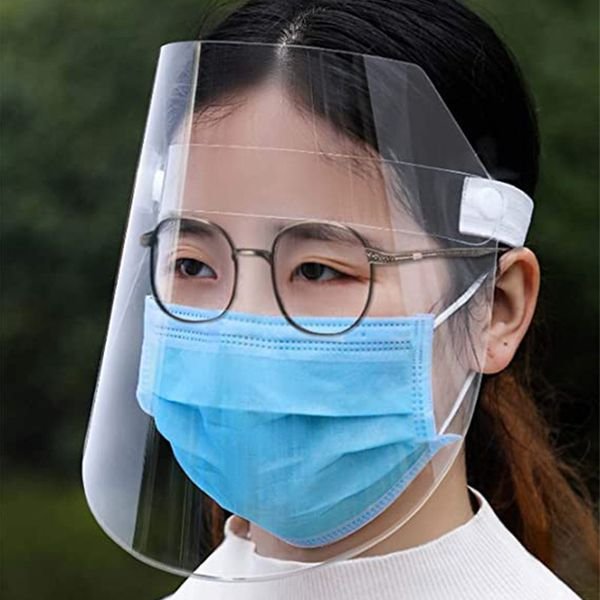
If you are provided with goggles or a visor for eye protection that are reusable, you need to ensure you know how to clean and disinfect these following the manufacturer’s instructions and your local infection control procedures.
-Essentials/assets/uX1DnEsjjkaznSWq_NcmRZTB_aUdfWkGq.jpg)
-Essentials/assets/Xl5tCTVMPLLqzYV__-iA3c-pqU7HNx7Ud.jpg)
-Essentials/assets/FmphewFAXel9zSjp_vPWebP3ZwT3H0YJ-.jpg)
-Essentials/assets/9DEK_-RFHuguK-6G_IiAFE1jnzJ04oq-I.jpg)
You will find the full COVID-19 PPE guidance on the UK government’s website via this link, should you want or need to find out know more.
You will find a COVID-19 PPE guide from Public Health England via this link, providing information specifically for care in residential homes.
This is the same link we posted in lesson 2 providing updated information specifically for domiciliary care.
We get it – legislation is boring.
BUT, it is designed to keep people (that includes you) and the environment as safe as possible.
During COVID-19, there is no doubt that following the legislation and guidance will save lives!
Here are some creative people who have made their own face masks.
Whilst the possibility exists that some of these might be effective, we do not recommend that you copy any of them. Clearly some are not going to be effective at all but it is fascinating what people think will provide protection.
Sadly, it is possible that some of these people may not have access to appropriate and safe face masks but we hope some of their ideas made you smile.
We know you may be experiencing an extremely challenging time in your role, but it has been proven that laughing relieves tension and stress. It can boost the immune system and provide infection-fighting antibodies, thus improving your resistance to disease.
If you did not find this funny, take a few moments to recall something that has made you laugh or smile and recreate that to boost your immune system.
.svg)



