
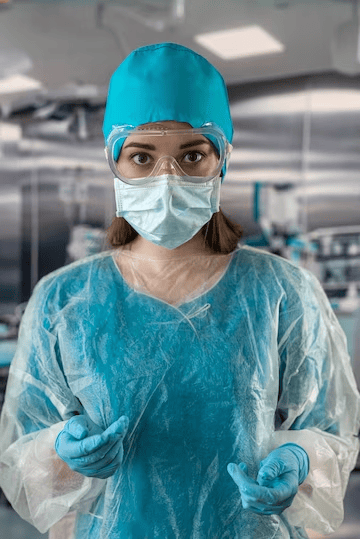
PPE is used whenever there is a period of contact or activity which has the potential to harm an employee or a person being supported.
It is also designed to protect anyone else in, or visiting, the care setting or an individual’s own home.
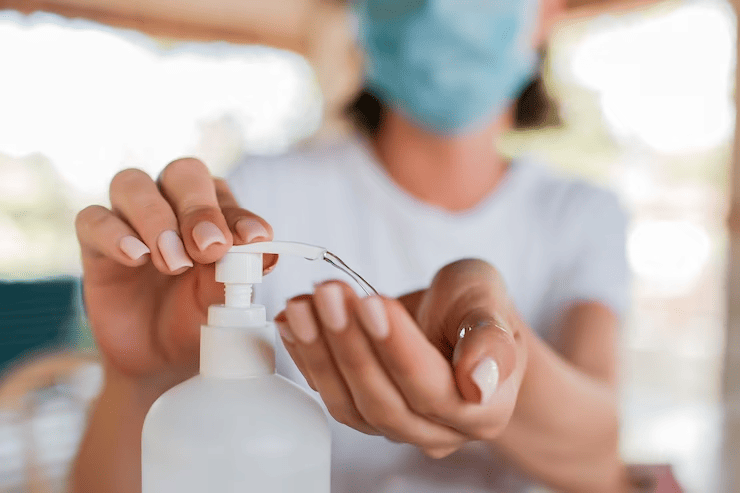
These are some examples of when PPE will be used…
This is to protect the worker from harmful bacteria and to protect the transmission of bacteria to other people.
-Essentials/assets/iqLZN57M5ovEZLQP_Me-fVhFHg_nNEZWR.jpg)
-Essentials/assets/YTEbeQ4Us1aiqTtN_M5gD0i6DPDsgWKQj.jpg)
-Essentials/assets/S6RWlgHwHXxAMkDT_voashmxqqWviw8PC.jpg)
This is to protect the worker from the effects of chemicals used and also from bacteria and viruses in the area being cleaned.
-Essentials/assets/1684LZyyOO__DXNx_Cq5N0GaXNGjDT8_j.jpg)
This is to protect the worker and the individual from any type of cross-contamination.
Cross-contamination is a term used when bacteria or other microorganisms are unintentionally transferred from one substance or object to another with a harmful effect.
-Essentials/assets/x5gjWJeHHkpfmsEa_Ugq1cyHXa5yLx7jo.jpg)
This is to protect the worker and the individual from cross-contamination.
-Essentials/assets/FqedU1DGQKObnn6r_TrM7J1KVmfhw63vq.jpg)
This is to protect the worker and the individual from cross-contamination.
-Essentials/assets/ajtppA4IZ3RcQuIh_gWOS0lNBbzSBmiKq.jpg)
Additional specific guidance has been published by Public Health England to follow during the COVID-19 pandemic.
Scenario 1 – Direct contact: within 2 metres of an individual who is coughing.
When providing close, personal care, in direct contact with an individual, for example, touching OR within 2 metres of an individual who is coughing. You must wear…
- Disposable gloves – single use ie for each interaction with each individual
- Disposable plastic apron – single use ie for each interaction with each individual
- Fluid-repellent (Type IIR) surgical mask – shift session ie continuously until you take a break. You will need a new mask after each break or if it becomes soiled, damaged, damp or uncomfortable. Note this advice is no longer correct for working in individuals’ homes – please see additional note after scenarios 1 and 2 to reflect government guidance change.
You may also be required to wear eye protection for some individuals where there is a risk of droplets or secretions from an individual’s mouth, nose, lungs or from body fluids reaching the eyes (for example, from coughing). It can be worn continuously until you take a break. Eye protection must be discussed with your manager.
In a residential home, this applies:
- Whether the resident you are providing personal care to has symptoms or not, and includes all residents including those in the ‘extremely vulnerable’ group undergoing shielding and those diagnosed with COVID-19.
- Whenever you are within 2 metres of any resident who is coughing, even if you are not providing personal care to them.
- To all personal care, for example, assisting with getting in or out of bed, feeding, dressing, bathing, grooming, toileting, applying dressings etc. and or when unintended contact with residents is likely (like caring for residents with challenging behaviour).
- Whatever your role in care (i.e. applies to all staff, care workers, cleaners etc.).
Scenario 2 – No contact within 2 metres of an individual with no cough.
When within 2 metres of an individual but not delivering personal care or needing to touch them, and there is no one within 2 metres who has a cough.
- Type II surgical mask – shift session ie continuously until you take a break. You will need a new mask after each break or if it becomes soiled, damaged, damp or uncomfortable. Surgical masks do not need to be fluid repellent for use in this situation. However, if you are already wearing a fluid-repellent (Type IIR) surgical mask, there is no need to replace it, and if only fluid-repellent (Type IIR) surgical masks are available, then these may be used. Note this advice is no longer correct for working in individuals’ homes – please see additional note at the end of scenario 2 to reflect government guidance change.
In a residential home, this applies:
- For tasks such as: performing meal rounds, medication rounds, prompting people to take their medicines, preparing food for residents who can feed themselves without assistance, cleaning close to residents.
- When working in communal areas such as dining rooms, lounges, corridors with residents.
- Whatever your role in care (i.e. applies to all staff, care workers, cleaners etc.).
If you are unable to maintain 2 metre distance from a coughing resident, then you must follow the recommendations in Scenario 1.
On 6th April 2021, new government guidance was published for people working in individuals’ homes.
Specific changes in the guidance are that when carrying out personal care or domestic duties:
- “Sessional use” of facemasks is no longer recommended: At the end of each homecare visit, the facemask should be disposed of and fresh PPE, including a new facemask, will need to be donned before entering the next client’s home.
- If a client has respiratory symptoms compatible with recent COVID-19 infection, or has tested positive for COVID-19, it is recommended that eye protection (visor or goggles) is worn (along with a Type IIR mask, which is already required).
- The eye protection and facemask should be removed and disposed of after completing personal care for a client. If the eye protection is not labelled as single use only, then it needs to be decontaminated before reuse.
You will find the full domiciliary care guidance via this button.
Don’t forget the basics…
-Essentials/assets/o21rOkYhb2381tkn_XMtOBf9H90odEkpZ.png)
PPE is only effective when combined with:
.svg)



