
Module 1: Advanced Formwork Design & Engineering

1. Principles of Structural Load Analysis
Formwork design begins with a thorough understanding of structural loads to ensure safety, stability, and compliance with engineering standards.
Load Calculations:
Dead Loads: The weight of concrete, reinforcement, and formwork itself must be calculated precisely. Fresh concrete exerts significant hydrostatic pressure, which varies with pour height and rate.
Live Loads: Includes workers, equipment, and temporary materials on the formwork. Standards (e.g., Eurocode 1, ACI 347) specify minimum live load requirements (typically 2.5–3.5 kN/m²).
Environmental Loads: Wind and seismic forces impact tall or exposed formwork systems. Wind can destabilize unbraced structures, while seismic zones require flexible yet robust connections.
Dynamic Loads: Vibration from concrete placement or machinery must be factored into design, especially in slipform or climbing formwork.
Pressure Distribution in Fresh Concrete:
Hydrostatic pressure peaks at the base of the formwork and depends on concrete density, pour rate, and setting time.
ACI 347 Formula: Maximum pressure
P=Cw×Cc×(150+9000×R/T)
P=C
w
×C
c
×(150+9000×R/T) (where
R
R = pour rate in m/h,
T
T = concrete temperature in °C).
Thixotropic Effects: Self-compacting concrete (SCC) may exert higher lateral pressures due to delayed stiffening.
Design Standards:
Eurocode (EN 12812, EN 1991-1-1): Provides load combinations, safety factors, and deflection limits.
ACI 347-14 (USA): Covers lateral pressure, bracing, and permissible stresses for materials like plywood and steel.
2. Custom Formwork Solutions
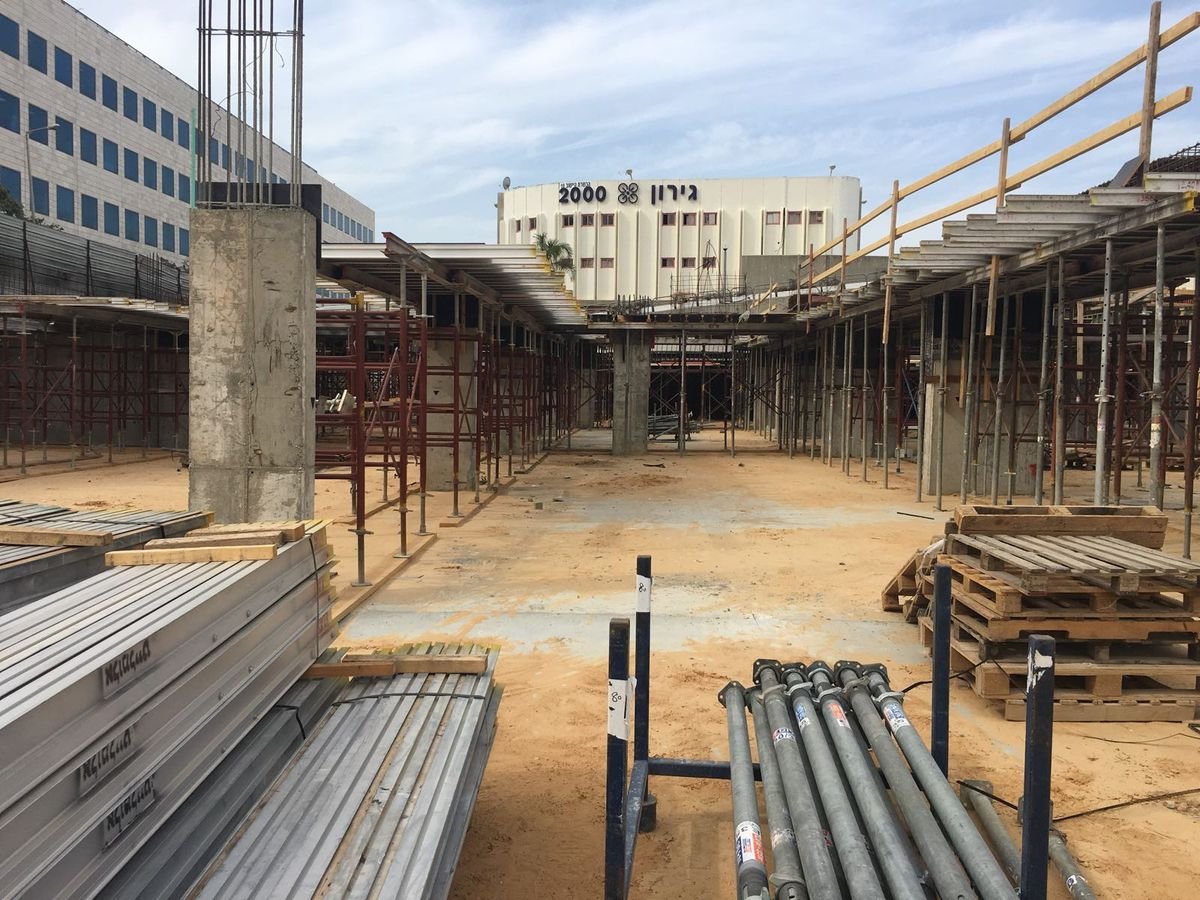
Complex structures demand tailored formwork systems to maintain accuracy and efficiency.
Complex Geometries:
Curved Walls/Domes: Flexible materials (plywood, fiberglass) or adjustable modular systems (e.g., PERI’s Vario) are used. CNC-cut templates ensure precision.
Arches & Shells: Requires rigid frames with exact curvature; often prefabricated in segments.
Variable Cross-Sections: Telescopic or sliding formwork adapts to tapering elements (e.g., bridge piers).
High-Rise & Infrastructure:
Climbing Formwork: Self-climbing systems (e.g., Doka’s SKE 100) use hydraulic jacks for rapid cycle times in towers.
Bridge Deck Formwork: Heavy-duty girders (e.g., steel I-beams) support large spans; cantilevered forms for overhangs.
Tunnel Formwork: Movable shields or gang forms for repetitive sections; invert arches require specialized bracing.
3. Material Technology

Modern formwork materials balance strength, weight, and sustainability.
High-Performance Materials:
Aluminum: Lightweight (30% lighter than steel), corrosion-resistant, and reusable (200+ cycles). Ideal for modular systems.
Composites (GFRP, Carbon Fiber): High strength-to-weight ratio for complex shapes; used in aerospace-inspired formwork.
Plastic (PVC, HDPE): Low-cost, chemical-resistant for repetitive molds (e.g., precast concrete panels).
Reusability & Sustainability:
Lifecycle Analysis: Aluminum and steel forms outperform timber in long-term projects due to reuse potential.
Eco-Friendly Practices:
Recycled Materials: Plastic formwork from industrial waste.
Minimizing Waste: Digital fabrication (BIM) reduces cutoffs in plywood.
Biodegradable Release Agents: Soy-based alternatives to petroleum products.
Key Takeaways:
Load analysis ensures formwork withstands concrete’s fluid and hardened states.
Custom solutions leverage modularity and digital tools for efficiency.
Material selection impacts cost, durability, and environmental footprint.
.svg)



