
Module 4: Specialized Formwork Techniques

1. Complex Geometries
Modern architectural designs often feature non-linear structures like curved walls, domes, and free-form shapes, requiring specialized formwork techniques.
Curved Walls & Domes:
Steel/Aluminum Radius Forms: Adjustable modular systems with curved face panels.
Flexible Materials: Bendable plywood (e.g., Finnforest or WISA-Form Birch) + flexible backing beams.
Fabric Formwork: Uses tensioned membranes (e.g., UHPC fabric forms) for organic shapes.
3D-Printed Molds: For ultra-complex geometries (e.g., parametric architecture).
Challenges & Solutions:
Accuracy: Laser-guided alignment ensures smooth curves (±2mm tolerance).
Concrete Flow: Self-consolidating concrete (SCC) reduces honeycombing in tight radii.
Bracing: Radial bracing systems resist inward/outward pressure.
2. Precast and Tilt-Up Formwork
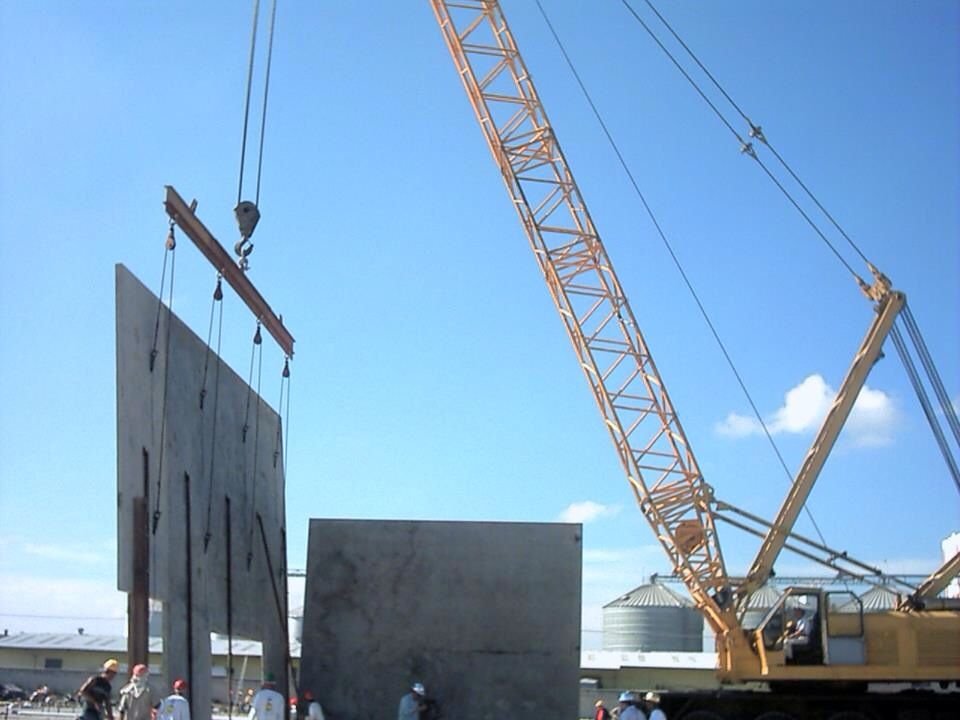
Precast concrete involves casting elements off-site, while tilt-up construction casts walls horizontally on-site before tilting them vertically.
Precast Formwork Techniques:
Steel Molds: Reusable, high-precision forms for beams, columns, and façade panels.
Glass-Fiber Reinforced Plastic (GFRP): For textured or patterned finishes.
Matching Casting: Stacking identical units (e.g., staircases) in a single mold.
Tilt-Up Formwork Process:
Slab Casting: A flat casting bed (often the floor slab) is prepared.
Formwork Setup: Edge forms define wall thickness; embeds (lifting inserts) are placed.
Concrete Pouring: Walls are cast horizontally with finishes (e.g., exposed aggregate).
Tilting: Cranes lift panels into position once concrete reaches ~3000 psi.
Key Considerations:
Lifting Inserts: Must align with crane pick points to avoid cracking.
Temporary Bracing: Required until structural connections are welded/bolted.
Comparison: Precast vs. Tilt-Up
Emerging Innovations
Robotic Formwork: CNC-cut molds for bespoke designs.
Inflatable Formwork: Air-supported structures for lightweight domes.
Case Study:
Sydney Opera House: Used precast ribbed shells with reusable steel molds.
Key Takeaways:
Complex shapes demand flexible materials and precision bracing.
Precast suits repetitive, high-quality elements; tilt-up is cost-effective for warehouses.
New technologies (3D printing, robotics) are reshaping formwork possibilities.
.svg)



