
3.1 Hard and soft facilities services

Broadly speaking, facilities management can be broken down into two distinct areas - hard services and soft services. Hard services encompass the services or elements that are either integral to the physical or structural building, or are vital to its operation.
Examples of hard services include the following non-exhaustive list:-
Heating and lighting
Fire and security systems
The building fabric and its ongoing maintenance
Plumbing and drainage
Inspections and testing
Air conditioning
On the contrary, soft services relate to the services that improve the working environment, either by making it safer, more comfortable, or more attractive.
Here are some examples of soft services:-
Cleaning
Parking
Catering services
Security and CCTV
Recycling and waste management
Mail room and communications services
Grounds maintenance
Reception services
As a Facilities Manager, you will in all likelihood be exposed to most, if not all, of these areas, plus some more for good measure. You will not necessarily be required to be an expert in all areas, rather to have a solid baseline understanding of the main principles, including the risks when things go wrong. You will benefit from building a solid network of specialists to support you in dealing with the intricacies of each area and we will discuss the important role of specialist contractors further, later on in this course.Let's now provide you with an overview of some of the more common and useful areas, in order to build your knowledge and skills effectively and give you an opportunity to hit the ground running in your Facilities Management role.
Activity 1
Estimated time: 15 minutes
Choose one of the following facilities services:
Provision of water services
Waste management services
Site security services
Consider the current system and its effectiveness in your own business, or one with which you are familiar. Draw up a proposal to be reviewed by senior management, making at least two justified suggestions for improvement in the area
3.2 Controlling heating, lighting, ventilation and air- conditioning with a Building Management System

Depending on the size, age and how modern and progressive your actual building is, it may have a Building Management System or a BMS.A Building Management System is essentially a computer system which is responsible for the co-ordination and control of much of the electrical and mechanical equipment used on the premises, including lighting, ventilation, other power systems and sometimes even fire management and security systems. It consists of a number of smart sensors, which are located around the building to gather data and automatically upload it to a database in the BMS, where it is compared to the data that was input at the system set up stage.
Building Management Systems can be an extremely convenient and sometimes cost-effective solution, as they take away the need to continuously manually adjust or configure the power systems, instead offering an automated way to manage energy demand.Some of the more technologically advanced systems offer components that “speak to each other”, such as the grounding of lift and escalator systems upon the triggering of smoke detection and a perceived fire threat.
Such systems can provide a good method of monitoring and therefore attempt to reduce energy consumption and can allow those working in the facilities team a high level of control and also an effective system of automation to free up their time. On the downside, configuration is key to the effectiveness of such systems - poorly configured units generally have much higher energy consumption rates and subsequently, higher costs. They can also be expensive to hire and maintain and the facilities team also needs to be trained to operate them to make the most of their full functionality and re-configure them where necessary.
Fact
The average office worker prints off over 1,500 sheets of paper per month.
Source: The Guardian Newspaper, following a report by Envirowise
3.3 Water and toilet facilities
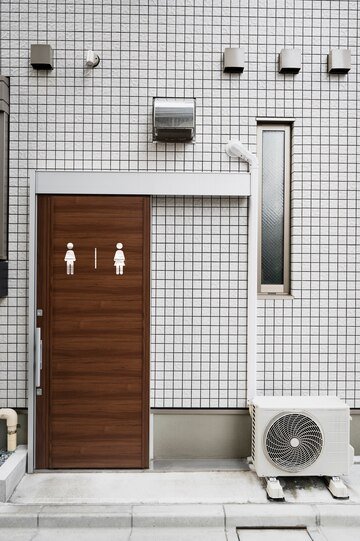
Water is a scarce and valuable resource and it is now not enough to simply ensure adequate provision of water for staff and visitors to your building, but imperative for responsible Facilities Managers to consider how to conserve and use water in the most efficient and environmentally friendly way possible.Not only is this the responsible way to ensure continued availability of scarce resources for future generations, it will result in a reduction in energy costs and the sending of an important message to staff and customers that the environment matters.
Modern commercial buildings comprise a number of different systems which rely on water to function. In the last couple of decades, architects have had to re-think traditional methods of plumbing, water access points and water distribution, in order to keep up with the need for water that modern commercial buildings have.
Here are some of the more recent developments that you may find in your premises, or which you may like to consider introducing:-
Rainwater harvesting
If your building has a large requirement for non-drinkable water, has a large roof area and is located in an area of medium to high rainfall, reusing rain water is a very easy and effective way in which to provide water for some of the building's functions. Common uses for rainwater include toilet flushing, decorative water features, plant watering and many more.
Reducing the pressure
Consider overriding the pressure on your taps, toilet flushing and boiler systems where possible, in order to minimise the amount of water that you are potentially wasting. Alternatively, there are now a number of low-flow plumbing fixtures that can replace the heavy water consuming traditional fixtures. Of course, if you require a fixed volume of water for certain services, you will not conserve water in this way, but you can certainly see dramatic decreases in waste water in some areas of activity.
It is the responsibility of the Facilities Manager to offer basic provisions in relation to water and toilet services for employees and visitors to the site, as follows:-
Toilets and washing facilities - Toilets and facilities to wash hands and faces must be made available in the following ways:-
They must be well maintained and kept clean, with a clear process for keeping them clean and tidy following regular use.
Clean running water must be made available, with the provision of soap or another method of cleaning.
A sink to wash in is required. Some companies provide a shower for the convenience of employees, though this is not obligatory.
Towels or drying equipment must be made available.
Drinking water - Clean and fresh drinking water must be readily accessible in designated places across the premises for employees.
3.4 Site security

The provision of security at the premises will likely fall to the Facilities Manager. You may be working directly for the company that runs or manages the premises, such as a large block of offices, or specifically for one of the businesses within it - and this will probably affect the scope of your role regarding security somewhat, as much of it will apply to the building as a whole, as well as the individual businesses within.Unfortunately, employing robust and effective systems and processes to keep individuals secure on your premises is more important than ever in this day and age. There are lots of things to consider for Facilities Managers in relation to site security.
Here are some examples:-
CCTV, or closed-circuit television, is a very commonly used system in which to alert managers to unknown or unwanted intruders on the premises. As well as from a safety and security angle, an increasing number of businesses are now relying on CCTV to highlight bad practices in the workplace, such as theft or poor productivity. CCTV can have the following advantages:-
It can be a more cost-effective solution than using security personnel and enables a business to view multiple locations simultaneously, with little effort.
It captures images permanently, so that you can revisit them or use them at a later date if required.
It is generally easy and user friendly to operate.
To get the most from CCTV, you should install the cameras in the most suitable places. Entrances and exits will allow you to keep track of people coming and going and whether or not their entry is authorised. If the cameras are visible, it will also potentially provide a deterrent, as people will see it immediately upon entering the premises and therefore know that the organisation takes security seriously. Installing CCTV in the reception area is also useful, as it is a high-traffic area. You should also consider CCTV in more remote and secluded areas, such as car parks or alleyways, including the perimeter of your building.
Security guards - Some buildings want or need a more robust security offering and this is when security personnel can be useful. The most common method of using security guards is via a third party company, whereby this business employs them directly and are responsible for the terms of their employment, though it is perfectly acceptable, particularly for large businesses, to directly employ their own security staff.
Consider the use of security personnel if your business or premises is particularly large and/or complex in its makeup, with multiple floors, areas, or a potentially difficult layout to keep secure. Businesses who engage in higher risk or higher value activities, such as shops that 1s expensive goods or business that have large amounts of cash on site, may also benefit from the deterrent that a physical security guard can produce.
3.5 Parking facilities
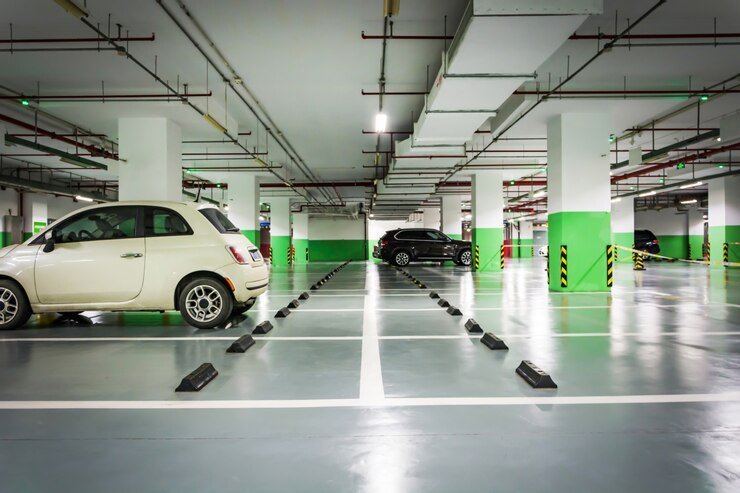
Many employees and visitors really value the provision of parking facilities, feeling that it makes their life much more convenient and it is seen as a popular staff benefit, by most across the board.There are a number of factors to consider when determining whether you are able to or want to offer car parking facilities, as follows:
Location - You are much more likely to be able to source the space required for car parking at a reasonable price in an out of town location.
Availability of transport links - If your premises are located in the centre of a city or large town, you may find that the public transport offered by the local council enables the majority of your staff to travel to work easily and cheaply. If this is not the case, you must consider the impact on employees who may find it difficult to travel to work.
Environmental impact - You may wish to promote a healthier and more environmentally friendly attitude amongst your workforce, by not offering free parking and instead providing benefits for staff who do not bring their own car to work every day. Cycle to work or car schemes can be particularly interesting alternatives.
Expense - Parking facilities can be expensive to buy or lease and also to maintain and can offer little in the way of tangible return for businesses, other than potentially improved staff morale or convenience for customers.
3.6 Waste disposal and cleaning services
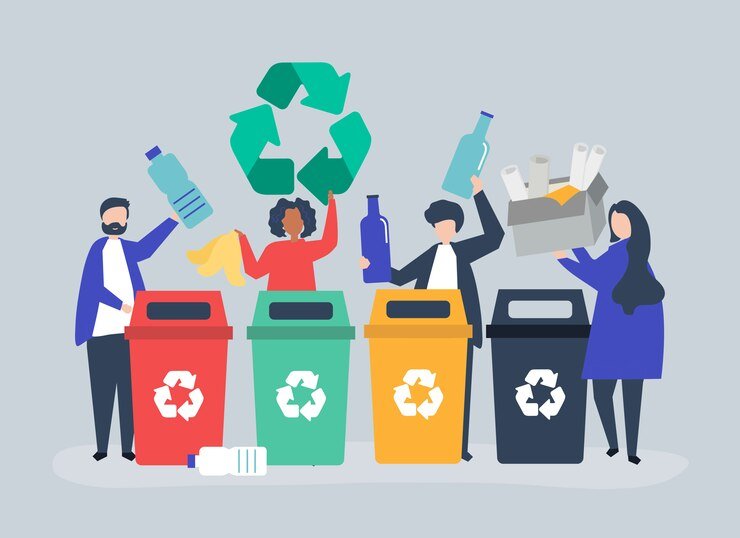
All businesses and business premises produce waste of some sort and the adequate disposal of such waste should be considered as part of your facilities strategy. Although waste is often seen as a burden, opportunities exist to manage waste properly, so much so that it can potentially become a resource, rather than an inconvenience.
Segregating waste effectively
You should offer a number of different waste containers for different types of waste matter on your premises. As a rule, separate recycling containers for glass, plastic, metals and paper should be provided, as well as one for food waste and a separate section for potentially hazardous waste, such as electrical equipment or hazardous materials. Depending on your business, you may also need a larger area in which to collect larger, bulkier waste. Specialist companies can help you to ensure that these items are reused or recycled in a responsible way. If you are working in an office environment, it is possible that there will be the generation of paper containing confidential information, such as customers' personal details. If this is the case, you should add a confidential waste bin which is locked and emptied regularly by a specialist company who will dispose of it in a secure fashion. Finally, there should be a container for non-recyclable waste, though this should be minimised as much as possible.
What are the benefits of manging waste properly?
It can reduce the amount of emissions that are harmful to the environment, minimise resultant pollution and reduce the negative impact on scarce natural resources.
Re-using and recycling materials where possible can reduce your business overheads.
It contributes positively towards a safer and more sustainable environment for future generations.
How to encourage good waste management practices on your premises
Choose suppliers who support recycling and reusing of materials and work in an environmentally friendly manner.
Provide sufficient numbers of well labelled waste containers across your premises, so that waste materials can be properly segregated, in order to encourage recycling.
Train the staff working on your premises on correct waste management practices and how to separate waste properly. Also, ensure that any visitors to the building, such as customers or temporary personnel, are aware of the waste procedures.
Ensure that the waste is picked up regularly, so that the containers aren't over filled and that there are therefore no barriers to correctly segregating waste.
Packaging can make up a big proportion of waste in an office environment. You can play an active role in reducing this, by purchasing material with minimal packaging and ensuring that all packaging such as cardboard, bubble wrap, foam, etc is correctly and responsibly disposed of.
Waste regulations
There are a number of regulations relating to the safe disposal of waste material, which you need to adhere to on behalf of your business. A useful website is gov.uk website, which summarises these regulations. You should also check whether your local authority has any specific regulations that you need to be aware of. There are particularly specific rules regarding the management of hazardous materials such as
asbestos, solvents, oils, etc, as these must be classified, stored and disposed of in a certain way.
Cleaning and Catering services
The Facilities Manager usually co-ordinates the provision of cleaning services in the building, which he or she is responsible for. You may choose to outsource the cleaning function, or to keep it in- house and we will discuss the merits and downsides of both options, later in this course.The regularity and type of cleaning will depend on the nature of your business. Some office environments require a basic level of cleaning on a nightly basis for example, whereas environments such as hospitals need a very thorough level of disinfection very regularly, plus periodic deep cleans. You should also consider whether or not to provide employees with an on-site catering service. Factors to take into account in this regard include the number of employees, the location of the premises and proximity of other food outlets and the budget of the business, etc. Bear in mind thatthe installation of an on-site kitchen and serving facilities brings with it increased obligations and requirements from a health and safety perspective, particularly around food safety and also a need to ensure that the structure and layout of the facility is safe and effective. If you choose not to provide a full catering service, providing vending machines, fridges and microwaves for example can be convenient and useful additions for staff.
3.7 Workplace furniture
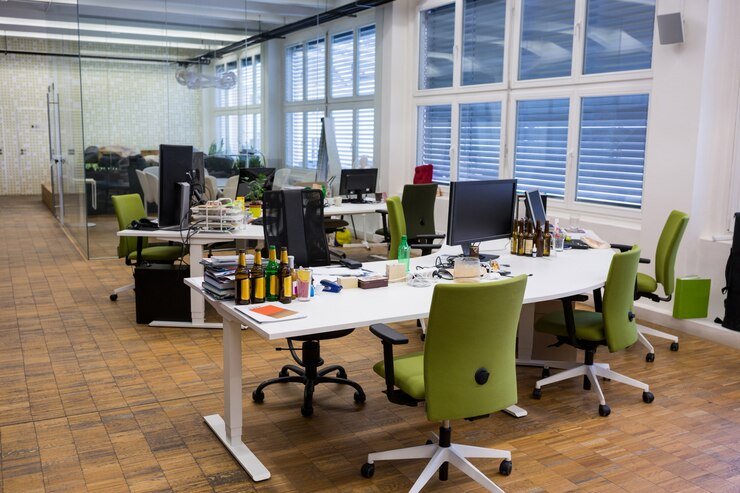
Depending on the nature of your business, employees will have differing needs regarding the furniture that is required to carry out their role.
Generally speaking, as a minimum, you can expect to need to provide the following:-
Desks and chairs.
Storage space - both for individual workers (e.g. drawers and small cupboards to fit under desks) and more generally, for the premises as a whole (confidential document storage, storage for items which are only used on an ad hoc basis, etc).
Furniture for rest areas, such as sofas, chairs and dining tables.
Although not strictly furniture, many employers see the benefit of providing additional items to make the workplace more comfortable and attractive, such as plants, wall decorations, etc.Remember that a key role of a Facilities Manager is to make the working environment safe, effective, comfortable and motivating for the employees and making wise choices about furniture can help immeasurably with this. If the furniture and equipment provided to staff does not allow them to work effectively and productively during their time at work, they may well lack motivation and productivity.
For example
Many offices are choosing brightly coloured office furniture, in an aim to boost employees' moods and increase productivity. Also consider tidiness and good organisation, as a cluttered environment can have a negative effect on productivity and morale. Some Facilities Managers implement a “clear desk policy”, whereby they require employees' desks to be left clear, with everything put away at the end of every day. Not only can this assist with good organisation, but it is also useful if you work in an environment which handles sensitive or confidential information.
3.8 Hot desking
.jpg)
A big phenomenon in the field of office organisation in the last couple of decades has been the onset of hot desking - essentially not providing each employee with their own, dedicated desk and instead, giving them access to generic workstations with a PC, keyboard, printer, etc. Hot desking has both its fans and its detractors, but there is no denying that it is a much more popular way of working than it used to be. Let's briefly consider the pros and the cons, so that you can make an informed decision as to whether or not your feel that it could work in your own environment.
Advantages of hot-desking
It fosters an open culture. As people from all different professions and levels could be sitting next to each other on any given day, this has potential to open the channels of communication and even allow ideas to flow more freely throughout the business.It frees up valuable space. In Module 2, we talked about space management and the challenges that Facilities Managers face in providing enough workable space to the workforce. Eliminating the need for everybody to have their own desk could mean that you find yourself with some valuable extra space that you could put to good use. You can de-clutter the working environment. In a similar way to clear desk policies, hot desking means that individuals can't leave reams of paperwork, old coffee cups, etc littered around their desk, as it needs to be clear for the next person who uses it. Hot desking can work well for roles where individuals are not expected to be desk based for all or the majority of the time. For example, salespeople, regional directors, etc.
Disadvantages of hot desking
No personality to the office environment. Without a dedicated space for employees to call their own and put their personal stamp on, the office may suffer from a lack of warmth, which can have the knock-on effect of employees feeling more negative about the environment.
On occasion, there may not be enough desks to go around! This can have a significant impact on productivity and morale. Lack of engagement from some staff members. Some individuals may resent the fact that they don't have the opportunity to have their own space and build relationships with those doing the same job who are sat in their vicinity. Hot desking generally does not work so well for roles that are expected to be present in the office for the majority of the time, such as administrative roles, or where it is expected that a person sits in a particular place, for example, a receptionist who is required to sit by the entrance of the office to greet visitors. Some roles may also require dedicated space due to the confidential nature of their role, such as Human Resources.
Activity 2
Allow 15 minutes
Is hot desking utilised in your current workplace, or somewhere that you have worked previously?
Consider some of the pros and cons that are discussed in this module and write 200 words on why or why not you feel that hot desking is a good thing, drawing on real life examples where possible.
3.9 IT systems
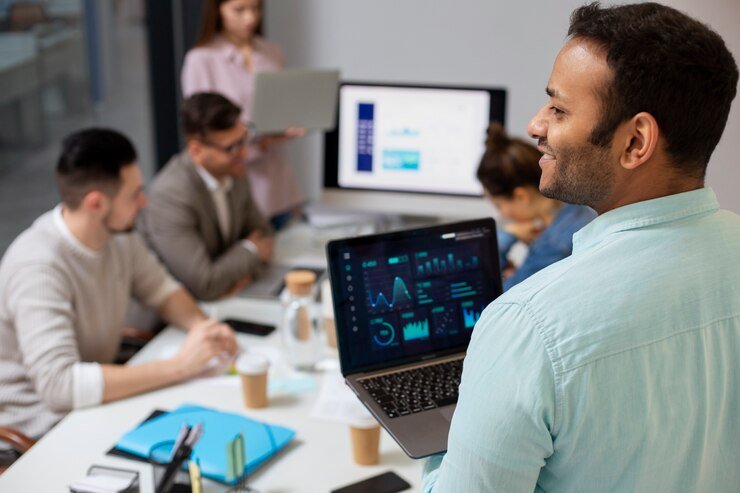
As a Facilities Manager, it is not expected that you are an expert in IT, but you should try to upskill yourself in some parts of the field where possible, so that you are able to work in an effective partnership with the IT team itself. It is important that all teams in a business work well together, but IT and Facilities need to ensure that they communicate effectively or it can have a real impact on the bottom line. This is particularly the case for IT hardware, such as PCs and laptops, keyboards, printers, photocopiers, scanners, etc. Essentially, part of your role will be to manage the physical environment where the IT infrastructure is located, which may involve managing space requirements, power supply and ordering or maintaining equipment. You will need to work in tandem with the IT team in this regard, to manage expectations and pre-empt any issues which may have an effect upon the business as a whole.
A common reason for IT and Facilities needing to work together on a sustained basis is during a project - perhaps an expansion of a department or a move to new premises, for example. As both teams have the same final objectives to achieve the aims of the project, their priorities anddeliverables may be different and this will require effective communication and an understanding of each other's pressures.
Module Summary
We began this module with a definition of hard and soft facilities services and some of the most common areas that you are likely to encounter in your role as a Facilities Manager. Following this introduction, the main part of this module was dedicated to looking at some of these areas in more detail. The first concept that we considered was that of building management systems and how they can be useful in co-ordinating some of the basic functions across a building, such as heating, lighting, air conditioning, etc.We then moved on to an examination of the water supply required by working premises, including what you must provide by law and some interesting methods with which to reduce water usage. This led us on to a definition of site security and different methods of ensuring the safety of your building through interventions such as CCTV and security personnel. We then moved on to looking at the provision of car parking in workplaces and some of the points that you may wish to consider when deciding whether to offer this as a benefit to the staff in your building. We covered a lot of detail around waste management and cleaning services - namely, how to encourage effective recycling in your unit and the considerations to take when implementing a cleaning regime. Finally, we looked at the importance of office furniture and IT services, with a specific review of the pros and cons of hot desking as a way of working.
.svg)



