
2.1 Space planning and management
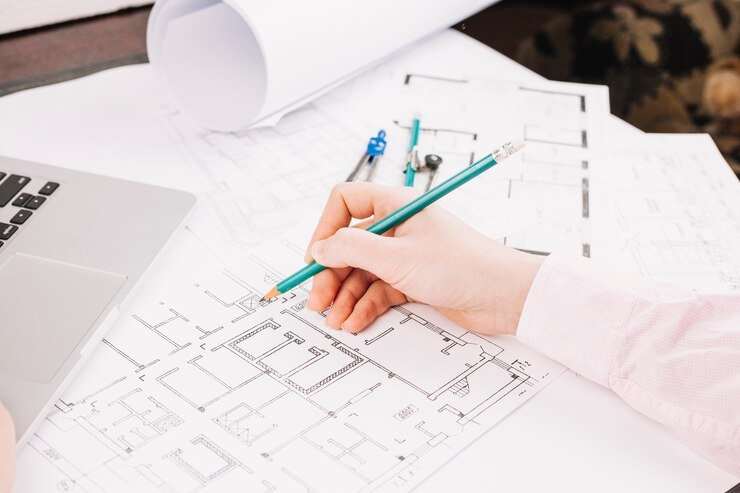
An important part of your role as a Facilities Manager will be to effectively co-ordinate the physical space available in your particular building, be it an office, shop, school, factory or any other unit, with the aim of producing maximum efficiency for those who work and visit the building and, as a result, for the overall business itself. This process is often known as space planning or space management and is not simply anoperational area but a very strategic one too, involving planning and analysis. Space, or usually the lack of it, is often a well documented issue in many businesses. Often, it feels as though there is not enough space for a department to work in or for a business to grow and it is a common complaint among the workforce. This is because space is a limited resource - there is only so much of it to go around! So, if the business is growing, unless is it feasible to move to bigger premises, creative solutions for making the most of the existing space must be found and this task often falls to the facilities team.
It is a good idea for a Facilities Manager to draw up some space management guidelines, to give clarity to the principles and processes involved in making the best and maximum use of available space. This will help them to deal with requests for increased or improved space fairly and consistently across the business. What's more, it will give them the opportunity to draw up a robust strategy to predict future space and infrastructure requirements as the business grows. This planning is very important, so that future needs can be adequately taken into account when making decisions about more immediate issues.
2.2 What should be included in a space management document or strategy?

You should detail the key principles that apply to the provision of space in your particular business, building, or unit. These principles should apply to staff and teams across the board and should be either published or made available to them, so that their expectations can be well managed.
Here are some ideas of general principles that you may wish to include in your space management document:
The workspace should be used to its maximum efficiency and functionality.
The allocation of workspace will depend on a number of factors, including the number of employees in the department, the type of work carried out, any equipment required, etc.
The allocation of workspace will be made overall to business functions and departments and not to individual employees.
Shared office space and/or hot-desking should be used where possible, in order to fully utilise scarce workspace effectively.
Requests for additional or restructured workspace should be made in writing to X person, giving a full justification of the reasons for the proposal.
Shared areas, such as meeting rooms, breakout rooms and private offices should be allocated on a first come first served basis, by means of a robust booking system.
Each department manager is responsible for ensuring that the space provided for his or her team is sufficient and not under or over utilised. If this is the case, they should report this to the facilities team, who can review the space allocation and make adjustments if necessary.
In addition to these guidelines, the document should include a section to predict the anticipated future space requirements of the business and a process for working towards these predictions in the short, medium and long term. Input will be needed from the senior leadership team, to accurately forecast new space requirements.
Activity 1
Estimated time: 10 minutes
Consider a working space with which you are familiar - perhaps a floor in the business that you work in, or even a public building such as a library or hospital waiting area.Think about the space utilisation rate of the area - how it is organised, the proportions of the space used for each part, furniture, equipment, walkways, etc. You may wish to use rough illustrations to organise your thoughts.
What are your conclusions regarding how the space is used? What suggestions could you make for improvements?
2.3 Space utilisation rates.

Before you are able to assess whether the space provided at your premises is adequate, either as a whole or for individual units and departments, you will need to measure how it is currently being utilised. This is commonly known as the space utilisation rate of a particular unit or building. The benefits of working out your space utilisation is to optimise the workplace for the benefit of the business, improve building energy consumption, enhance productivity and effectively predict space requirements or model proposals for future workspace requirements.
To do this, you will need to map out all of the space in the area that you are looking at and then fill in the space that is being used already. There are a number of computer programmes that can help you to create 3D and virtual plans of this. Once you have a picture of how the space is currently being utilised, you can consider how it might be used to better effect. Some things may strike you from a visual perspective, immediately.
For example
You may notice on the plan that, although the marketing team has the highest number of employees, their space is limited as a walkway runs through their area, thus hindering their use of bulkier equipment such as photocopiers. Or you may see that there is a meeting room with space for up to 20 people when, in reality, you know that there are never more than 10 people attending a meetingat any one time.
Other features may be harder to spot and may rely on a more detailed analysis of space area vs number of employees, amount of equipment, productivity, etc and again, you may choose to use some specialist software if you think that it would be beneficial, to get into the detail of the figures and do some in-depth analysis.
Another useful tool is that of feedback - essentially, asking employees, managers and customers/visitors their views on how the space is being utilised and what suggestions they have for improvements.
How to improve space management
Here are some ideas on how to better utilise the space available to your teams in the building:-
Develop a clear vision. This goes back to the need for a space management strategy which is clear, simple and understood by all. The Facilities Manager will often own this strategy and will be responsible for keeping it up to date. Therefore, it is important that they are made aware of any future business changes which may affect the future direction of the allocation of workspace.
Proactive workspace management by all. The provision of space should not be seen as finite, but should be continuously assessed and changed when required. There should be no need for managers to “hold on” to space with the concern that they may not get it back should they need it in the future if their team or department grows in size or importance. Review the size of the estate as a whole. If after full analysis, the facilities team feels that the current space is being used to maximum efficiency, there may be a case for increasing the size of the estate - by moving to bigger premises, for example. If this is the case, the Facilities Manager should ensure the proposal that they make is robust and built on quantitative facts, following a thorough and detailed space management analysis.
Fact
Three quarters of small and medium sized companies delay moving premises because of the stress of the task.
Source: Survey by EON, as reported on smallbusiness.co.uk
2.4 Choosing appropriate new space

If it is the case that the current premises are not suitable for expansion, or it is too costly or prohibitive to do so, the business may consider the option of either fully or partially moving its operations to new premises. It is likely that the Facilities Manager will be heavily involved in both the decision making and subsequently, the implementation of such a move. Here, we will cover the two likely possibilities in this regard - moving into new, purpose built premises, or working with a building contractor to design and build new premises to meet the requirements of the business.
Firstly, let's take a look at the factors to consider when deciding on new premises:-
The infrastructure of the building
Depending on the nature of your business, you may have specific needs for your premises, to ensure that you can work as effectively as possible.
For example
If you are a high-tech telecommunications firm, you will need to ensure that the building has the capability to support the amount of data flow that you will be using, both now and in the future. Note that some older buildings may not necessarily have what you may think of as even basic requirements, such as reliable air conditioning.Make a list of the essential components that you require in this regard and it may also be worth hiring the services of an independent engineer to evaluate the premises and provide you with a suitability report to assess, before coming to a decision.
Rent and auxiliary costs
Of course, the price of the rent is often one of the most influential factors when choosing business premises, so ensure that you have a well thought out budget before embarking on a hunt for new premises (and don't forget to negotiate with the landlord, if you need to!). However, do not forget to consider the additional costs that can make a relatively reasonable looking rent stack up on a monthly basis.
Utilities bills are a big thing to consider - some leases have them included, but many don't and this is something that should be established with the landlord upfront. If utilities aren't included, it is suggested to ask either the landlord or the local utility companies for details of previous usage, so that you can make a relatively well informed estimate of your costs in this regard, to ensure that there are no nasty surprises.
Other costs can include whether you need to pay for your own cleaning and security services, whether on-site parking is included or not and how much insurance services are.
Accessibility and parking
Consider how accessible the area is for the needs of the business. For example, are there roads and good public transport links such as bus routes, so that staff, customers and visitors can get there easily enough? It might be worth doing some analysis to ascertain where the majority of the employees/customers, etc live and whether this impacts where you decide to relocate.
Parking is also a notoriously important factor, for both staff and customers alike. If you are a retailer, being located on a busy street could mean that you will benefit from increased foot traffic and therefore, potential custom, but will it also be a deterrent for some who cannot park there and could you find it difficult to retain and hire staff because of this.
Bear in mind that often, the most accessible places to get to, such as town centres, can be more expensive to buy or rent in, as space is scarcer and at a premium. You may need to find a good balance between ease of accessibility and cost. Another note on accessibility relates to the days and hours of service in the potential area. For example, if you are taking up some space in an existing office block or business park, you will need to find out if the exterior doors, gates, or barriers are closed at certain times, or if the heating or air conditioning are not in operation out of hours, if you need them.
Surrounding area
You will want to think about what other buildings, services, etc are in the local area. Depending on your business, would it be best to be located in the greenbelt, countryside, or town? What it the make-up of residents in the area and are they the target consumer for the services that your business offers? You will probably also want to make sure that the local area offers some useful amenities for your staff and customers, such as somewhere for them to buy their lunch, or good childcare facilities. These factors may sound more minor than some of the other considerations, but they do make a definite difference in the long term to your ability as a business to provide a great and effective working environment for your staff and the ability to retain and recruit successfully.
Also consider whether there are any competitors in the area and whether this could potentially impact your business. On the positive side, you may benefit from some overflow custom from existing firms, but beware of the potential pitfalls of going head to head with an existing competitor in the same area. Finally, think outside of the box when considering what other businesses, services, or amenities in the local area could work to your advantage. For example, if you sell healthcare products, could locating within walking distance of a major hospital be beneficial to you?
The history and image of the area
There are a couple of things to think about in this regard. Firstly, what has happened on the site in the recent past - have there been failed businesses, a change in transport links, or a change of style?All of these things could impact upon the perception that your clients or customers may have on your business for choosing to locate there. This leads us neatly onto the concept of image. Different areas have different styles, cultures and backgrounds and attract different people. Setting up a hip new nightclub in a suburban residential area is unlikely to be suitable, or locating your financial services office in an area which has a high amount of noise pollution may also not be suitable. Research is key with this point - it may mean talking to local people, using anecdotal knowledge and taking some time to observe and build a robust picture of an area.
Activity 2
Estimated time: 15 minutes
Imagine that you are the Facilities Manager for a small pharmaceutical sales company, employing 100 people in an office environment. A decision has been made to relocate to newer, larger premises approximately ten miles away, on the other side of the town. Revisit the tips about how to make a move of premises go as smoothly as possible and brainstorm your key priorities and activities for this move.
2.5 Factors to consider when choosing a new site on which to build

Most of the time, you will be moving to existing, established premises. However, sometimes the role of a Facilities Manager may involve supporting in a move to a brand new site, built from scratch to meet the needs of the business. Although the building company that you use will have overall responsibility for considering all of the factors that make an area or piece of land suitable to build on.
It is useful for a Facilities Manager to have an overall understanding of these points:-
Environmental factors
It is important to consider this area carefully, as decisions made which have an impact of the environment are often irreversible.
Research should be conducted, to find out if the land is situated in a flood basin, close to the coast, or in an area prone to weather extremes, such as a particularly windy area or a micro climate. In addition, if building is in a rural or greenbelt area in particular, you should give prior thought to the impact upon any wildlife who have a natural habitat in the area. In fact, it is likely that if any significant alterations need to be made to the site to build on, for example cutting down many trees or making irreversible changes to the natural habitat, permission would have to be sought from the local council and there may also be some resistance from members of the local community.
Legal requirements
The local authority is likely to have a number of regulations in relation to planning permissions on the land and it is crucial that this is covered at an early stage.
Quality and make-up of the land
The building contractors responsible for your build will conduct a detailed inspection on the land, taking into account soil quality (including type, consistency and uniformity), as building on poor quality soil can have the result of problems from unsteady foundations in the future. In addition, if there is high water pressure on or around the land, this can cause problems to the quality of the soil. Note should also be made of the topographical features of the site, including the elevations and the low points, as well as the compass orientation.
2.6 How to effectively manage a move of premises
Once a new location has been decided upon, the next step is then making the move happen! Naturally, moving to new premises can be an unsettling time for employees and a challenging and stressful period for management - especially those working in facilities. Here are some things to consider, when planning your moving strategy:-
Which stakeholders to engage
Think about the key people who will need to be involved in the move.
As Facilities Manager, you will play an integral role in the process. If the business has a facilities team of more than one person or more than one manager, it may be worth having a designated individual to take ownership for the move and be the main point of contact to draw all of the other parties together. In addition to individuals in facilities, some of the key individuals/teams that should be involved are the senior leadership team, the IT team, the Human Resources team and the catering/cleaning team.
Building issues
Think ahead about the basic to more complex solutions that need to be in place, even before the move happens.
Consider the following points:-
Who needs access to the building and at what level? For example, who will be the main key holders and does anybody need to be trained to act as on call for emergencies?
How will you provide access to employees -for example, a security pass system and how will you keep well updated of changes to this?
Think about the parking that is available and how this will be allocated to individuals and if any permits are required.
What signage is required - both externally and internally of the building?
Consider also if there is a need to contact the local authority and ask them to add the name of your business to local road signs, if it is particularly hard to find.
Technology and telecommunications issues
One of the most frustrating aspects to a move is when there are ongoing problems with IT or working equipment after completing the move, as these issues have a direct impact on the ability of individuals to perform their role effectively. Work closely with the IT team in advance of the move, to ensure a robust plan for the transfer, including possible testing of equipment in the new premises, a phased transfer and a final “go live” date, as well as clear escalation points if things don't go to plan, etc.
Engage the teams
Try to build employees' support for the move, by consulting them for their opinion on key areas, asking them for regular feedback and taking care not to underestimate the potential emotional impact of the move for some, in particular those who had been working in the previous building for a number of years. The HR team may be able to offer some support in this area and help you to build enthusiasm and positivity for the move amongst the workforce. You should also consider actively involving them and using their expertise in the moving project itself.
Furniture and equipment
Think about how and when you will move key pieces of furniture and equipment and how you will handle transition arrangements where employees need to continue working. Also think about how to move employees' personal or job-specific effects, in a safe and confidential manner. On the theme of confidentiality, a very important consideration is how to ensure full data integrity of information, if transporting files or computer systems which could hold confidential information about your staff or customers. Our advice is to draw up a specific plan to this effect, as you will need to produce evidence that you took all reasonable steps to protect the confidentiality of information, in the unlikely event that a breach occurs during the move.
Communications and mail considerations
Much of this work can be done in advance.
For example
Updating company letterheads, business cards, advertising and email signatures with the new address details. You may also want to think about arranging a post redirection with Royal Mail for a short period of time, to cover the transition and to ensure that all business critical post is received to the new premises. Also think about the marketing angle, though, if the business has one, the marketing team will likely take overall responsibility for this. For example, how integral is your business location to your customers/clients? You will certainly need to send out a communication to inform them that you havemoved premises, but do you also need to do some advertising, for example, so that they know where to find you? These are certainly steps which can be taken in order to safeguard against a potential loss of custom after a move of premises.
Assignment
Managing Space Requirements
Time: 30+ minutes
Hopefully, you took in as much of the information in this module as possible. To find out how well you have done, complete the following worksheet.
Module Summary
This module built on the general principles that you learnt in Module 1, to further explore the important concept of space planning within facilities management. To begin with, we discussed what space planning is and why it is important within a business, for both current and future business needs. As part of this, we covered some key principles that you may wish to include in your space management document or strategy, to ensure that space is used to its best effect within your organisation. Following this, we moved onto a definition of space utilisation rates and some suggested methods for the Facilities Manager to improve the way that space is used. Of course, it is not always possible to make space work even harder than its maximum - and this is when you may need to be involved in a decision to increase the amount of working space available by moving to new premises. We covered the key factors that you will take into consideration when choosing the most appropriate space for your needs and, following this, how to manage the practical aspects of a move of premises, to ensure that it runs as smoothly as possible for staff, managers and customers.
.svg)



