
1.1 Introduction

The travel and tourism industry is big.
In actual fact, that does not even come close to accurately describing the amount of money that is spent each and every year within this one single industry around the world. The entire industry would not be able to work so efficiently and to this extent if it was not for the plethora of trained and experienced individuals that are behind each and every location, destination, or type of transport.Understanding the industry is therefore key if you wish to have a career, and that is where we will begin this course.
1.2 What We Actually Mean by Travel and Tourism

To begin with, we are best to explore the term 'travel and tourism' a bit further as it encompasses a number of different areas. Of course this is going to be a good thing from the perspective of having a career, as it does mean that there is a need for a range of people with different skills just to make the entire industry work.
Due to this simple fact, it is not easy to provide a definitive explanation of the concept of travel and tourism. However, the World Tourism Organisation, or WTO for short, does provide an insight into what they believe is an adequate description suitable for most instances.
“Tourism comprises the activities of persons travelling to and staying in places outside their usual environment for not more than one consecutive year for leisure, business and other purposes.'
With this attempt at a definition, we can begin to surmise that the industry itself is going to encompass any business or individual that is providing some kind of service or product to those individuals that have travelled outside of their normal environment.
It is important for us to also mention that this has to include those on day trips, so in actual fact the comment above which mentions the idea of staying should be changed slightly as day trippers do contribute a substantial sum of money to the industry as a whole throughout the year.
1.3 The Scope and Scale of the Industry
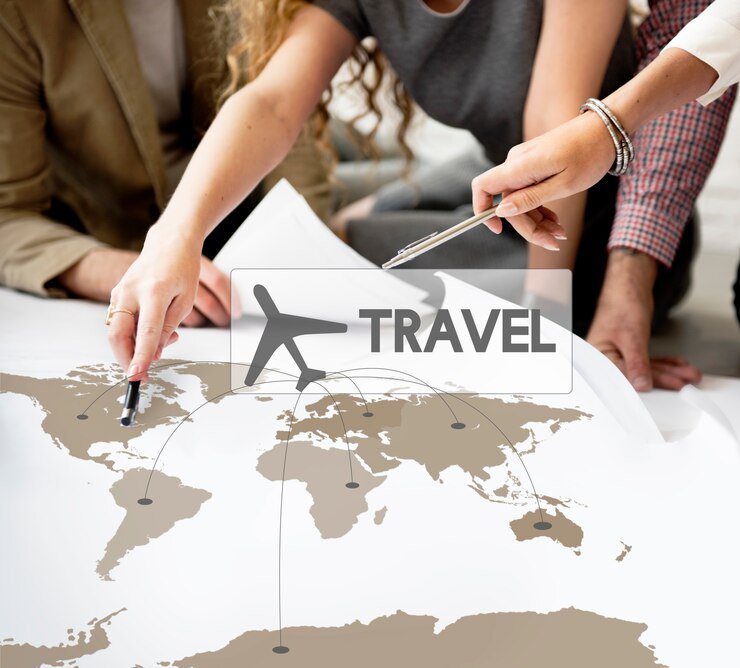
Even though it is difficult to give an accurate figure as to how much money is spent within the tourism industry on a yearly basis, we can offer some insight to give you an indication of the scale that you are dealing with.
For example
According to statistics from 2014, the contribution that the travel and tourism industry made to the global economy was estimated to be in the region of $7 trillion. Accommodation, entertainment, and transportation alone are in the region of $36 trillion. As you can see, that is a huge sum of money and that is a figure that has a tendency to grow each year, by approximately 4%.
It is also estimated that the hotel industry on its own is worth over $450 billion a year. This is split over an estimated 180,000 hotels, although this figure is accepted as just being an educated guess, and it is believed that there is a minimum of 17 million hotel rooms available in the world.
However, there is more to it than just booking hotel rooms.
For example
The cruise industry generated a total of $6 billion in 2014 around the world. Travel bookings made online in 2014 came to a total of $340 billion. The number of tourists around the world in any given year is now over 1 billion. These are vast numbers and they give you an indication as to the number of possibilities that are going to be out there for you.
The size and scope of the industry means that there is always a part of the world where the industry is growing even when other parts are in some kind of financial difficulty. For example, during the recession people were still able to go on breaks due to the general low cost of flights from the UK to the Mediterranean. However, long haul destinations and those locations that were seen as being more exotic did suffer slightly (although they could still benefit from those individuals that lived closer to them).
This industry is something that is only ever going to increase as the population of the world continues to grow and people become more aware of what is on offer around the world. We could sit here and bombard you with facts and figures about the size of the industry, but in all honesty, we recommend that you spend time getting to know the ins and outs of the part of the industry you are aiming to work in so you can start to develop a specific understanding of your market .The knowledge that you pick up from here will be like gold dust when it comes to dealing with customers.
FACT
In the year prior to June, 2016, there were 67.6 million UK residents who travelled abroad. This is an increase of 8 percent when compared to the year before.
Source: Office for National Statistics
1.4 The Different Facets of the Industry
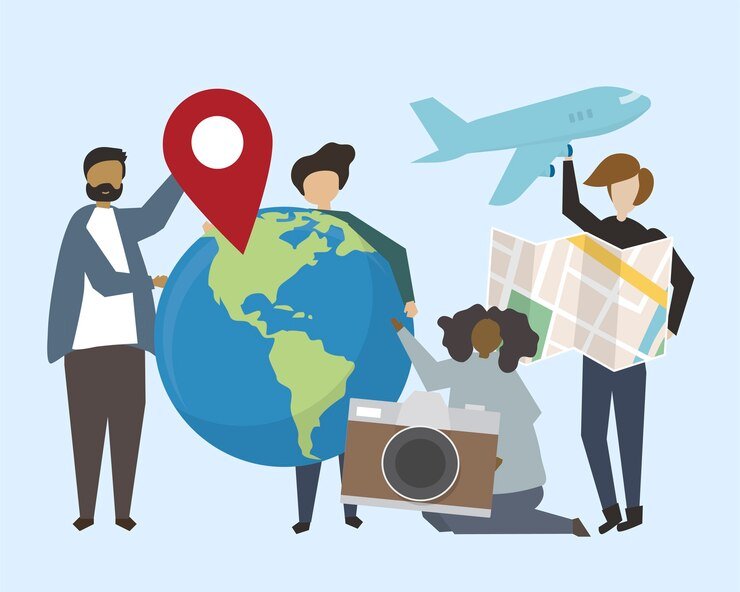
When the industry is this size it makes sense that there are a number of different facets of it.
This is tied in with the point that there are just so many things that you could potentially do as a career within this industry that the world really is your oyster.You need to be aware that the entire industry consists of different individual components that are all interrelated due to the services or products that they provide. You should also be aware that the World Tourism Organisation has identified four different types of tourists with each one having its own needs and wants that have to be catered for.
These four different types are as follows:
1. International Tourism: This is defined as people travelling to another country where they are not a resident.
2. Internal Tourism: This is defined as people travelling within their own country and visiting various parts of it.
3. Domestic Tourism: This is defined as both internal tourism as well as inbound international tourism for hotels.
4. National Tourism: This is internal tourism and outbound tourism for travel agents and flight companies.
Each type has its own particular needs and each one has its own sector of the industry with different services and products being offered to clients and customers. However, the industry itself covers even more areas than just these types of tourism. Throughout the various modules in this course, we will look at these different facets in a bit more detail to provide you with the basic knowledge that you will need to make progress in your career.
Indeed, people that have studied travel and tourism in general will often find themselves dealing with hotel bookings, flight bookings, working with tour companies, tour guides, working in tourism information offices, telesales, travel agents working face to face with customers, travel reps abroad, flight attendants - the list does go on and on and it all depends on what your particular interests are as well as what you are capable of doing.
The key thing here is that there are certainly more than enough opportunities out there due to the sheer size of the industry. Other individuals may even use a diploma in travel and tourism to move into the hotel industry before going on to further enhance their education with additional qualifications to allow them to specialise in certain areas.
What you need to be aware of when you look at the different facets of the industry is that you are not going to be stuck doing the one thing all the time as there is absolutely no need whatsoever to be in this position. Instead, a willingness to try out different positions in different industries will certainly serve you well and as you can imagine, if you do not like one part of the industry then your travel and tourism diploma will help you to seamlessly move elsewhere.
1.5 The Potential for Your Career

Once again, we will look more specifically at your potential career within the travel and tourism industry in another module, but it is sufficient here to say that this is an industry that can serve you well throughout your working life.
It is possible for you to experience working in different locations and within different aspects of the industry depending on your own personal abilities and skill set.
There is no doubt that an individual that has their sights set on working in this particular industry can go on to have a successful career and even work in different parts of the world. There is a very clear career ladder that is there to be climbed and, at the same time, there is also the possibility for you to learn various new skills that will allow you to further enhance your career in whichever direction you wish.
We can use one of the examples from the list of different areas of the industry that were mentioned above to show you how your career could potentially develop.
To begin with, we will say that you have completed the course and are looking at working in a travel agents. At first you will need to learn the ropes for the search and booking system that they use whether it is via telesales or in their store. Your main role will of course be to deal with the customers as they come to you for help to book their holidays, but your career does not have to keep you sitting there behind that one desk forever.
Instead, the potential for your career is to learn the ropes at that level before moving into management. After that, and with the experience that you have managed to pick up during your time working in this part of the industry, you may even wish to start your own travel company and with this comes a number of different opportunities and possibilities.
For example
You may wish to move entirely online and work as a broker setting up flights and holidays for various companies. Alternatively, you may wish to go on and specialise in a particular type of holiday or trip and perhaps even in a specific part of the world. In actual fact, there are some individuals that have gone on to specialise in high quality holidays or focus on executive travel mixing with the rich and famous, although that is rare.
In other words, from starting off working in a travel agent there is no reason why you cannot go on to eventually have your very own business a few years down the line. Clearly you need to understand the workings of the industry in order to be able to do that, but you can easily move from being behind a desk to owning your very own company if that is what your end goal is.
The potential for your career can be described in the following steps:
Getting your foot in the door
By doing this course you are providing yourself with a wonderful opportunity as you will be able to learn about various aspects of the industry and do so in an easy to follow manner. By gaining this knowledge you will then be able to better decide which part of the industry you wish to focus on for your career.
Getting started in the industry
After getting your foot in the door you can then start working in the industry, although it is certainly best to be willing to start at the bottom of the ladder and be prepared to work your way up. Coming in at the grassroots level will allow you to learn every aspect of the industry in real life situations.
Moving up to supervisor or manager
After spending some time learning the ropes and doing your job to the best of your ability it is then a case of looking at moving to a supervisory position or even a managerial job. Depending on where you are working in the industry, it is possible that this could be a department head position.
Move to overall manager
The next step is to move to overall manager, although there could be several steps involved in doing so.
Look at branching out
After getting to the managerial level, it would be fair to assume that you would then have the experience and knowledge to potentially move away and branch out on your own. However, this does depend on your own industry, but moving into becoming self-employed within your area of expertise is certainly something to consider.
There are of course more than 5 steps, but this is simply a short summary - we will be looking more at the potential for career development later on in another module.
1.6 The Development of the Industry
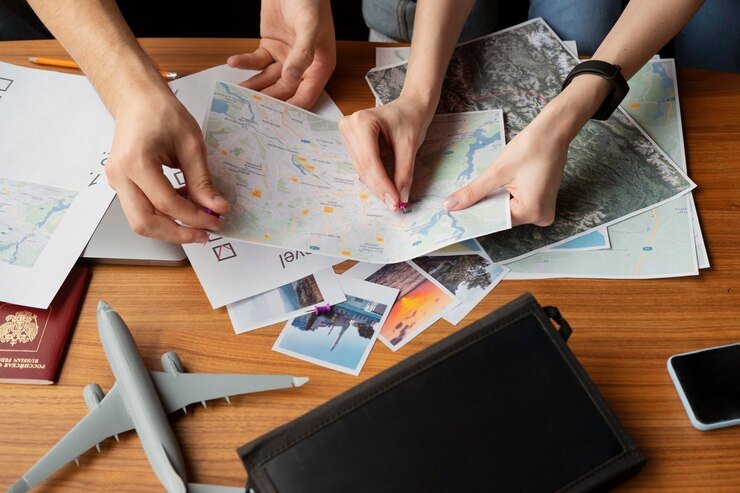
Finally, in this module we will look at the development of the industry itself.
It is fair to say that the industry has changed as a whole thanks to the Internet and technology in general. In order to get away, nowadays there is not the same need for you to go to a travel agent and book through them. This has meant that those individuals that are involved in the industry have had to change their own particular tactics in order to keep up to speed with what is going on with the customers.
We can go back just 100 years and see that the travel and tourism industry was something completely different and it was mainly for those individuals that had spare cash floating around. Now it is nothing like that. Instead, almost anybody can fly away and see the world without it always having to break the bank.
Indeed, before World War 2 people mainly went to holiday camps and even that was relatively rare. People would visit somewhere for a day trip rather than an extended break as that was all they could afford. All that changed after Boeing released their first Jumbo jet in 1958 as this altered the way in which people saw air travel.
As a result, people could now afford to go places and get there in a fraction of the time. These advances in technology are always at the forefront of the development of the tourism industry. We now have better transport, more comfortable transport, faster transport, and of course the Internet has made it so much easier to link people together and for us to know what is available in every corner of the world.
People have also changed the way in which they arrange to travel. The holiday camp was something that they could book themselves and then when the Jumbo jet came out people had to go to a travel agent to arrange everything. We do still use travel companies, but at the same time we can arrange things all on our own if we want to.
Indeed, it could be argued by many that there is now a greater need for more specialist knowledge due to the sheer range of options out there as people simply do not know which way to turn when arranging where they would like to travel to. In this instance, the world really has managed to get smaller.
There is also a growing market whereby people are quite open to going away on a short city break where they just require a 2 or 3 hour flight to get there.
This is apparent when it is a bank holiday weekend with airports full of people just jetting off for the extended weekend. These short breaks have revolutionised a part of the industry and they now account for a substantial part of the entire market with people using them in order to get away and explore new cultures for a short period of time several times a year.
What is clear is that this is an industry that is always developing with certain parts of the world becoming more popular and then others dying off somewhat as people want to see something different. All of this just means that you, as an individual working within the industry, have to better understand what it is that people are after or you are going to have disgruntled customers on your hands. Indeed, the customer is so important in this industry that we have decided to focus on that part in the next module before we get into the real grit of the industry.
MODULE SUMMARY
In this module we have sought to provide you with a basic understanding of the industry itself prior to going into various areas in a bit more detail. As you can see, the size of the industry is perhaps bigger than you imagined and this does mean that there are a number of doors that can be opened up for you and your career. However, in the next module we are going to focus on something that is very important and at the heart of the entire industry: how to deal with customers.
.svg)



