
7.1 Introduction

As a pharmacy team worker, you may be expected to fill prescriptions or dispense basic drugs, under the supervision of a registered pharmacy professional. Pharmacy staff should endorse prescriptions in a clear and consistent manner, so that healthcare professionals are able to understand the documentation and information. Healthcare professionals, as well as patients, should be able to identify the medications that have been dispensed and the quantities, strength and so on. It is important for all staff to familiarise themselves with prescription dispensation and endorsement guidelines, if they deal with medicines in any way.
Prescriptions are written by certified medical practitioners and they are interpreted by pharmacy staff members who then dispense the drugs in accordance with the instructions. It is important to be familiar with basic abbreviations commonly used in prescriptions. Misinterpretation of prescriptions can result in increased risks to patient health outcomes. A clean and hygienic dispensing environment is extremely important for accurate drug dispensation.
It is important for pharmacy assistants to keep the shelves, counters and dispensing equipment clean, at all times. Lack of hygiene can result in cross-contamination of drugs. Similarly, pharmacy assistants are also responsible for checking and monitoring refrigerator temperatures. Module 7 explains the different ways in which the dispensing area of the pharmacy can be kept clean and free of pollutants and contaminants.
Pharmacy medicine labels should be clearly printed with patient-centric information written in legible and readable fonts. Pharmacy assistants are usually actively involved in the printing of labels on containers and this is a key part of the drug dispensation process. The patient must be able to interpret the instructions clearly. Conceptually related information should be separated into “chunks”, in order to promote improved comprehension.
7.2 What are Prescriptions and What Information do they Contain?

Prescriptions are written orders by a medical doctor to the pharmacist, providing instructions for drug dispensation to the patient. Prescriptions are important documents that may have legal implications. They typically contain the following important information:-
-Name of the physician or medical practice: If there are multiple doctors practising at the clinic, the doctor who writes the prescription in question will usually circle his or her name.
-Physical address of the clinic, telephone number and email contact.
-Name of the patient.
-The date on which the prescription is written: The date is extremely important, in case the patient has been prescribed a controlled drug. In such cases, the pharmacy assistant must check that the prescription has been presented at the pharmacy within thirteen weeks of the date. For POM (Prescription Only Medicines), the time limit is twenty six weeks.
-Medication name and strength.
-Directions for consumption of the drug, written in medical abbreviations.
-Number of refills (if any): Please note that the number of allowed refills varies, depending on the class of drugs prescribed. For example, class II drugs cannot be prescribed with refills - the patient must carry a new prescription every time the drug is required (classes of drugs will be discussed in further detail).
-The prescriber's signature.
The RPS (Royal Pharmaceutical Society) recommends that private prescriptions should preferably be recorded in a file for future reference. For some classes of medications such as controlled drugs, recording the sale and details of the prescription is mandatory. However, if the prescription does not contain a POM drug, it can be returned to the patient and need not be recorded in the pharmacy filing system.
Whilst it is the doctor's or GP's job to write out the prescription, it is the pharmacy worker's task to read and interpret it correctly. It is extremely important to do this, because the pharmacy assistant must provide advice and guidance to the patient based on the instructions given in the prescription.
7.3 Common Abbreviations Contained in Pharmacy Prescriptions

Prescriptions should contain clear instructions and abbreviations that are clearly recognised by pharmacy workers. Obscure abbreviations may increase the risk of confusion. Prescriptions should be written with clear ink and must contain actual times of drug consumption (as opposed to simply writing twice a day, for example), directions should be written in full English, metric units should be used for indicating
quantities and the minimum time between reβills and the number of exact reβills should be clearly specified.
In case of illegible prescriptions, the pharmacy assistant must contact the physician or doctor for clarification. Contacting the physician will not only prevent interpretation errors, but will also help to ensure the authenticity of the prescription. These instances are now reduced, due to the increasing use of electronic prescriptions. These will be discussed in subsequent sections.
Here is a list of the common abbreviations used in prescriptions. Understanding these abbreviations will help you to interpret prescriptions correctly:-
a.c Prior to meals
alt.h. Every other hour
ad lib. Use as one desires (free usage)
a.d. Right ear
admov. Apply
agit. Stir/shake
amt Indicates amount
Aq Water or solution form
A.T.C. Around the clock
Bis Two times/twice
B.M. Bowel Movement
Bol. Large, single dose (usually applicable to medicines that are prescribed intravenously)
B.S. Blood sugar
Cap. Capsules
CC with food
Comp. Compound
D.A.W. This indicates 'Dispense as Written'
Dc/Disc Discontinue the medication
Dil Dilute
Disp. Dispense
D.W. Indicates distilled water
e.m.p As directed
emuls. Syrup in the form of Emulsion
fl. Indicates fluid
g Unit of measurement indicating gram
garg. Gargle
H Hypodermic (to be administered under the skin region)
inj. Injection
L.A.S. Label as Such
Liq Indicates solution
Lot. Indicates lotion
M./mist. Mix
m/min Minimum dosage
mcg Unit of measurement microgram
mL Millilitre
N.M.T Not more than
Noct. To be administered at night
Non rep. Dosage is not to be repeated
NS Normal Saline
o.d. Right eye
o.s. Left eye
oz Ounce
p.a. To the affected part
p.c. After meals
p.m. Includes evening or afternoon times
p.o. By mouth (orally)
p.r. Administered through the rectum
q.a.d Every other day
q.h. Every hour
q.h.s. Every night at bedtime
q.s. A sufβicient quantity
rep., rept. Indicates repeat doses
Rx Take
s.a. Use your judgement
sig Write on label
stat Immediately
susp Syrup in the form of a suspension
Tab Tablets
Tbsp Implies tablespoon
Troche Latin for Lozenge
Tsp Indicates one teaspoon
t.i.d./t.d.s. To be given three times a day
top. This means topical (not oral) application
u.a. As before
u.t. As directed
ung. Implies ointment for topical application
vag Applied/administered vaginally
w With
w/o Without
X Times
Activity
Estimated time 10-15 minutes
Why do you think it is important for an assistant to be familiar with prescriptions and their interpretation? How does it help you offer better services to patients?
7.4 Dispensation of Drugs

As a pharmacy assistant or worker, you should be familiar with certain basic information regarding prescription and dispensation of medication. All pharmacy staff should ideally be aware of the following:-
-Sale of over the counter medication, as well as the provision of information regarding benefits and effects of the drug.
-Receipt and collection of prescriptions.
-Generation of labels and assembly of prescribed pieces included in the prescription.
-Preparation and dispensation of pharmaceutical and medicinal products (to a fundamental extent and under the supervision of the pharmacist).
Good dispensation practices involve correct dosage, strength and concentration of medicine to the patient, along with clear instructions regarding consumption. All pharmacy staff must practice drug dispensation in an orderly, accurate and disciplined manner. You should be particularly careful about using clean equipment and reading labels correctly. Pharmacy assistants will also be expected to label medication packages correctly and they should contain clear instructions for use. The language and style should correspond with the requirements and ability of the patient.
Pharmacies can also consider improving dispensing practices, by creating standard security and safety measures. Assistants should refer to the standards, before handing over the medication to patients. The term “dispensing” refers to the process of preparing, labelling and providing medicines to a patient on the basis of a prescription written by a certified medical practitioner.
Dispensation of drugs is performed by a variety of pharmacy workers, including pharmacists, technicians and assistants. It is also performed in a variety of settings, such as hospital, ambulatory, community or retail pharmacy. Regardless of the location or the worker dispensing the medicine, it has to be performed with due diligence and care.
Any errors with regard to dispensation, including misinterpretation of the prescription or inadequate understanding of patient requirements, can result in serious risks to patient health outcomes. In fact, it would be correct to say that all resources that have been invested into a patient's care will be wasted if the dispensation of drugs is done incorrectly. Dispensation of drugs is usually regarded as a routine, simple process. However, drug dispensation requires attention to detail, improved understanding of the prescription and the patient's requirements, as well as the ability to provide correct information to the patient.
The following factors influence the dispensation of drugs in a pharmacy:-
FACT
In the UK, about two and a half million prescriptions are issued and roughly 7,000 medications are administered on a daily basis.
Source: ncbi.nlm.nih.gov
7.5 Clean and Hygienic Environment

It is extremely important to dispense drugs in a clean and hygienic environment, in order to reduce the risk of contamination. The dispensing environment must be dust free and kept free of dirt and grime. Ideally, the dispensing area should be accessible only to authorised pharmacy personnel. It is also a good idea to wear a clean uniform or protective clothing. It is also important to maintain personal cleanliness and keep hair pulled back and nails well scrubbed.
Pharmacy assistants are typically in charge of the maintenance and upkeep of the pharmacy premises. They should ensure that shelves are dusted and clean, floors are swept, rubbish should be removed and counters wiped down regularly. There should also be a regular schedule for defrosting, checking and cleaning out of the pharmacy refrigerator. Any spills should be wiped up immediately (especially if the liquid is stocky or sweet, as this may attract flies). Food and drink must be kept out of the dispensing area and the refrigerator must be used only for the storage of medicines.
Pharmacy assistants should also regularly check refrigerator temperatures (which should usually lie within a range of 2 to -8 °C), otherwise the medicines may spoil or cause errors during dispensation. Pharmacy staff use dispensing equipment to count pills, measure liquids, or weigh solids. You should be extremely vigilant regarding cleanliness when using uncoated tablets, for example. Uncoated tablets may leave a light powder on the counter surface, which may stick to other tablets or pills.
This is known as cross-contamination and can be particularly dangerous in a pharmacy setting. For example, if powdered aspirin sticks onto another tablet, this may cause health problems to a patient who is allergic to aspirin. Assistants must ensure that dispensing equipment and the area is cleaned well between uses, as well as at the end of the day. The dispensing environment must be efficient and
safe for more than one staff member to dispense drugs simultaneously.
Overcrowding may result in jostling for space, which may interfere with accurate drug dispensation. The difference between dispensing standard goods and medicines is that the patient (customer) is unable to gauge the quality of the drug and depends on the dispenser to provide the correct amount, dosage and so forth. Hence, in addition to reading, writing, counting and pouring, pharmacy assistants require specific training and skills in the dispensation process.
These are set out below:-
Basic knowledge about the medicine being dispensed:
-This will include correct use, dosage, precautions, side-effects, common interactions with other drugs and so on.
-Competent arithmetic and counting skills.
-Ability to judge the quality of preparation.
-Ability to judge standards of cleanliness and hygiene.
Activity 2
Estimated time 10-15 minutes
Cleanliness and hygiene are extremely important in the process of drug dispensing. What checks would you like to implement, in order to reinforce cleanliness in the dispensing area?
7.6 Training in the Preparation and Dispensation of Drugs

Ideally pharmacy assistants should receive training in the preparation and dispensation of drugs and the interpretation of prescriptions, depending on the number of patients and type of services offered at the pharmacy. Pharmacy assistants working in community pharmacies should also be trained in the dispensation of drugs. In busy pharmacies, the pharmacist may be involved in physician and patient interactions, as well as pharmaceutical treatment reviews. Hence, assistants can expect to become actively involved in the dispensation of drugs.
Good dispensing procedures involve consistent checking and regulation, in order to ensure minimisation of errors at every stage of the dispensing process. “Dispensing process” involves all of the steps, starting from receiving the prescription, to issuing the prescribed medication to the patient.
There are six major steps involved in the dispensation of medicines:-
1. Receipt of the prescription
2. Interpretation and translation of the prescription
3. Enter the prescription into the computer system
4. Filling the prescription
5. Labelling the prescription
6. Issuing the medicine to the patient
Step 1: Receipt and validation of prescription
Once the pharmacy assistant receives a prescription, the first step involves verification of the name of the patient. In some cases, the caregiver could be collecting the medication on behalf of the patient. This step is particularly important in busy pharmacies that deal with large crowds. Failure to verify the name of the patient may result in mix ups. The pharmacy staff can consider using symbols or codes with the name and prescription, to ensure that the correct medicine is provided to the correct patient. This symbol is provided to the patient, as well as recorded on the prescription. This is particularly helpful in cases where there are patients with the same surname.
Step 2: Reading, Understanding and Interpreting the Prescription
The prescription can either be interpreted by the assistant or a senior member of staff, who will then guide the dispensation process. This process involves reading the prescription, interpreting the abbreviations used in the prescription (explained in the section above), confirming that the doses prescribed are normal for the patient and correctly calculate the dosage for the medication.
The level of training provided for any dispensing task depends on the complexity of preparation and calculations involved. In some pharmacies, basic dispensing training may be adequate, given the fact that they may be handling a limited number of drugs and fewer patients. In such cases, dispensation training is usually provided, based on previous healthcare care skills and knowledge. Pharmacy assistants who have received basic training must perform drug dispensations under strict supervision of the technician or pharmacist.
Please note that all prescriptions must be in the written or electronic format (electronic prescriptions will be explained in subsequent sections). Verbal prescriptions should not be accepted, except in emergency or exceptional cases. Computerised prescriptions and dispensing systems are being increasingly used, especially in hospital pharmacies. If you have any doubts or confusion due to illegible handwriting (especially with similar products), please make it a point to check with the prescribing authority - you may actually save a life.
Step 3: Entering the Prescription into the computer system
The assistant will enter the prescription into the pharmacy's computer system. In modern pharmacies, prescriptions are usually scanned into the system.
Step 4: Filling the prescription
The assistant now fills the prescription, by first verifying the details on the prescription. You will now pick the correct medicine off the shelf, count the pills or measure the liquid and enter the medicine carefully (without touching) into the vial.
7.7 Labelling Items for Dispensation
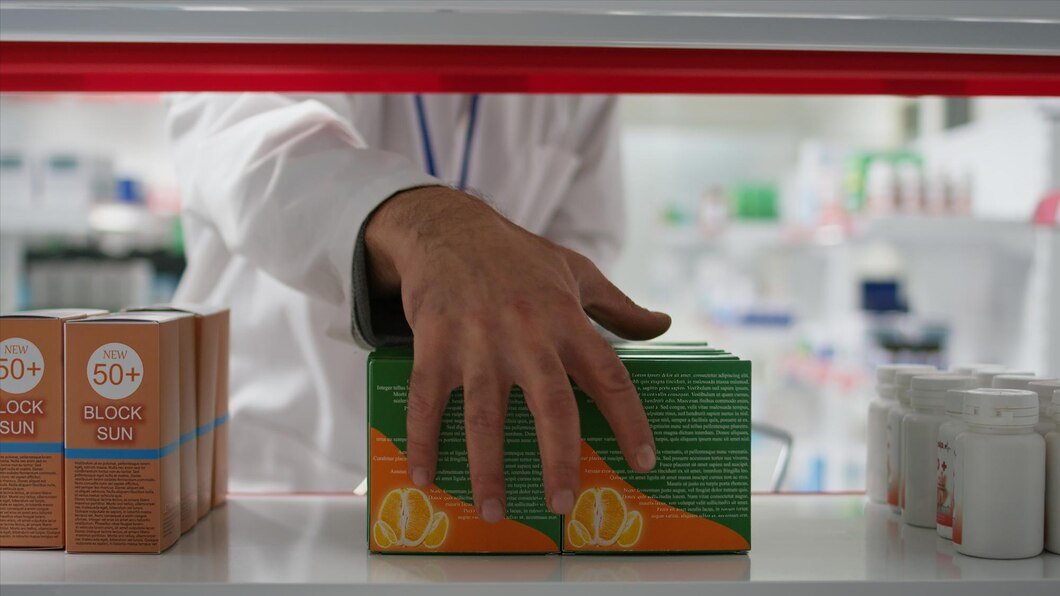
The pharmacy assistants need to prepare and label items for dispensation. This is a key procedure in drug dispensation and assistants must incorporate either self-checking or cross-checking by another pharmacy assistant, to ensure accuracy. Preparation of items is the step that follows after the prescription has been read and interpreted and the required quantities have been calculated. It is a good idea to prepare the label at this stage, as this will help prevent errors.
Poorly designed and printed pharmacy labels can result in reduced patient outcomes, confusions and serious consequences. Standardised and carefully designed container labels can help to reduce inadvertent medication errors. The duty of printing drug labels is typically performed by pharmacy assistants. It is extremely important to understand how to print medicine labels.
Follow the tips and suggestions explained below, in order to design clear and legible drug container labels:-
1. Print labels in a way that improves readability and comprehension
Use a standard font size of 12, to print the patient's name, generic drug name and dosage. Avoid using narrow, oblique, fancy and condensed fonts, as these often pose difficulties in viewing. Stick to standard, sans serif type fonts, such as Arial, Verdant and Times New Roman. Wherever applicable, use numeric characters as opposed to alphabetic characters, when it comes to printing frequency, concentration or quantity Use horizontal text formats.
Maximise white space between characters, for improved readability, especially for older patients. It is ideal to include white space for 25-30% of the point size. Thicker, denser fonts are easier to read. A white background offers better legibility, as opposed to a coloured background. Please note that the emphasis is on readability, as opposed to aesthetics. This form of label printing is called “high contrast printing”. Indicate bar codes with black ink. Group the content into conceptually related sections, in order to make it more patient-centric.
For example, dosage instructions should be printed together and precautions can be printed in a separate section (this is called “chunking”). Use white space, to separate dosage instructions. Provider related content should be printed at the bottom of the page and should be separated from other information. Provider content should include name, contact number and address.
2. Provide the patient with explicit instructions in order to improve patient comprehension
Directions must be detailed and specific. For example, you need to print the dosage instructions as “take one tablet in the morning after breakfast and one tablet after dinner in the evening”. This should not be simply written as “take two tablets, twice a day”. Use simple numbers or words. For example, two or 2 is preferable to “twice”.
Use mixed case, for better readability. In fact, it is best to print in accordance with simple English language rules - i.e. capital letters, followed by small letters - wherever applicable. Tweak printer and computer settings, to ensure inclusion of characters that dip below the line (such as “y” or “g”).
Avoid use of abbreviations for drug name, dosage or generic name. As a pharmacy worker, you may be expected to be familiar with abbreviations used in prescriptions, but please keep in mind that ordinary folk cannot be expected to understand medical abbreviations. Use the expanded format for all words.
As far as possible, auxiliary information should be limited, in order to avoid distracting the patient with non-essential information. This is especially true for patients with low literacy levels. Limit auxiliary information to critical information regarding over-dosage, etc. Also, paste the label in a manner that the patient is not obliged to turn over the container in order to read it.
Additional tips to ensure improved readability of pharmacy container labels:-
1. Avoid trailing zeros. For example, write 3 mg and not 3.0 mg. Trailing zeros often lead to increased confusion.
2. Include leading zeros, for numbers less than one. For instance, you should consider writing 0.5 mg and not .5 mg. The presence of the leading zero emphasises the decimal point. In the absence of the zero, the patient may interpret the dosage as 5 mg, instead.
3. Write the word “Units” or “units”, wherever applicable and do not substitute with “u”. This may be easily confused with “0” and may result in a ten-fold overdose.
4. If the dosage is written in thousands, make sure that you use commas for proper spacing of numbers. For example, you may wish to write 4,000 instead of 4000. Similarly, use the word “thousands” instead of the number, for very large doses. For instance, you should write 180 thousand instead of 180,000.
5. Keep the labels simple and avoid unnecessary medical jargon.
Pharmacy workers should use the following metric units, for dosage instructions on medicine labels:-
m Metre
Kg Kilogram
g Gram
mg Milligram
mcg Microgram
L Litre
mL Millilitre
mEq Milliequivalent
Please follow the upper/lower case lettering, as shown in the list above. Drug names printed on the label should be different from other information. Generic drug names should be distinct from brand names, by writing all generic names in lower case letters and brand names in upper case letters. Do not use trademark symbols, etc. Whenever you need to print the strength, dosage, dosage units, etc, separate the main word from the dosage units with a space.
For example
Amoxicillin 250 mg is more legible compared to amoxicillin250mg. You should also include the purpose for which the medication has been prescribed, unless the patient does not want the information to be included. Ensure that you include the generic as well as the brand name of the drug. In addition, use a second patient identifier (apart from the name), in order to ensure that you are dispensing medicine to the correct patient. This could be the address, or the date of birth.
If you are creating a label for a patient with low vision, use font size 18. Also include pictograms, with a dense black print on a white background. If the pharmacy offers large label printing, this information should be clearly communicated to the patient or caregiver, as well as prominently displayed at the counter. Tallman letters are used to increase legibility of certain letters, in order to reduce between similar sounding drug names. Tallman letters are typically uppercase letters that are used within drug names, to distinguish them from look-alike names.
Examples:-
CefaCLOR
cefALEXin cefAZOLin
Community, retail and hospital pharmacies may also interact often with patients who are not familiar with the English language. In such cases, the prescription may need to be translated by a trained translator and cross-checked by a pharmacist who is trained in the target language. As far as possible, computer generated languages should not be used, as this may result in dosage inconsistencies and potential hazard to the patient. Similarly, the label should be printed in the target language as well as English, in order to allow for continuity of care.
7.8 Step 6: Issuing the Prescription
The assistant should have the medicine checked by the pharmacist on duty and only then issue the medicine to the patient and provide counselling. The assistant should ensure that the patient has understood the instructions clearly and comprehends the side-effects and precautions and so on.
MODULE SUMMARY
It is essential for pharmacy assistants to be familiar with the basics of prescription interpretation and drug dispensation. Multiple pharmacy staff members will usually be involved in the dispensation of drugs, especially in busy pharmacies. Regardless of the setting, it is extremely important to eliminate any errors in the prescription and drug dispensation process. The patient depends on the competency and ability of the pharmacy staff, when it comes to the quality of the drug dispensation process.
Pharmacy assistants are also actively involved in the upkeep and cleanliness of the physical environment. Spills should be immediately wiped up, counter tops should be kept clean and dispensing equipment should be cleaned between uses. In addition, counters and equipment should be wiped down at the end of the day. Assistants should also monitor the temperature of the refrigerator where medicines are stored. Any faults should be immediately reported to the supervisor.
It is important to print legible, clear and explicit labels on pharmaceutical containers. The information must be patient-centric and devoid of technical jargon, which may confuse the patient or caregiver. Similarly, pharmacy assistants should incorporate adequate white spaces, to ensure improved readability. It is best to use standard sans serif fonts, such as Ariel or Verdant, as opposed to oblique, narrow and fancy fonts. Numeric measurements must be separated from fonts, in order to ensure legibility. The labels must be printed in a standard format, according to suggested governmental guidelines and not according to the tastes of individual practitioners.
.svg)



