
Module 5: Casing & Cementing Operations

5.1 Casing Design Principles
Casing strings are critical for well integrity, providing structural support and zonal isolation.
Casing Strings & Functions:
Conductor Casing:
First string set shallow (50–300 ft) to stabilize surface formations.
Prevents washouts and supports subsequent casing.
Surface Casing:
Isolates freshwater zones (typically 1,000–5,000 ft).
Anchors BOP stack for well control.
Intermediate Casing:
Isolates unstable formations or pressure transitions.
Mitigates lost circulation or kicks in deeper sections.
Production Casing:
Final string reaching reservoir depth.
Provides conduit for hydrocarbons and well completion.
Casing Design Calculations:
Burst Pressure:
Maximum internal pressure (e.g., gas influx) casing must withstand.
Formula: Burst Resistance = Yield Strength × (OD/t) (OD = outer diameter, t = wall thickness).
Collapse Pressure:
External pressure from fluid/formation loads.
Governed by API Collapse Rating Tables (varies with diameter/grade).
Tension Load:
Weight of casing string + bending forces in deviated wells.
Safety factor: 1.6–2.0 for static loads; higher for dynamic (tripping).
Design Workflow:
Select casing size based on wellbore diagram.
Calculate burst/collapse/tension for worst-case scenarios.
Choose material grade (e.g., L-80, P-110) and connection type (e.g., API, premium).
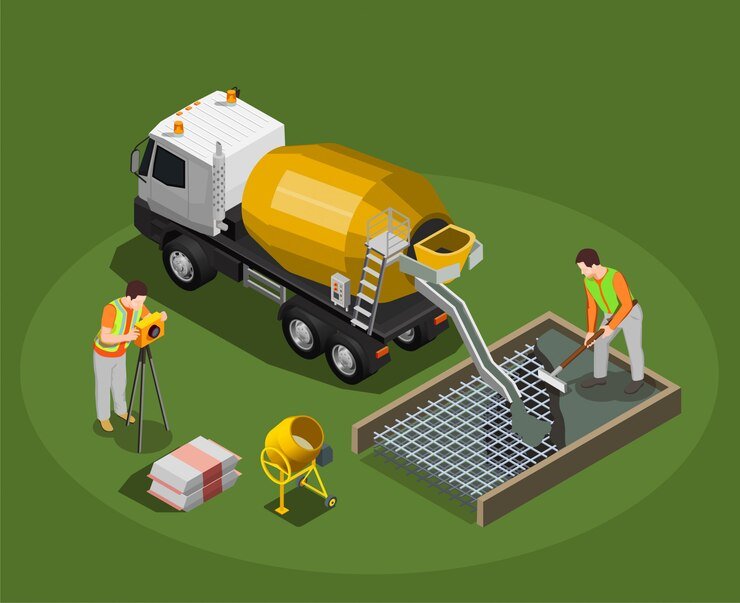
5.2 Cementing Process
Cementing isolates zones, prevents leaks, and supports casing.
Slurry Design:
Additives:
Retarders: Extend thickening time for deep wells (e.g., lignosulfonates).
Accelerators: Speed up setting in shallow zones (e.g., calcium chloride).
Lightweight Agents: Reduce density for weak formations (e.g., bentonite, foam).
Dispersants: Improve flow (e.g., sulfonated polymers).
Thickening Time:
Measured via Consistometer (simulates downhole conditions).
Must exceed operational time + safety margin (typically 2–4 hours).
Primary Cementing Techniques:
Single-Stage Cementing:
Cement pumped through casing shoe in one circulation.
Used for shallow or simple wells.
Multi-Stage Cementing:
Uses differential valves to cement isolated sections separately.
Ideal for long intervals or pressure-sensitive zones.
Liner Cementing:
Cementing a liner (not full casing) tied back to surface.
Common in deep wells to save cost.
Critical Steps:
Mud Removal: Pre-job spacer fluids clean the wellbore.
Centralization: Casing centralizers ensure even cement distribution.
Pressure Testing: Verify zonal isolation post-cementing (e.g., CBL/VDL logs).
Key Takeaways:
Casing design balances burst/collapse/tension loads with cost and safety factors.
Cement slurry is tailored to well depth, temperature, and formation needs.
Cementing techniques vary based on well complexity; poor cement leads to sustained casing pressure (SCP) or blowouts.
API Standards (e.g., 5CT, 10A) govern material specs and testing.
.svg)



