
6.1 Types of Customers

First, let us discuss the
different types of customers that you will come across duringyourtime as a
hotel manager.
Understanding the variety of
people that you will encounter allows you to have a better gripof yourpeople
skills and will lead to you being able to perform better as a hotel manager.
Tourists
The first group are tourists.
They are going to be there for sightseeing and checking out everythingthat the
city has to offer, but it also means that they have limited knowledge of the
area. That iswhere your own knowledge comes to the fore. You must be able to
provide themwith information. You will often have to deal with groups of
tourists together and make sure that you findout thekindof things that they
would like to do and see to help them with it. They will often be very awareof
how much money they want to spend. They will also be looking for places to eat
and any customsthat they should perhaps know about.
You need to be ready to offer a
substantial amount of information to make sure that this typeof customer has
the best experience possible whilst staying at your hotel.
Families
Families is another big market
for most hotels, but your approach and the information that youhaveavailable
will be slightly different to a group of tourists.Depending on the type of hotel
you work at, you could find that families are there for a short breakand they
just want to have a change from their usual daily routine. You need to have
adequateinformation on places to check out and things to do when you have a
child, and the last thingtheywant is for the hotel to be too noisy, so try to
keep that in mind when you are dealing withthem.
Elderly
The elderly are going to be an
important group of customers, and they also have different needsthathave to be met
in order to provide them with the best possible experience. Perhaps the most
important thing when dealing with this type of customer is making sure that the
staff are extremelyfriendly and helpful at all times and that they are made to
feel at home. This is somethingthat should apply to every kind of customer, but
with the elderly it is even more important thaneverbefore.
Business
The business customer is
completely different to everybody else. They are not staying
therefortheexperience of doing so, but rather they are there because they have
meetings to attend anddealstostrike. There will be less interaction with this
type of customer, as you will find that they get up, have their breakfast,
check out and are on their way. There is no sense of providing themwithasmuch
information or having to deal with their needs on a regular basis.
It can often be the case that the
business guest will even eat in the hotel, but they will lookforsomewhere quiet
in order to try to relax as best they can at the end of the day. Also, Wi-Fi
will tendto be an absolute must for them.
Delegates
Depending on the type of hotel
you are working at, as well as its location, you could easilyenduphaving to
deal with yet another type of customer, the delegate.
This type of customer will often
be in hotels that have large spaces that can be hired out for meetings, so they
are also in the business group, but their business often takes place
withinthehotel itself. They have a tendency to look for fast service, but as
with the business customer, youractual interaction with them will be kept to a
minimum.
However, no matter the type of
customer that you get, you must always act professional at all timesand
identify their specific needs to make sure that their stay is as enjoyable as
possible.
FACT
The contribution Britain's
tourism industry makes to the UK economy is predicted to morethandouble in the
next 12 years.
Source: Hotelindustry.co.uk
6.2 How to Identify their
Requirements

As the hotel manager, it is an
absolute necessity for you to be able to correctly identifythedifferent needs
and requirements for your guests in order to then provide themwiththebest
possible experience in your hotel.
Often, clues will be available in
their initial booking, and you can start to come to terms withtheinformation
that they will perhaps require, and also the kind of interaction that you will
havewiththem.
Train staff to ask certain
questions, or if they are booking online, make sure that the websitehascertain
questions included, that will help you to identify what they are looking for
aheadof theirarrival.
How many rooms do they require?
How long are they staying? Can you provide themwithanyspecial deals? What is
their reason for staying? How can you then help themin line withwhytheyare
coming to your hotel? Do they have any special dietary requirements? Do they have
anyissueswith disabilities or need extra assistance in any way?
You cannot be afraid to ask
questions. Stress that the reason why you are asking themis simplytomake sure
that you are providing them with the best service possible during their stay.
If youdonotknow their personal requirements, then how can you make sure that
they enjoy their time there?
Finally, make sure that you check
about their personal requirements when they arrive tocheckin, asthings can
change between the booking and arriving dates. Always be friendly and ask if
youcanhelp them with anything else as friendly staff and a willingness to help
will always prove tobeuseful.
6.3 Dealing with Walk-In Guests

Even though the majority of your
reservations will come via the Internet, travel agents, ortelephone, there will
still be some individuals that will simply become walk-inguests
Dealing with them involves going
through a slightly different process, as you need to be abletoquickly identify
what it is that they need and make sure that you are able to meet those
individual requirements. It is difficult, as you have had no time to prepare
for these guests, so youmust beonthe top of your game to make sure that they
have a fantastic time while staying at your hotel.
If potential guests walk in and
ask for a room, it is important that you are still warmandfriendlywith your
welcome and be open to the prospect of them staying there. However, there
arecertainthings that you are recommended to do in order to appear as
professional as possible whilst alsodealing with their request for a room.
First, you must of course
determine if you do indeed have a room spare. This is informationthat youshould
have at your disposal at all times, and you should be capable of providing
themwithananswer to this question immediately.
When you know that you have rooms
available, it is then important that you ask themabout theirneeds and personal
preferences in order to match them up with the room that is best for them.
Afteridentifying the room, you must of course provide them with the cost for
the night and thengothrough the booking procedure.
However, it is important to make
sure that the room is indeed ready for the sudden arrival of anewguest. With
this, you need to explain to them that it will take just a short period of time
toget theroom ready, and you may then wish to usher them into another part of
the hotel, where theycansitand perhaps have a coffee while they wait. Walk-in
guests will be more than happy withthis, astheyrealise that they have caught
you unawares and will at least appreciate that you are takingthetimeand putting
in the effort to make sure that the room is suitable.
It is also useful to know how to
handle a situation whereby there are no rooms available. If youworkfor a hotel
that has several in the same location, then offer to contact the other hotels
inthechaintosee if they have any rooms available. By doing this, you are going
to keep the guest withinthesamecompany albeit at a different location, but it
still reflects well on you as you are clearly puttinginthetime and energy to
find them suitable accommodation within their desired price range.
If you are unable to help them in
any way, it is important that you apologise for being unabletohelpthem and
perhaps provide them with alternative solutions that may be suitable. This may
meanthatanother hotel gets the business, but it still reflects well on you for
being friendly and helpful, andthat is the key thing in any hospitality
setting.
6.4 Disabled Guests
Even though it is not our
intention of singling out specific types of guests, it does havetobe the case
when we are dealing with people that are disabled.
As a hotel, you will need to meet
certain criteria for dealing with people that have a wide rangeofdisabilities,
and as the hotel manager, it is important that you understand what those
requirementsare.
However, we also need to stress
the kind of information that you need to obtain, and the productsand services
that you need to include to make sure that the needs of the disabled guest
aremet andto their satisfaction.
Does the guest require any
special help? What kind of things do they find difficult? Howeasilycanthey move
around? Which parts of the hotel would prove to be too difficult for
themandpotentiallyhave an impact on the quality of their stay?
Dealing with a disabled guest
requires some careful thinking and planning to ultimately makesurethat they
have the best stay possible.
It is advisable for your hotel to
have certain rooms that are going to be easier for people that aredisabled to
be able to use.
For example, it is common for
hotels that have rooms on the ground floor to have themadaptedforpeople that
use a wheelchair or have difficulty walking. This will remove the need for
themtousethe elevator or stairs, and there is no doubt that it will improve
their experience of stayingtherequite considerably.
The key thing is to do with
access to the hotel and its different facilities and when they arebooking, and
also when they are checking in. It is important that you learn as much as you
can about theirneeds so you can then allocate staff, if required, to help them
at various times. There is undoubtedlymore due care and attention required when
dealing with somebody that has a disability, but thisisan essential part of
your job, as you must make sure that every guest is comfortable at all times.
6.5 Privacy and Confidentiality
of Guests Next, we need to discuss the issue of privacy and confidentiality
surrounding your guests.

As a hotel, it has always been
the case that these two matters are held dear by staff andowners, asthey wish
to create a sense of individuals being able to be whoever they want to be,
withinlegal limitations, as they stay at the hotel.
Indeed, each hotel will tend to
have its own policies regarding these two issues, and as thehotel manager, it
is important that you stress these policies to your staff and make sure that
theyadhereto them at all times. This is something that applies to every guest
and not just those that arefamousin some way as everybody should be treated equally
no matter their standing.
What you must remember is that
staff in a hotel will often be privy to personal informationaboutaguest.
However, it is essential that it remains private in the same way as individuals
workinginabank will keep the financial details of individuals private.
It should also be made clear in
the company privacy policy what a guest can expect withthewayinwhich their
information in not only accessed, but how it is then handled.You must remember that you will
have their contact details, as well as swiping their credit cardsforpayment, so
your guests must know that all of this is protected wherever possible.
It is important that staff are
trained in an appropriate manner to deal with credit cards andthat theyalso
understand the importance of keeping these details private at all times. They
oftenstatethatdiscretion is important in a hotel, and that is certainly true.
You should also avoid treatinganyguestdifferently just because of their social
standing as every guest deserves the same treatment nomatter what.
However, there are exceptions to
the rules when it comes to privacy and confidentiality inahotel setting. Nobody
is allowed to be involved in any illegal behaviour and that also includes
anybehaviour that goes against the policies of the hotel itself. As long as
that has been clearly explained, it does give management the right to remove
the individual due to thembreakingtherules of the hotel just as the guest has
the right to complain when a member of staff does likewisewith them.
If there is the belief that
somebody is in immediate danger, then it is the responsibility of thestaffand
management to deal with the situation, rather than just ignoring it due to the
privacyissue. Thesafety of all of your guests is paramount, and it is more
important than any policies that mayhavebeen established by the hotel. You are
also well within your rights to call the appropriate authoritiesshould you be
required to do so, as this is also not going to be in contravention of your
privacypolicyif you believe that somebody is in danger or something illegal is
going on.
6.6 VIP Guests

As we just spoke about privacy
and confidentiality, it makes sense to also discuss meetingthe needs of VIP
guests as this is something that you may have to deal with dependingonthe hotel
that you are managing.
When you have somebody at your
hotel with a VIP status, then it does mean that there arevariousprotocols that
tend to be put into action to provide them with the kind of service that
theyrequire. The point about privacy and confidentiality is certainly something
that applies, and indeedanumberof celebrities will specifically ask for
confirmation of this before any booking is completed.
With VIP guests, it is often the
case that their specific needs and requirements are sent aheadof their arrival
to make sure that everything goes as smoothly as possible fromthe outset. This
doesalso mean that it is perhaps in your best interest to have your most
experienced staff dealingwiththem.
Often, and depending on the VIP,
you may not even deal with the individual themselves, andit will rather be with
a member of their own staff who will work alongside you with what they
needorwant. If this is indeed the case, then it is important that you identify
the individual that youwill haveto deal with in order to then discuss various
issues to make sure that they have the best experiencepossible at the hotel.
Finally, it is also important
that you do not then spread the news around the hotel about whoisstaying there,
since this does breach the privacy policy that has been established. The
VIPguestsshould be left alone, just like any other guest.
6.7 Building Relationships with
Guests
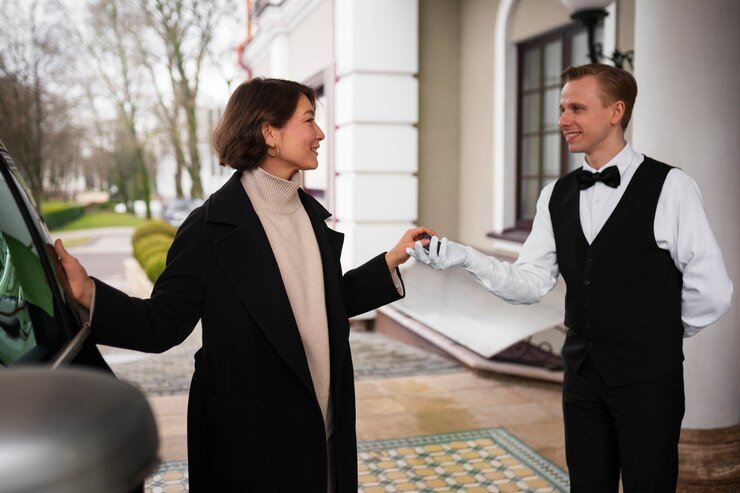
The final section that we need to
discuss is focused on the art of building relationshipswith guests.
Without this, it becomes
relatively impossible to provide them with the level of service that
theyareseeking, and at this point, it becomes a major issue and can undermine
your ability to operateasahotel manager.
There are various aspects to
building that relationship, and it is fair to say that your abilitytodosowill
improve as your level of experience increases.
1. Be polite at all times.
The first thing that has to be
done is that you need to be polite to the guests every single timeyousee them.
It is amazing what just asking them if they slept well, if there is anything
you candoforthem, or if they have any comments can do to the relationship, as
it lets themsee that youviewthemas being actual people rather than just another
number.
Remember, being warm and friendly
does not have to cost you anything at all, so do not holdbackon it, as it
really will make a difference.
2. Offer advice whenever
possible.
If you are dealing with tourists
or families, it can be useful to offer advice to themwhenever possibleregarding
events that are on, places to check out, or anything that can make their time
inthecitythat bit better. Try to do this without always being prompted, as it
shows the guest that youhavetaken an interest in helping them out rather than
just sitting back and waiting to be asked, asthatcan be slightly off-putting for
them.
3. Learn about them at the time
of the booking.
If they are booking the hotel by
phone, make sure that the staff that deal with this part aretrainedtouncover as
much information about the guest as possible.
What time will they arrive at?
How long are they staying? What is the purpose of their stay?
By asking questions at the time
of the booking, it means that you can then start to providethemwitha more
personal service right from the get go and that is something that will be
appreciatedbytheguest before they even arrive at your hotel. It will also mean
that they will arrive with a positiveframe of mind and everything will start
off on the right foot.
4. Be visible.
It is of vital importance to
build a relationship with guests. To do so, you must be visible tothemasmuch as
possible. They want to know that if they have a question, they can ask you
andareabletofind a member of staff whenever they require some assistance. It
will not help the relationshipif they feel that they need to go hunting,
because by then their frustration will be building inside, andyou will then
have an unhappy guest on your hands. This is something that needs to be
avoidedatallcosts.
5. Ask for feedback.
This is another point that is
exceptionally important at building a relationship between youandyourguests.
Asking for feedback makes the guest feel that their opinion is valued, and if
they commentonanything that can be changed immediately, then get it done to see
that you do take their commentsinto consideration. Guests do rather enjoy when
their comments are actioned upon, but clearlythisis not always possible, so
informing them that you will take their comments on board maysufficeincertain
situations.
6. Make sure that you are
flexible.
There will be times where you are
bound by the rules and regulations, but avoid being a jobsworthwith every
guest, and prepare to be quite flexible in the way that you deal with their
different requests. There is nothing wrong with slightly bending your usual
approach, as long as it still fallswithin the rules, because guests will
appreciate when staff go that extra step just to make surethatthey can provide
whatever is required. However, if you are unable to do this, then
explainthereasons why to prevent a situation from arising. At this point, it
could be useful to providethemwithan alternative as it does at least show that
you are willing to work with themon their issue.
When it comes to building a
relationship with the guests, make sure that you are friendlyandaccommodating.
Listen to their needs and take the relevant action that is required as this
will hopefully lead to them being quite content with their stay.
Summary of Module
This module has been focused on
how to deal with customers and their needs, as well as what isexpected from you
regarding their privacy and confidentiality. Each guest has to be
treatedasanindividual, but certain key points must be applied no matter who they
are. Be friendly andhelpful atall times in order to provide them with a stay
that they will be more than happy with.
.svg)



