
1.1: Reading Fantasy Books from Childhood
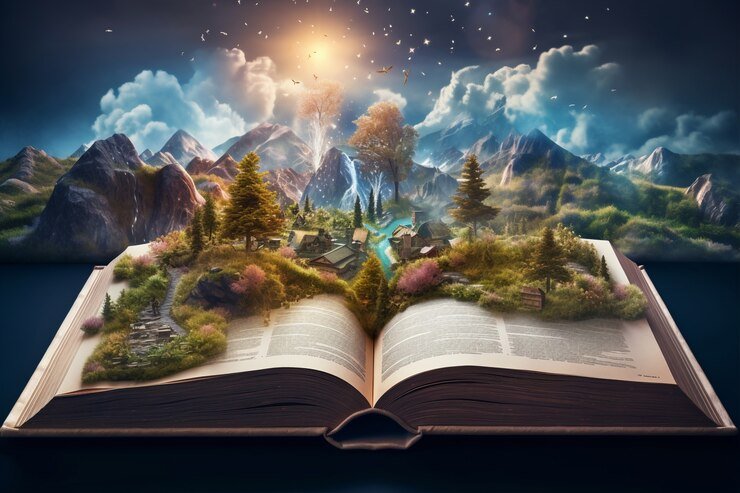
If you think back to some of your favorite childhood books, no doubt many of them were in the fantasy genre, whether it was dragons and goblins in Tolkien's The Hobbit or travelling to different lands in Enid Blyton's The Magic Faraway Tree. Everyone wished they could step through the wardrobe into C.S Lewis' Narnia or down the rabbit hole with Alice into Lewis Carroll's imaginary world of grinning cats and obstinate caterpillars. Escaping into another world through the medium of fantasy writing is a pastime that extends into adulthood, although the perception of reality is obviously somewhat clearer. But why is the fantasy genre so popular?
Ask yourself why you like fantasy novels.
Is it the insight into another world, realm or time? Is it the chance to meet strange and intriguing creatures, beasts and races of people, and see how they deal with the problems they face? Is it to simply forget about boring old Earth for a while and live your dreams of escaping through a magical book that transports you to another world? When contemplating writing a fantasy book, it's important to know the reasons you enjoy reading the genre so that you can hopefully pass on that same enjoyment to your readers.
1.2: What is fantasy?
It's hard to concisely define the fantasy genre as it can encompass many ideas, but generally there should be some kind of magical or mythical element to the story, some kind of supernatural presence. This could be a vital part of the plot, or just as a background theme. Many fantasy tales are set in the middle ages and have a medieval style in terms of technology or culture. Others take place in made- up worlds and realms that are purely based on the writer's imagination. Often elves, dwarfs, goblins and dragons, as well as more human-like different races, fill the pages of the novel as well as unique beings created in the writer's mind.
The author can choose to take the magical element as far as they wish. For instance in George R.R. Martin's A Song of Ice and Fire it's not until late in the first book we learn that dragons actually exist. Up until this point they are an extinct species as far as the characters in the book are concerned. Other fantasy series such as J.K. Rowling's Harry Potter are filled with magic and witches and magicians from the first to the last page of each book. With the fantasy genre you can really go as crazy or as subtle as you choose as regards to the supernatural elements.
1.3: Subgenres of Fantasy

Fantasy is a huge genre which embraces so many possible options that different sub genres have been created to be able to narrow down this enormous field. There is low fantasy where a non-rational plot or theme exists in a real or rational setting, whereas high fantasy is where the author describes a completely fictional location. If a person from the real world ends up in a new world meeting a new species or humans from a different time, this is known as portal fantasy. Urban and modern settings for a fantastical plot bring about the subgenre urban fantasy. Epic fantasy describes long tales which fill many pages, for example one of the various series or trilogies of books, one of the most famous of course being Tolkien's Lord of The Rings. Dark fantasy is where the author mixes in horror or grim themes, such as Stephen King's Dark Tower series.
Other subgenres include romantic, fairy tale, contemporary and juvenile fantasy, which are all pretty self-explanatory. If you were to go about writing a Gaslamp fantasy novel, this would mean employing a Victorian or Edwardian setting. Writing about historical figures and their interactions in the afterlife, however, would be classed as Bangsian fantasy. The genre is so broad and can include so many different elements that when it comes to fantasy you can pretty much do whatever you like.
1.4: How is Fantasy Different to Sci-fi?
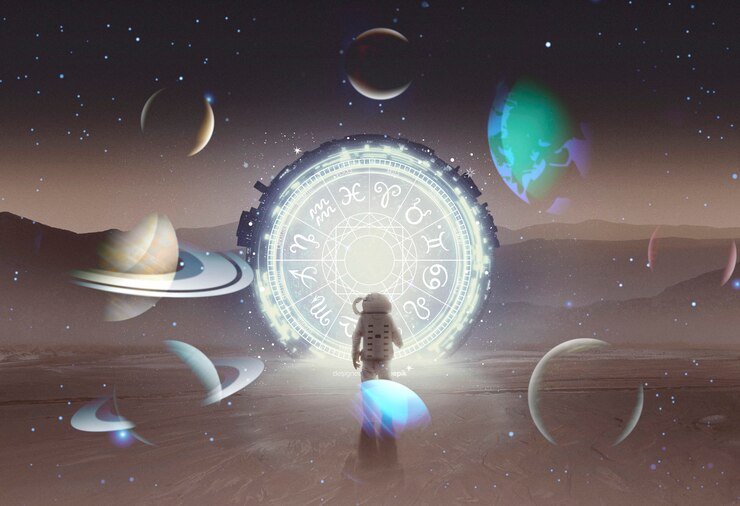
Obviously science fiction is also a kind of fantasy as it is often based on crazy space travels and encounters with aliens. The difference between the two genres is the absence of magic in one and the absence of science in the other. Even though travelling through space faster than the speed of light and waking up on a planet full of little green people might not sound very scientific, it's the author's job to rationalise how and why this can happen. Whether it's through the use of future technology and inventions, or it can be justified by bending the laws of physics slightly, the reader needs clarification on the how's and why's of the experience in hand. A sci-fi author cannot simply put something down to magic.
The reality of other planets and universes means that technically other life that doesn't originate from Earth is possible and sci-fi authors explore this idea often. Space travel is also possible and sci-fi authors just stretch this advancement to further and faraway places. In fantasy the author is not imagining a world that could be possible; they are imagining a world that could never be possible. They don't have to explain anything through lengthy scientific explanations to make events feasible to their readers. Dragons exist simply because they are dragons and not because they have evolved that way in order to survive on whatever planet they originated from.Having said that, fantasy still needs to have some kind of logic (unless you are creating a surrealist novel that is not meant to make any sense).
We will come back to this later, but in order for your readers to believe your weird and wonderful creations, there needs to be a set of rules, definitely consistency, and also some types of limitations. If everyone can do every kind of magic with no consequences whatsoever, it would make for an unrealistic and boring novel. Fantasy doesn't need to be scientifically explainable, but it does need to be believable and relatable.
1.5: Why write fantasy?
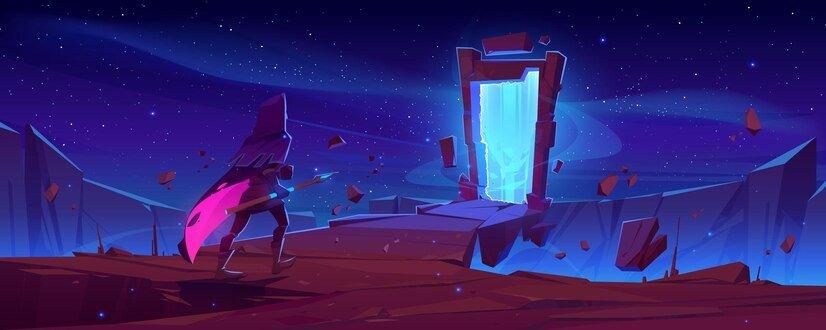
It's always enjoyable to delve into a fantasy world with captivating characters and an enthralling plot that someone else has created for us to enjoy. But imagine being in charge. You can craft your own land, planet or universe, fill it with weird and wonderful people and animals, re-write the laws of physics, write a new set of laws, and add as much or as little of the supernatural as you desire. You can let your imagination run completely wild. And how wonderful for others to be able to share and enjoy your stories. After all, writing is all about sharing and relating to others, and fantasy is a means to do this in a way that lets you tell your story with a magical twist.
One of the great things about fantasy writing is that all you really need is a great imagination. You don't need to have extensive knowledge about a certain field or do hours and hours of research. You don't have to worry about getting the facts about certain times and places wrong. You don't have to worry about the laws of different countries or knowing how to describe different cultures or nations accurately. Everything comes from inside your own head so you can write your own rules, invent your own countries, and devise your own cultures and traditions. Of course, this doesn't mean fantasy is an easy genre to write about and we will focus on this later, but it's easy to see why the freedom of this genre appeals to so many people.
FACT
The Top 5 book genres that make the most money
Source: The Guardian - 2014
1.6: Opportunities for Fantasy Writers

Readers love reading fantasy novels as much as authors love writing them. It is now a hugely popular genre and this has been helped recently thanks to extremely popular fantasy authors such as J.K. Rowling, George R.R. Martin and Suzanne Collins whose works have been turned into TV series' and movies. People who may have not previously read fantasy novels are now showing an interest in the genre. It's a great genre for new authors who want to get published. If you're a new author, your best bet is to start writing short fantasy pieces and try to get them published in fantasy magazines and publications. There are many different ones to try, such as Fantasy and Science Fiction Magazine or Buzzy Mag which will pay for stories if they're good enough to get published.
Only once you're a seasoned fantasy writer you should attempt to write something longer, and be prepared to get rejected many times before you ever succeed in seeing your words in print. You can also choose to skip the publisher and instead publish your book in e-book format on websites such as Amazon. However we will cover more about how to get your work published in future modules. Of course many people simply write for their own pleasure and enjoyment and have no ambition of ever making their work public or for sale which can be just as rewarding.
Module Summary
Lessons Learned:
So we now know that setting out to write a fantasy book can be a pretty daunting task. Not because it's a difficult genre to write about, but simply because there are so many different ways to write the story. With fantasy your book can go wherever you want, but knowing and understanding the different subgenres will help you choose which direction you want your book to go in. Also, realizing that as long as you are consistent with your supernatural elements, you really do not need to explain how anything works like you would if you were a sci-fi writer. Your main character can move things by pointing at them with her finger? Great, case closed. You don't need to justify anything scientifically.
.svg)



