
Module 1: Introduction to Demolition

1. Overview of the Demolition Industry
The demolition industry involves the systematic dismantling, destruction, or removal of structures such as buildings, bridges, and industrial facilities. It is a critical sector within construction and urban development, ensuring safe and efficient removal of outdated, unsafe, or unwanted structures to make way for new projects.
Purpose of Demolition:
Clearing sites for redevelopment
Removing hazardous or structurally unsound buildings
Facilitating urban renewal and infrastructure upgrades
Economic & Environmental Impact:
Generates employment in construction and waste management
Promotes recycling and sustainable material recovery
Reduces urban blight by eliminating abandoned structures
2. Types of Demolition
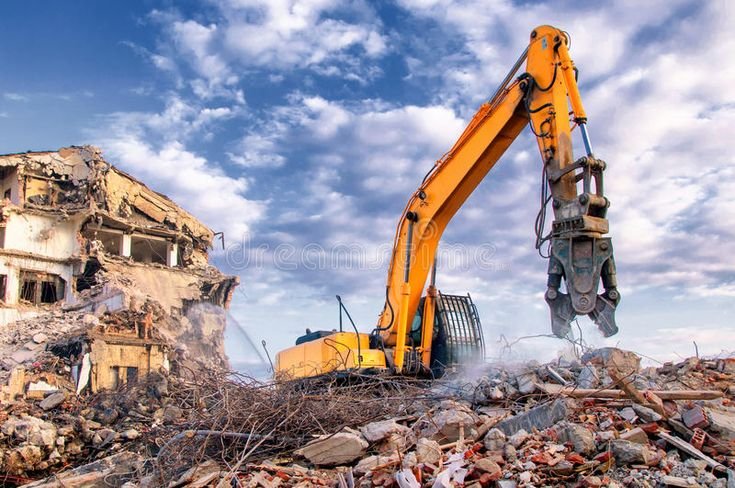
Different demolition methods are used depending on the structure’s size, location, materials, and environmental considerations.
A. Mechanical Demolition
Uses heavy machinery (excavators, bulldozers, wrecking balls)
Common for concrete and steel structures
Fast and cost-effective for large-scale projects
B. Implosion (Explosive Demolition)
Controlled use of explosives to collapse a building inward
Used for tall structures in open areas
Requires expert planning and safety measures
C. Deconstruction (Selective Demolition)
Carefully dismantling a building to salvage reusable materials
Environmentally friendly, supports circular economy
Slower but reduces landfill waste
D. Manual Demolition
Hand tools (sledgehammers, jackhammers) for small-scale or delicate work
Used in historic preservation or tight urban spaces
E. High-Reach Demolition
Specialized excavators with extended arms for tall buildings
Minimizes collateral damage in dense areas
3. Roles and Responsibilities of a Demolition Worker

Demolition workers must follow strict safety and operational protocols. Key roles include:
Demolition Laborer:
Assists in manual dismantling, debris removal, and site cleanup
Operates hand tools and supports machinery operations
Equipment Operator:
Handles excavators, bulldozers, and hydraulic breakers
Must be certified and trained in heavy machinery
Site Supervisor/Foreman:
Oversees the demolition process, ensuring compliance with safety plans
Coordinates with engineers and safety inspectors
Hazardous Materials Specialist:
Identifies and removes asbestos, lead, or chemical contaminants
Follows EPA/OSHA disposal regulations
Demolition Engineer/Planner:
Designs demolition strategies, including structural analysis
Ensures stability during partial demolitions
4. Key Industry Standards and Regulations
Demolition is highly regulated to ensure worker and public safety, environmental protection, and legal compliance.
A. Occupational Safety and Health Administration (OSHA) Standards (U.S.)
OSHA 1926 Subpart T (Demolition Standards):
Requires pre-demolition inspections
Mandates fall protection, PPE, and hazard communication
OSHA 1910 (General Industry Standards):
Covers asbestos handling (1910.1001) and lead exposure (1910.1025)
B. Environmental Protection Agency (EPA) Regulations
Asbestos NESHAP (National Emissions Standards for Hazardous Air Pollutants):
Controls asbestos removal and disposal
Resource Conservation and Recovery Act (RCRA):
Governs hazardous waste disposal
C. Local Building Codes & Permits
Cities may require demolition permits and environmental reviews
Noise, dust, and vibration restrictions apply in urban areas
D. International Standards (ISO, EU Directives)
ISO 45001 (Occupational Health & Safety Management)
EU Directive 2008/98/EC (Waste Framework Directive)
Conclusion
Module 1 provides a foundational understanding of demolition, covering industry significance, methods, worker roles, and legal requirements. Proper knowledge of these elements ensures safe, efficient, and compliant demolition operations.
.svg)



