
Module 1:Advanced Concrete Placement & Consolidation
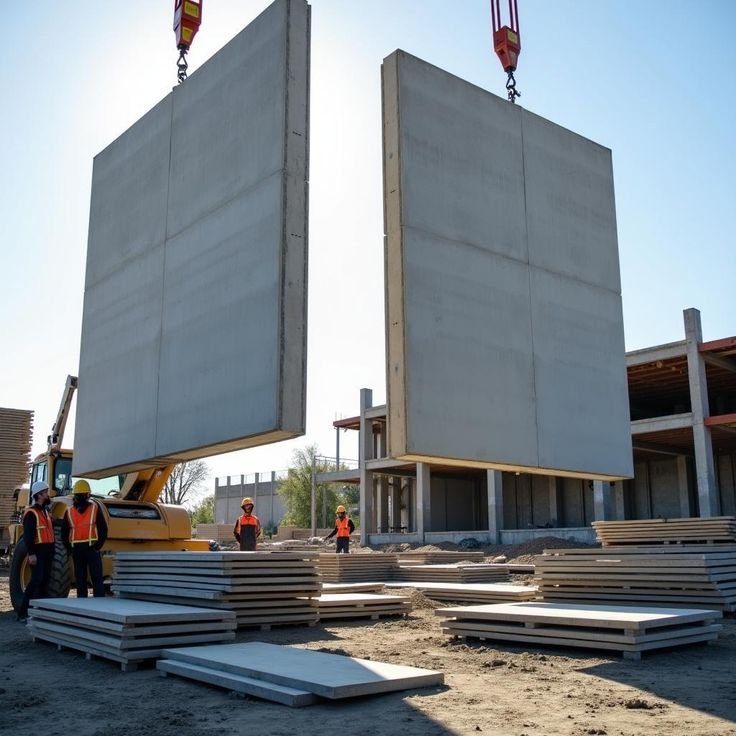
Proper concrete placement and consolidation are critical to achieving a durable, high-quality finish. This section covers advanced techniques for different structural elements, effective vibration methods, and strategies for handling varying concrete slump levels.
1. Proper Concrete Placement Techniques for Slabs, Walls, and Columns
Slabs
Pouring Sequence: Concrete should be placed in continuous horizontal layers, starting from one end and moving systematically to avoid cold joints.
Uniform Distribution: Use chutes, pumps, or buggies to distribute concrete evenly, preventing segregation.
Avoid Overworking: Excessive raking or spreading can bring excess water and fines to the surface, weakening the top layer.
Walls
Layered Placement (Lift Technique): Pour in lifts of 12–24 inches, allowing each layer to settle before adding the next to minimize pressure on formwork.
Internal Vibration: Insert vibrators vertically at regular intervals (18–24 inches apart) to ensure proper consolidation without honeycombing.
Formwork Considerations: Secure forms tightly to prevent blowouts, and release air pockets by tapping forms lightly with a hammer.
Columns
Controlled Pouring: Use tremie pipes or drop chutes to prevent concrete from free-falling more than 4–5 feet, reducing segregation.
Vibration Depth: Insert vibrators at multiple points around the column to eliminate trapped air, working in an up-and-down motion.
Top Surface Finishing: After consolidation, screed and trowel the top to ensure a level bearing surface for subsequent structural elements.
2. Vibration Methods to Eliminate Air Pockets
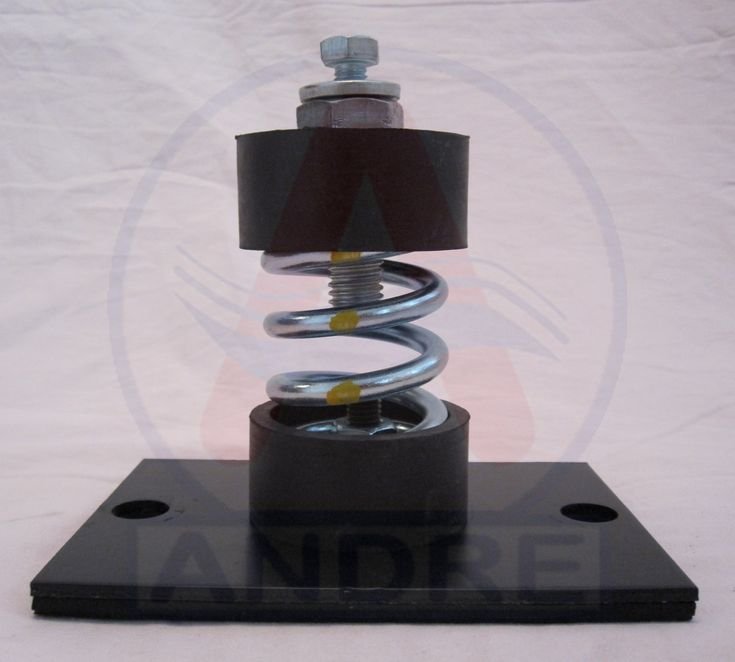
Proper vibration ensures dense, void-free concrete by removing entrapped air and improving particle settlement.
Types of Vibrators
Internal (Immersion) Vibrators: Most common for walls, columns, and thick slabs; inserted directly into the concrete.
External (Form) Vibrators: Attached to formwork, useful for thin walls and precast elements.
Surface Vibrators (Screed Vibrators): Used on slabs, attached to screeds for initial consolidation.
Best Practices for Vibration
Insertion Points: Space vibrators 18–24 inches apart in a grid pattern for uniform consolidation.
Duration: Vibrate for 5–15 seconds per insertion, stopping when air bubbles cease rising and a glossy surface appears.
Avoid Over-Vibration: Excessive vibration can cause segregation, bringing aggregates down and pushing paste upward.
3. Handling High-Slump and Low-Slump Concrete
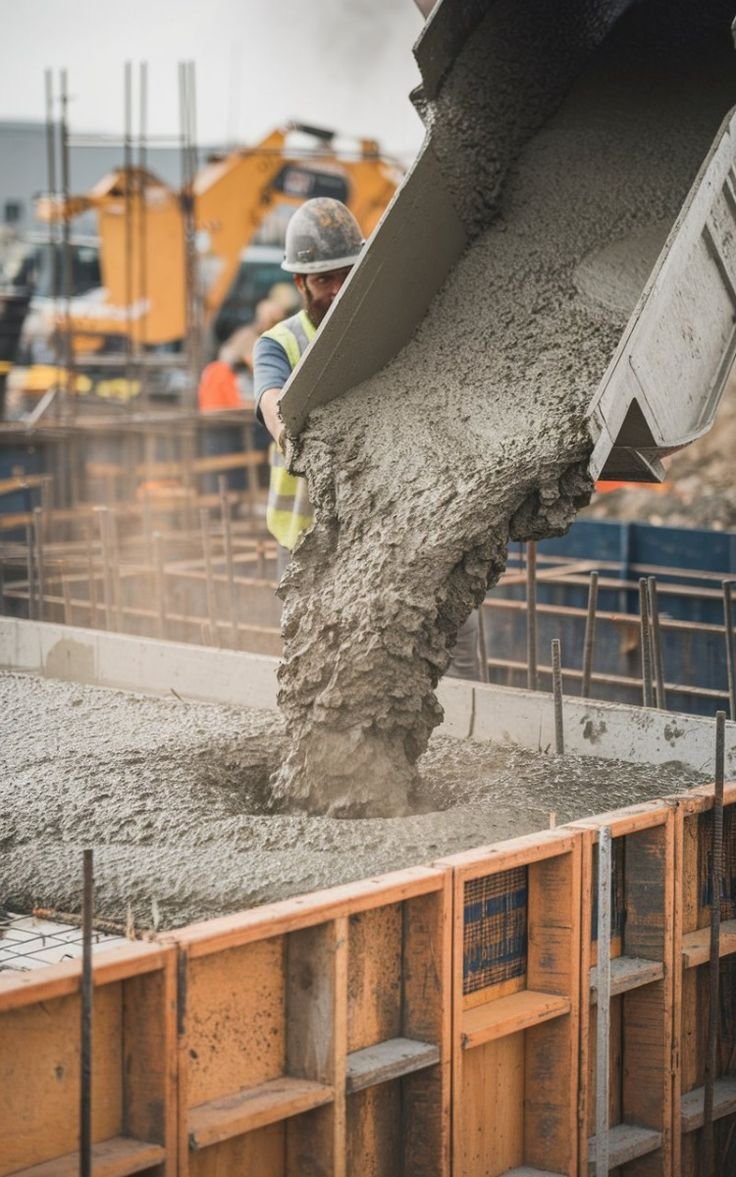
High-Slump Concrete (Wet Mix, 4–7 inches slump)
Advantages: Easier to place and consolidate, ideal for heavily reinforced sections.
Challenges: Increased risk of segregation, bleeding, and cracking if not properly managed.
Mitigation Strategies:
Reduce free water content using superplasticizers.
Avoid excessive vibration to prevent segregation.
Use controlled placement techniques (e.g., pumping instead of free fall).
Low-Slump Concrete (Stiff Mix, 1–3 inches slump)
Advantages: Higher strength, reduced shrinkage, and better surface hardness.
Challenges: Difficult to work with, requiring more effort in placement and consolidation.
Mitigation Strategies:
Use mechanical vibrators for thorough compaction.
Apply external vibration if internal methods are insufficient.
Work in smaller sections to ensure proper consolidation before stiffening.
Key Takeaways
Placement technique varies by structural element (slabs require even distribution, walls need layered pouring, and columns demand controlled drops).
Vibration must be systematic—neither too short (leaving voids) nor too long (causing segregation).
Slump management is crucial—high-slump mixes need careful handling to prevent bleeding, while low-slump mixes require vigorous consolidation.
.svg)



