
11.1 The Basics of the Psychology of the Store
Large scale companies
employ industrial psychologists to pick apart the reasons behind why customers shop in the way that they do.
However, even though you may not have the finances
to do this, it does not mean you should be missing
out on the positive effects
that psychology can have on customers.
What customers are not aware of is that they are being subjected to psychological measures
of some sort from the moment that they walk in the store. Every aspect of the set-up of a retail outlet has been thought about at some point by a psychologist that specialises in understanding the way in which we shop and the things that can influence us.
To show what we mean about psychology in a store, we will go back to using an example to really emphasise the key points.
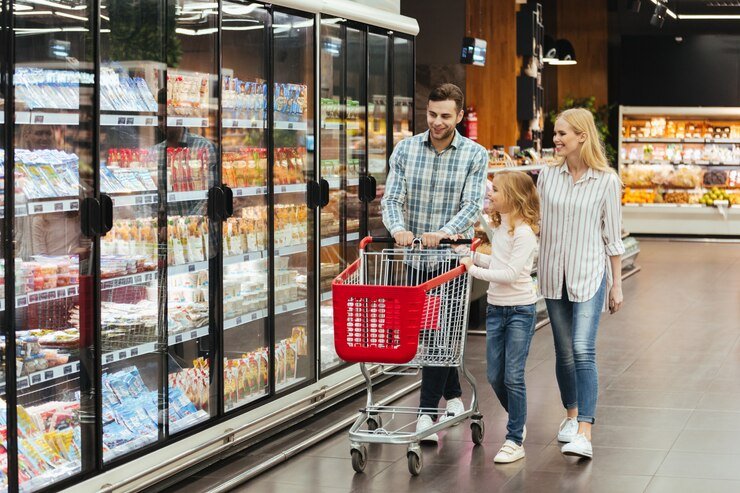
If we look at a supermarket, then the layout is very clever indeed and it is all designed to effectively play tricks on our mind and convince
us about certain factors connected
to the store.
In the vast majority of instances, whenever
you walk into a supermarket you will be met with fresh flowers
near the entrance
and the first 'section' will be fresh fruit and fresh vegetables. Now, that is not there due to a coincidence or the different
supermarkets following the same blueprint
with the layout, but rather what they are doing is playing a psychological trick on you. The idea here is that the freshness that you experience will not only put you in a good mood, but it will also make you feel that the supermarket is clean and fresh as well.
The key in all of this is subtlety and yet the psychology of the retail environment can be so powerful that companies have invested millions
in developing the techniques and conducting studies
that show how effective it is in convincing people to go ahead and make that purchase.
You need to understand that when we visit a store to purchase something,
that we have certain modes of thought
going on in our brain. Often, we tend to go into a store with a clear idea of what we want. However, the psychology of the store is designed to convince
us that we need more, and this all comes down to the art of persuasion.
You should also think of it along these lines.
Salespeople need to understand the psychology of selling and getting to grips with the needs and wants of their customers. The retail store has to achieve the same end effect, but largely without
the same interaction, although that does not apply in all situations and circumstances.
Just look around a store the next time you are in one and think of all the different
ways in which the store and products
are being presented
to you.
The products look tidy, making you feel that the store is organised and capable of handling anything.
It is clean and well-kept
which makes you feel more positive and less likely to want to leave. Items on special offer and discounted
prices are clearly marked so you can easily find them and you feel drawn towards them. The staff is friendly
and approachable, making you feel more relaxed and confident
enough to ask them for help if required to do so.
In addition, your store should be laid out so that people can flow easily between sections and wander around in their own time and in their chosen direction. This freedom is designed to make it so much easier for people to return to items that they have noticed previously
and are busy thinking about whether or not they will purchase
them. If you basically force them to walk through a store in a set way, then they would just figure that it is not worth going back and you would lose out on a sale.
Furthermore, there may be music playing in the background
to help with that feeling of a nice and relaxed atmosphere.Remember, if we are in a good mood, then we are more likely to spend money. However,
fail to create a good atmosphere and you will only push customers out the door as they will not want to spend another minute in there.
You also have to remember
that advertising is part of retail psychology, as are the displays in your windows,
if you have them, and so much thought has to go into each and every aspect that if the customer stopped to think about it all, then they would realise that they were indeed being bombarded by subtle tactics that are purely designed
to make them spend more cash.
11.2 What You Are Trying to Achieve with Psychology

After looking at the basics of the
psychology that is involved in the layout
and design of a retail outlet, we also have to look at what you are trying to
achieve overall by employing these tactics.
Clearly your main aim is to encourage
people to spend more money and to effectively get inside their minds to persuade them to part with more cash than they perhaps intended to.
Basically, you are trying to tap into the vibe and feelings
that promote healthy spending for the type of store that you manage. You are also trying to get into various human feelings that will hopefully
tempt the customer
into spending more money. Sounds difficult? Well, it is not as difficult as you may have initially
thought.
For example
You can look at some methods that are employed
on a regular basis by retail outlets around the world. Yes, you can often import ideas from a different
country and it will still work in your own environment because,
generally speaking, our minds do tend to work pretty much the same way no matter
where we are.
Making people feel as if you are their best friend
It is accepted
by sales analysts
that people will tend to spend more money if they are relaxed and feel comfortable in the company of somebody
from the store. Clearly this only applies to certain environments, but in more intimate stores it is believed that the cost of those items in the basket will increase
by more than 15% just by talking to the customer and finding some common ground wherever possible.
The use of reusable bags
You may have noticed that more stores are now using reusable
bags and offering them to their customers. Well, clearly those bags will also have the logo of the store on them so they end up acting
like a walking advertising hoarding for the company. However, if they keep the bag and use it on a number of occasions, then it stands to reason that your company name is going to be in their mind, and they are known to be more likely to come back to you.
The use of seats
In certain types of stores, such as department stores, it is often the case that there will be seats carefully placed throughout the store for shoppers to rest. However,
this is not
just them being polite and kind, but rather it is about getting you to spend longer in the store to think about what you have noticed on the shelves
and whether or not you will buy it. Also, the seats are often next to the products that the store really wants to sell as they know that customers
will look at them as they rest.
The compromise
price effect
This is something
that is very clever and is used by stores around the world. There will be a tendency
to place two similarly priced luxury items close beside one another where the price is just slightly
different. Often the second item will only be in the region of 10% cheaper, but that can be enough to make people believe
that they are getting a good deal and can still result in the store getting a good sale.
The left digit effect
Have you noticed how prices in stores tend to end in 99 or 95? That is all psychology. It is believed
that just having this price under a full number is enough to persuade people to go ahead and take a chance.
Think about how petrol is priced as they do the exact same thing there as 9.99 just seems better than 10.00.
Using cheap items to get people in the door
Every retail manager understands the power of using cheap items or sales to get more customers through
the door and it is not all because we love to get a bargain. Instead, the reason why there will often be some items reduced or on sale in a store is because they are seen as being the one thing that can get the customer to open their wallet. Once they have done that, they are then more likely to spend money elsewhere.
The concept
of the treasure hunt
It is often the case that sale items and sale displays are disorganised and untidy and there is a real reason for that. It has been shown that people are more likely to go through the sale items if they are like this as there is a fear of missing out on a bargain. However, at the same time it has been shown that people are more likely to make some kind of a purchase even if they did not intend to do so.
The concept of the accessory
Often, a store is not only going to recommend
a product, but also other items to go alongside
it. For example, it will often be the case that a product that requires batteries
will not have them with the product
and you need to purchase
them elsewhere. Also, clothes stores are going to recommend
certain accessories to go with an outfit as people do tend to want to complete
the look rather than just get a single piece. By doing this, a store is going to increase its sales without having to put in too much effort.
There are a number of other tools that can be used when it comes to the use of psychology
in a store setting and clearly it will depend on the industry that you are working in and also who you are targeting.
What we have tried to show here are some generic tools that are used around the world to tempt people into spending more money than they intended and as you can see these ideas can be pretty powerful.
We have not covered the psychology that goes into the labels of a product or the adverts that you display in your store. This is something that is an entirely new area that would be worthy of a module on its own, but it is sufficient to say that you need to combine retail psychology
with product design
psychology to create a powerful tool that will help to convince customers to spend money.At the end of the day, it is your job as the retail manager to understand which tools you should use in order to get the best return and most sales from your customers.
Look at your market and who you are focusing
on and even try experimenting with different concepts
to see which ones work best in your particular
industry.
FACT
It's a simple fact that women are much more experienced shoppers
than men. Most women have developed the ability to shop rapidly and efficiently, identifying products and brands subconsciously, "on auto-pilot".
Source: campaignlive.co.uk
11.3
How Effective
Psychology Can be in the Success of your Store

At this point, we will look at how there is a clear link between effective psychology and the potential success of your store.
This is going to ultimately persuade
you that this is indeed the way forward and that you need to be willing to try different concepts to get
the effect that you are looking for, mixed in with the positive vibes that clever psychology can achieve.
Psychology and the tactics used are known to increase
the sales per basket by a considerable percentage. The exact amount does vary between industries, but each and every company reports that when certain
tactics are employed,
their customers will purchase more items. Of course, this then means an increase
in your turnover and that will only ever reflect well on your ability as a retail manager.People are more likely to venture over and look at items if the display signs stick out from the shelf or the details are clear for all to see simply because we are nosey by nature. We do not want to walk out of a store and feel that we have missed out on a bargain.
You need to sit and think about how you act in a store because the chances are the vast majority of customers that come into your store are going to act in exactly the same way. How do you feel about staff helping you? What do you expect from a store? How do you think products should be displayed? What makes you spend more money? If you already know all of these things and know certain stores that you will go to over and above others,
then those are the stores that are carrying out the psychology correctly and that in itself is going to let you see how effective
it can be in your own store.
Furthermore, due to the psychology
used in creating a friendly and helpful atmosphere, customers
are more likely to pass on good reviews about your store via word of mouth, or even online, to their friends and family, so you will then see an increase in the footfall
figures coming in through your door.This has to be one of the best things about psychology in that it can really kick-start this motion whereby
your customers begin to work for you, which is better than any other form of marketing.
11.4 What your Store Would Be Like without
Psychology
Finally, we take you through what can only be described as being the flip side of what your store would be like if you did not use these psychological effects.
Now, at first glance your customers would not notice any difference
because they are so used to seeing certain features
in the store that it pretty much works on a sub-conscious level. However, if you were to be taken into a store where none of these concepts had been applied,
then you would find a poor atmosphere, the store would be in chaos, staff would not be helpful, products would be poorly displayed, and the end result would mean you would want to leave as quickly as possible.Indeed, you can probably think of a few examples
where a store has poor psychology and you just want to leave. Do you want that to be your store?
The thing that is crazy about all of this is that we are not talking about complex strategies or ideas that need to be put into place. Just making sure that this is a store that you would love to shop in thanks to the points mentioned
above can often be enough for it
to make even
just a slight difference. Our advice is to begin small by making sure that the store is tidy and that the staff are clued up on what to do - see the difference that it makes to your customers. Experimenting with psychology is going to help you to ascertain
which tactics work best in your situation
because clearly not everything will work for everybody all of the time.
MODULE SUMMARY
In this module we have focused on the concept
of using psychology in your store to make it seem more appealing in various ways for the customers that walk through
the door. Now, we are not talking
about you trying to tap into their mind in some peculiar
way, but by using subtle tactics it is accepted
that you can make a difference to the way in which your store is viewed as well as how people feel about shopping there.
 |
.svg)



