
8.1 Introduction

Perhaps the most challenging part of a PA's job is effective time management. The responsibilities are many and the time to execute them is limited. Finding enough hours in the day without having to work overtime can be stressful if you are unsure about where to start. A PA will often function as the office manager and the sole person your manager relies on to maintain a watchful eye over tasks and office activities. Some PAs have a tendency to jump from one task to another and they seem to be constantly doing something with their time.
However, this does not imply that they are able to accomplish more - most of them tend to fritter away valuable time on menial tasks while leaving more important tasks undone. Please understand that effective time management does not involve trying to squeeze in an impossible number of tasks. You need to take a closer look at the tasks lined up for the day and examine how you can do them more efficiently. There may be some tasks that can be eliminated altogether. Time management skills involve rearrangement of tasks in order of complexity and importance.
FACT
20% of the average workday is spent on "crucial" and "important" things, while 80% of the average workday is spent on things that have "little value" or "no value"
Source: Balancetime.com
8.2 Why is Time Management Important?
.png)
6 reasons that explain the importance of time management at work:
1. Time is a limited and finite resource. Therefore, it makes sense to maximise its use. Time lost cannot be regained.
2. You can hope to accomplish much more in a shorter length of time without feeling stressed and exhausted. This is because you have chosen to take control of your time instead of the other way round.
3. Effective time management is inevitably linked to improved decision making. You learn to weigh the importance of different tasks and prioritise them in the best way possible.
4. Time management allows you to identify tasks that are time-wasters. You get into the habit of streamlining processes and eliminating wastage of time.
5. Time management results in reduced stress levels and higher quality output of work. The feeling of being rushed and out-of-control makes way for a calmer, more focused way of planning and execution.
6. As a PA who has to juggle multiple tasks all at once, you learn the art of discipline.
Effective time management minimises the likelihood of procrastination and helps get your jobs done on time. Although time management can seem daunting to practise at first, you learn over time. Discipline, prioritisation and focus become regular habits and, as a result, your productivity levels increase significantly.
Development of good time management skills lead to positive cumulative effects over time. To make sure deadlines and responsibilities are met, you must understand the basic principles of quality time management. Thus, time management plays an important part in the success of your job. It helps you provide improved support to your boss in the form of increased efficiency and competence levels.
8.3 Follow these Tips for Successful Time Management
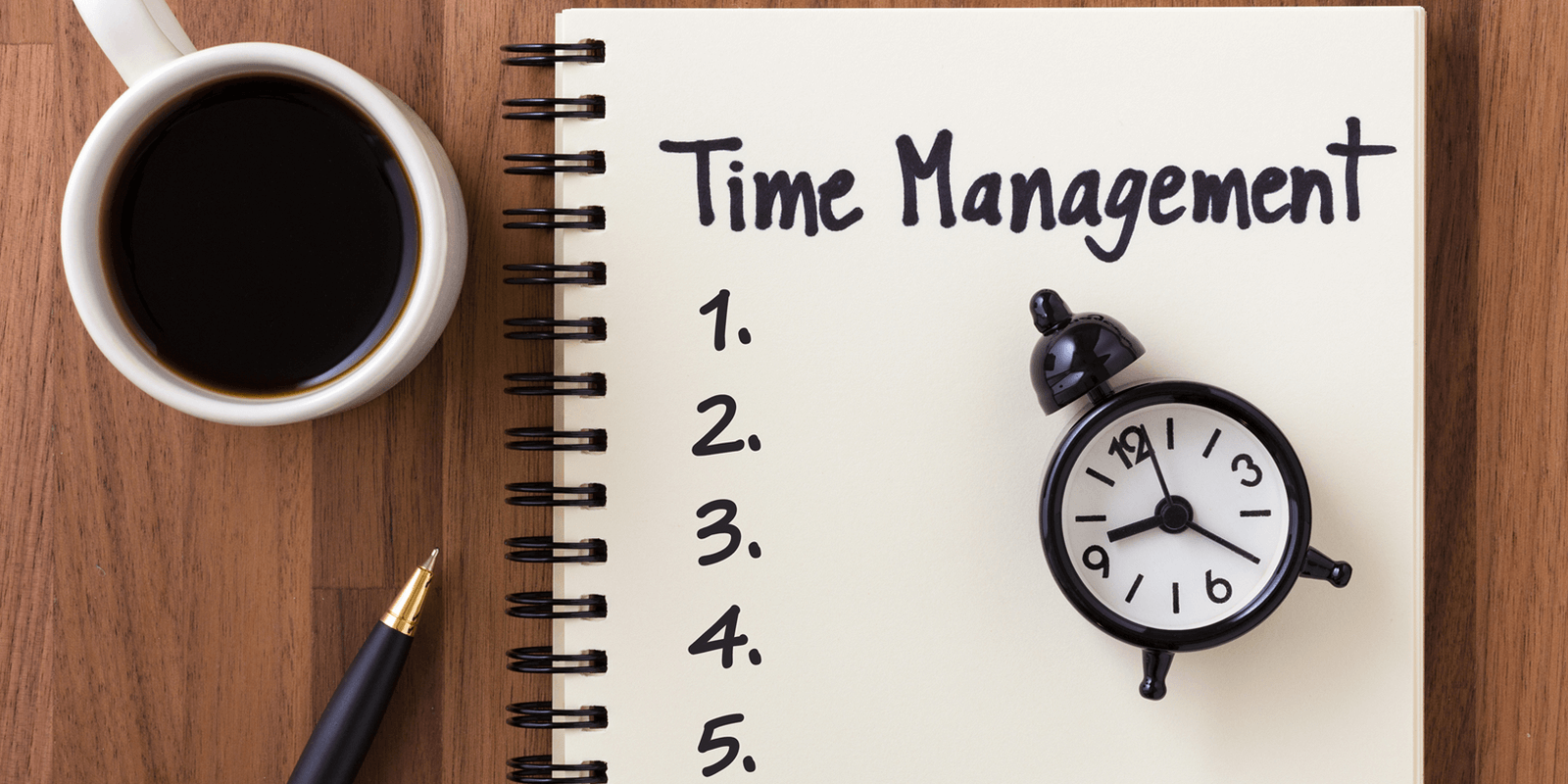
Know your role and style
Only you can be the judge of when you work at your best. Is it morning or afternoon? Schedule your hardest work at a time when you generally tend to feel fresh and alert. Inadequate levels of enthusiasm or excessive exhaustion are not recommended precursors for tough and complicated work tasks. Plan to execute easier tasks during the time that you feel tired and keep the difficult tasks for when your mind and body feels active.
Define your tasks
Are your current tasks important or urgent? Prioritise your tasks and avoid doing the easy task first. Spend time on the tasks that are important and leave the less pressing matters until afterwards. Task prioritisation is a critical component of effective time management skills. The latest prioritisation app will be of no use unless you fill in the correct information. On some days, every task may vie for the top slot on your priority list.
Read for tips on prioritising tasks at work: Collect and list out all the tasks that you can do for the day
At this initial stage, avoid worrying about order and prioritisation. Identify tasks Identify tasks that fall under the 'urgent and important' category. These will be the tasks which, left undone, would lead to serious negative consequences. For example, missed customer deadlines or missed corporate tax compilation deadline.
Analyse
Now, take a closer look at urgent and important tasks and assess the value of each one. Choose to focus on tasks that will add value to the organisation. For example, responding to client letters and emails regarding orders or purchases. Plan internal organisational work (preparation of sales reports) for later.
Sometimes you may end up with multiple tasks that qualify for top priority. In that case, you should typically opt for tasks that involve the maximum effort first. This will motivate you to complete other simpler tasks faster. Often, it's not possible to complete every task on the priority list. You may need to eliminate less important and menial tasks or reschedule them to the next day.
Set clear deadlines
Always ask your manager for clear deadlines regarding the tasks that you are allocated. Keep time- frames realistic and doable. If you feel that a certain task cannot be completed in the allocated time, give feedback to your boss regarding the same. This is a better option compared to failing to meet a deadline at the last minute.
Tackle your weak points
A tedious or complex task may encourage you to procrastinate the job. Try to complete tedious tasks first so that you avoid falling into the procrastination trap. Mundane tasks are always worse when you think about doing them rather than actually doing them. Putting tasks off will only lead to confusion and stress.
Categorise your jobs
Work on your jobs that have similar categories, this way you can hopefully work on them at the same time. Use your newly learned diary management skills and filing system to help you manage your time. Always cross jobs off your checklist to avoid doing them twice. Categorising your jobs will help you to prioritise your tasks and will help you to structure your workday better.
Take small breaks
Break up large and complex jobs into smaller, more easily manageable tasks. Also, remember to take small breaks between tasks; these small breaks will minimise the likelihood of mental and physical exhaustion.
Allocate time in the day to proofread your work
Allocate to proofread each task, double-check your numbers, etc. Proofreading your work will help to reduce the time spent on correction, re-doing and repetition.
Activity 1 - Practise with Time Management Skills
Estimated time: 10-15 minutes
Time management is a critical, yet challenging responsibility in personal assisting. Managing your time can be difficult to learn, but once you grasp the concept, it can lead to success in your job and can help you further support your boss. Begin this activity by analysing how you spend your time every day. Write all your daily tasks down for an entire week. Once you have done this, try to locate a pattern in how you spend your time. Next, select one other tip from the module and implement it to your new time management routine.
8.4 Additional Tips for Successful Time Management

Identify the three most important tasks for the day Brian Tracy, author of 'Eat that Frog', suggests that you would normally be able to identify three important tasks that contribute the maximum value to your work. You may be familiar with the famous Pareto principle that stipulates that 80% of results arise out of 20% of our actions. This is apt for time management skills.
Brian Tracy further suggests that other tasks (apart from the three important ones) can be classified under 'complementary' or support tasks. These invariably lend themselves to delegation, downsizing or even elimination. These three tasks are referred to as high-leverage tasks and they should be your point of focus before you move onto other tasks. Improve your concentration and immerse yourself in your task. Effective time management depends on the minimisation of time-wasting activities. Here are some quick tips to focus on work:
Work for 60 to 90 minutes after which you may wish to schedule a small break. Close irrelevant browser windows, mute your mobile phone and shut out conversations. Messages on the mobile phone and the constant peeking into your inbox are classified as one of the biggest time-wasters at work. In the middle of report preparation, it's not important to know where everyone plans to meet up for happy hour on Friday.
Distractions are not completely bad, but you need to plan them during your free time. For example, you can consider checking your social media messages at the end of the day after work is done. Observe patterns in your concentration and identify triggers. For example, you may begin to lose concentration when you feel hungry or exhausted. This is the time that you should ideally take a break.
Activity 2 - Fine Tuning Your Time Management Routine
Estimated time: 10-15 minutes
In the previous activity, you worked on your time management skills. After writing down all your daily tasks and analysing how you spend your time, hopefully you have a better grasp on your day. For this next activity, you will go through your sample routine, identify the three most important tasks and assign them a priority number. Next, schedule yourself some time every day to plan your next day and to follow up on any emails or phone calls. You should also spend some time identifying weak points in your routine.
Avoid excessive amounts of idle chatter and gossip with colleagues at the workplace.
Schedule the activity during the time when you are free. The best way to confront the office chatterbox is to let them know in a polite, but firm manner that you need to work. Constant office chatter tends to affect our concentration and is classified as a time waster. The power of the word 'No' You are there to support your boss and senior management, but you still have the right to say 'no' (within reason).
Being able to say no to certain tasks does not imply that you refuse to do work. You are just making an attempt to avoid overloading your schedule. Susan Newman, Author of 'The Book of No' suggests that an increasing number of PAs are overloaded with work because companies are trying to extract more work out of employees. Most of us tend to nod our heads to every allocated task because we want to earn brownie points and we wish to seek the boss's approval.
However, Susan Newman warns that you must consider the ramifications of accepting too many tasks. Eventually, your boss will want quality work done thoroughly and with minimal errors. You need to learn to say no to the less important tasks and avoid taking on work that needs to be done by other colleagues. Needlessly offering acquiescence to extra work will simply result in exhaustion, stress and failed deadlines.
So, if you are already overwhelmed at work and your boss wants more, here are a few tips to say no politely: Explain that you are obliged to say no due to the fact you have to prioritise your tasks. Communicate to the boss that you don't really wish to decline the task, but you are simply trying to be realistic. Try to resolve the requester's problem while saying 'no'. For example, you can ask if you can work on the project the following day or you can ask if you can delegate it to so-and-so. Always make it a point to say no in person rather than by email. Speaking face-to-face allows the boss to listen to your tone of voice; emails can be misconstrued.
Staying Organised
Staying organised is an extremely effective aid to time management. If you arrive at your desk and are looking everywhere for last week's customer correspondence, you will end up wasting valuable time. Here are some useful tips that help you to stay organised at work: Start the day with 5 to 10 minutes of quiet time; this allows your mind to gear up for the cascade of work tasks that could soon follow.
Schedule regular buffers between tasks. This allows you some breathing space during which you can assess the task that you've just completed as well as prepare for the one ahead. At the end of the workday, take out 5 to 10 minutes to plan for the following day. Check to see if you have important documentation ready; verify if you have phone/email contacts of customers.
FACT
The average person gets 1 interruption every 8 minutes. With the average interruption taking about 5 minutes out of the working day.
Source: Balancetime.com
Module summary
Time management is crucial to successful execution of tasks. It also leaves you with breathing space between office jobs. As a matter of fact, effective time management allows you to maximise your productivity without leaving you feeling drained and stressed out. Prioritisation is an integral part of time management. All tasks are never urgent and important at the same time. Categorising each task helps you to identify the sequence in which you need to execute the tasks. Time management skills help you to manage your day in a way that results in added accomplishment with less effort.
.svg)



