
Entrapment means getting trapped.

Always ensure the bed safety rail is appropriate for the type and style of bed.
If there are two rails (often called split rails) along one side of the bed and one or both rails are tilted at an angle so both the top and bottom of the bed is raised, there may be gaps in which an individual could get trapped. This is an example of entrapment.
Where split rails are used, make sure the gap between the split rails is less than 60mm, or more than 25 cm, to avoid head and neck entrapment.
- -You need to use extra height bed rails when there are extra-height mattresses or overlays.
- -Use bed rail covers or special bed rails to reduce the risk of an individual knocking their legs and arms on bed rails, or getting their arms and legs trapped between the bars.
- -Check if the bed rails are fitted correctly and in good working order.
- -Take extra care when the person is very small or very light. They may need to be assessed in line with guidance for bed safety rail use with children if the person is of very small stature and weight.

Bed rail bumpers
Bed rail bumpers, added accessories or enveloping covers are used to prevent impact injuries however they can also reduce entrapment when securely fixed to the bed or rail following manufacturers guidance.
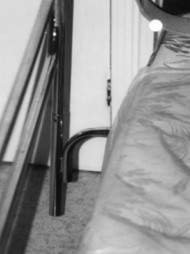
This is a dangerous gap between the bed and rail.
Mattress Dimensions
In addition to considering the height of the mattress, you will need to ensure all the dimensions (length and width) fit the base of the bed.
If the mattress is not the correct size to fit the bed then the bed rails may not fit properly and create gaps.
Entrapment can happen between the bed rail and the headboard if the gap is the wrong size for the individual.
Avoid gaps over 60mm which could be a large enough size to avoid the individual from getting their head trapped.
Entrapment can occur in the space between a poorly fitting mattress and the side of the bed rail or a bed rail that does not fit the bed base tightly enough.
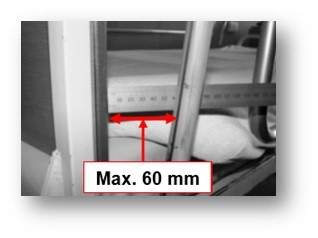
Avoid gaps larger than 60mm.
Most mattresses compress. Some compress more than others. When mattresses compress, they increase the gap size and the risk of entrapment is higher. An individual’s weight will compress the mattress. You might not realise this if an individual is not on the bed when you assess the risks.
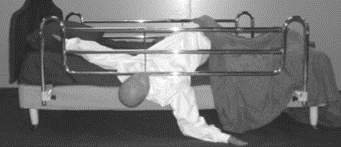
This is a mattress compressed by the person allowing entrapment.

Bed rail diagram and risk assessment
This bed rail diagram and risk assessment template is designed to support people in completing a bed rail risk assessment. It is relevant to people working in residential settings and in the community. It was originally created by NHS Greater Glasgow and Clyde and has been republished by the Care Inspectorate (who regulate care services in Scotland) as a model of good practice.
Click on the blue button to download a copy of the diagram and risk assessment.
You can save this document on your device to use later. You can also share it with your manager and colleagues.
Risk assessment checklist example
This is another example of a more simplified bed rail risk assessment checklist from the Medicines & Heathcare products Regulatory Authority (MHRA).
.svg)



